Gaines County
About
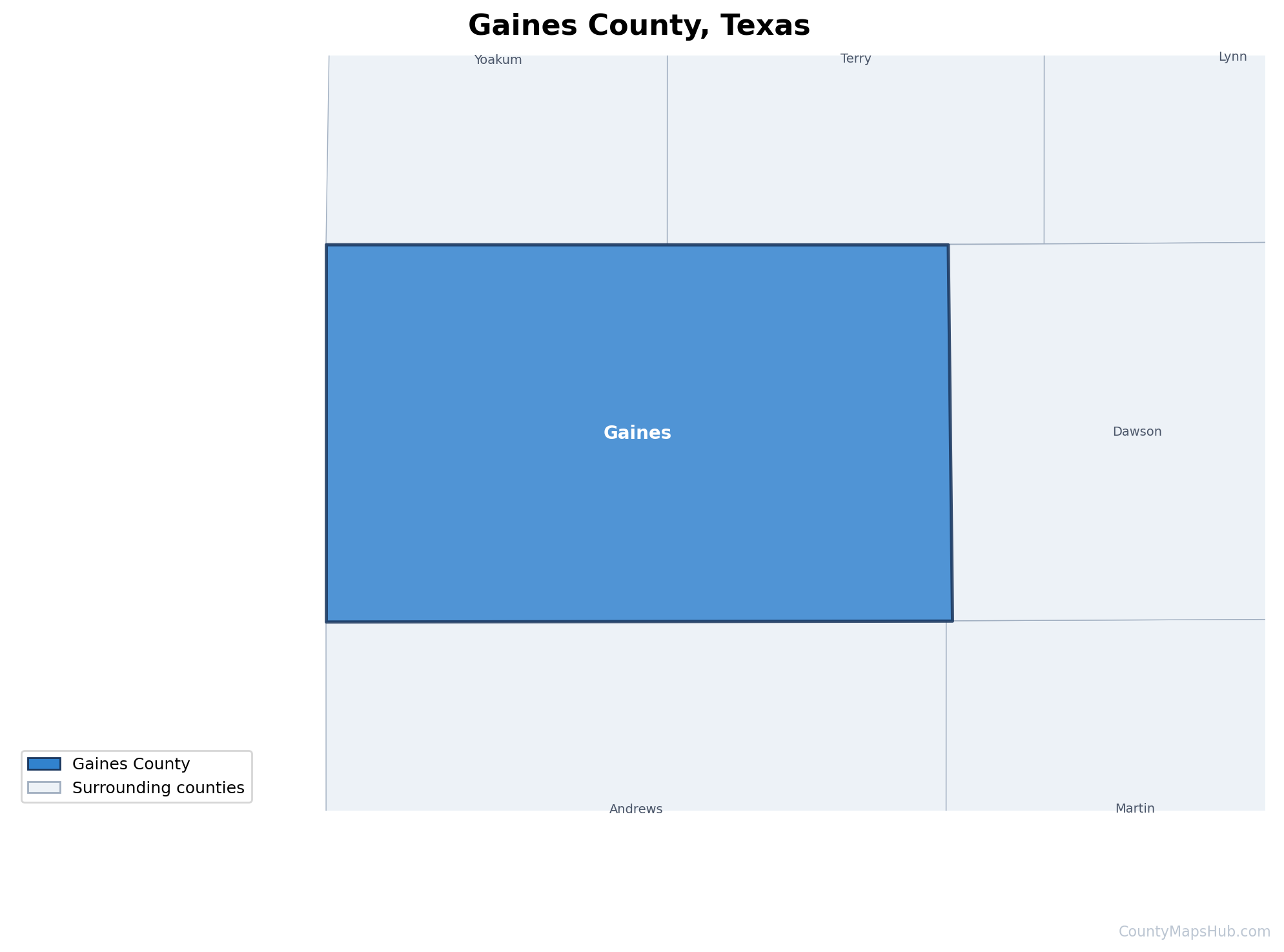
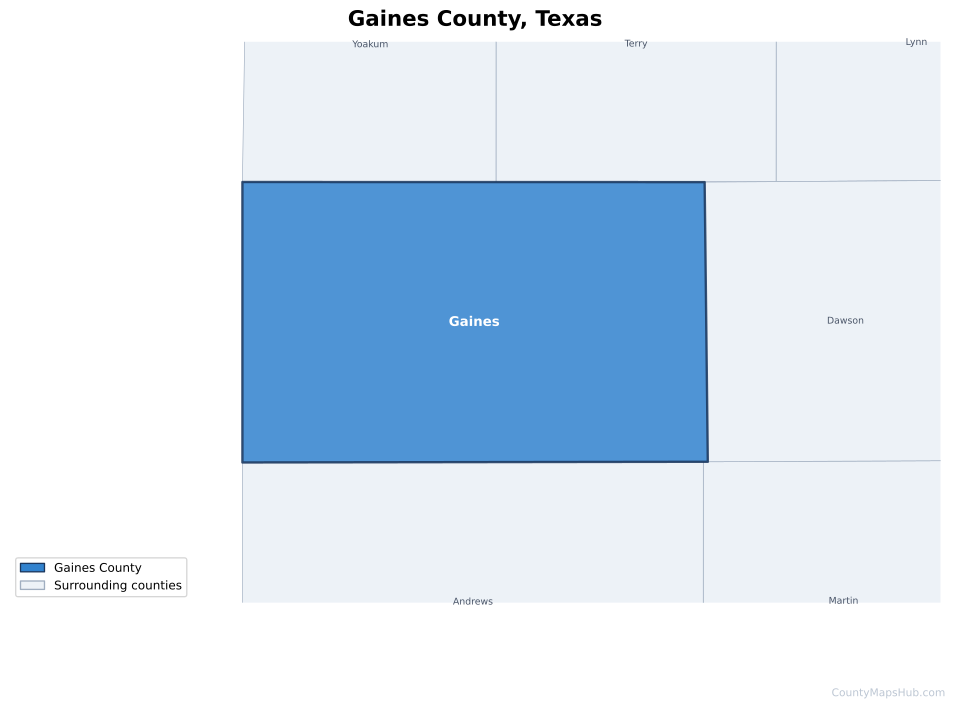
Gaines County was established in 1876 during a period of westward expansion across the Texas plains. The county was named after James Gaines, honoring his contributions to Texas history. Located in the western portion of the state, the region developed gradually as settlers ventured into this semi-arid landscape seeking opportunities in agriculture and ranching.
The county seat of Seminole emerged as the administrative and commercial center of the region. Throughout the late nineteenth and early twentieth centuries, the area’s economy evolved alongside technological developments in irrigation and farming techniques suited to the challenging climate. The discovery of natural resources in West Texas further shaped the county’s growth trajectory, bringing new residents and economic activity to the region.
Population
According to the 2020 census, Gaines County has a population of 21,598 residents spread across its 1,502 square miles. This population density reflects the county’s character as a largely rural region where communities are interspersed across the semi-arid landscape. The demographic composition includes families with roots spanning multiple generations alongside newer residents drawn by employment opportunities. Population distribution centers around the county seat and smaller communities throughout the area, with residential patterns influenced by the region’s agricultural and resource-based economy.
Climate
Gaines County experiences a semi-arid climate characterized by hot summers, mild winters, and limited annual precipitation. This climate zone is typical of the western Texas plains, where wide temperature variations between day and night are common throughout much of the year. Summers can bring intense heat with temperatures frequently exceeding ninety degrees, while winters are generally mild with occasional cold fronts moving through the region.
The limited rainfall presents both challenges and opportunities for residents and agricultural operations. The semi-arid conditions require careful water management and have influenced the types of crops and livestock operations that thrive in the area. Clear skies dominate much of the year, contributing to abundant sunshine and dramatic sunsets across the flat to gently rolling terrain that characterizes the landscape.
Tourist Attractions
Visitors to Gaines County can experience the authentic character of West Texas rural life and expansive landscapes. The region offers opportunities for those interested in agricultural heritage, with working farms and ranches illustrating the area’s economic foundation. The wide-open spaces and clear skies make the county appealing for outdoor enthusiasts who enjoy activities such as hiking, wildlife observation, and photography of the distinctive semi-arid ecosystem.
The county seat provides amenities for travelers including local dining establishments, lodging options, and community facilities. Historic sites and structures scattered throughout the area offer glimpses into the region’s development from the late nineteenth century onward. Seasonal events and county gatherings provide visitors with opportunities to engage with local traditions and experience the hospitality characteristic of small-town Texas communities.
Culture
The cultural fabric of Gaines County reflects the heritage of West Texas agricultural communities, where values of self-reliance, neighborliness, and hard work remain central to daily life. The population includes families whose ancestors settled the region generations ago, creating a sense of continuity and shared history. Community gatherings, whether centered around civic events, recreational activities, or seasonal celebrations, serve as important touchstones for maintaining social bonds across the county’s dispersed population.
Local traditions are influenced by the ranching and farming lifestyle that has defined the region for well over a century. Rodeo culture, country music, and Tex-Mex cuisine feature prominently in community life. Religious institutions play significant roles as gathering places and social anchors. The county’s cultural identity embraces its position as part of the broader West Texas region while maintaining distinct local characteristics shaped by the specific challenges and opportunities of life in this semi-arid landscape.