Galveston County
About
Galveston County was established in 1838, making it one of the original counties of the Republic of Texas. The county was named after Bernardo de Gálvez, a Spanish colonial governor and military leader who supported American independence during the Revolutionary War. Throughout the 19th century, the region developed as a major port and commercial center along the Texas Gulf Coast.
The county’s coastal location has shaped much of its history, with maritime commerce, fishing, and trade playing central roles in its economic development. Over the decades, the area has witnessed significant historical events typical of Gulf Coast communities, including periods of rapid growth, economic transformation, and adaptation to the challenges of coastal living. The county has evolved from its early settlement days into a diverse region balancing historical preservation with modern development.
Population
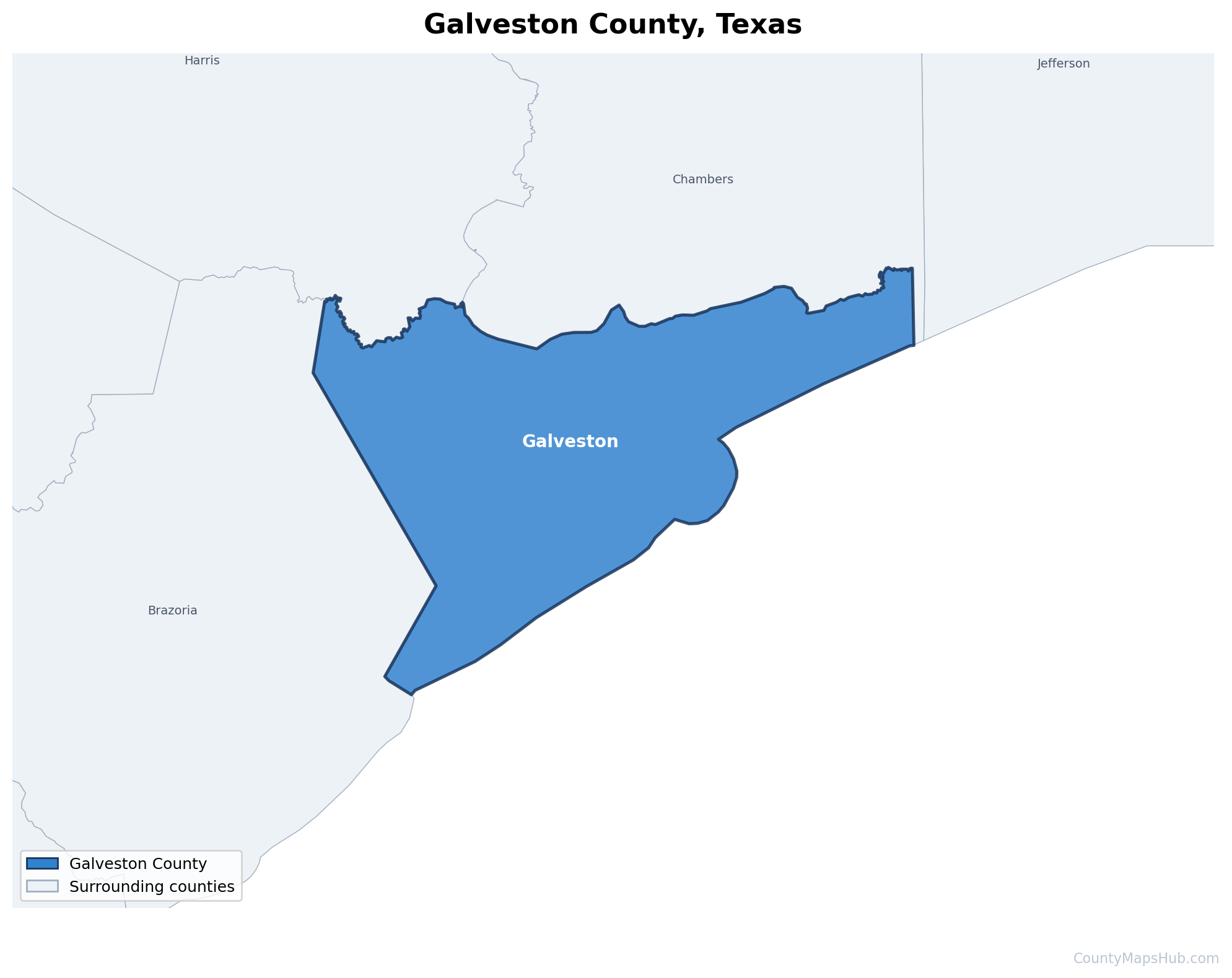
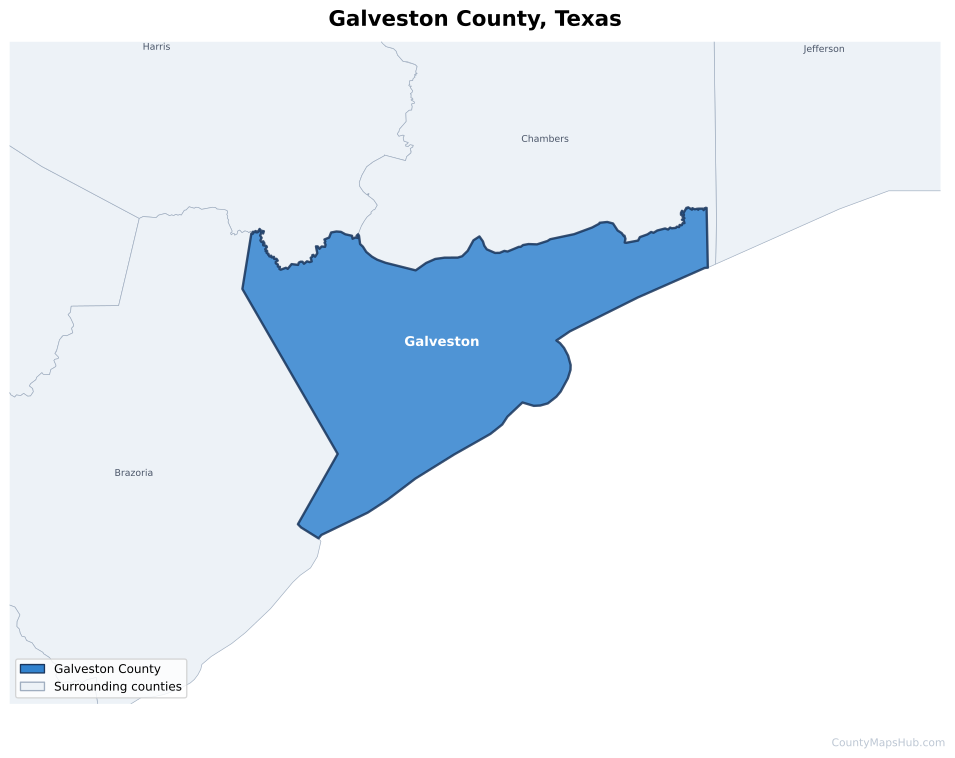
According to the 2020 census, Galveston County had a population of 350,682 residents. The county encompasses approximately 874 square miles of land and water along the Texas Gulf Coast. Population distribution reflects a mix of urban centers, suburban communities, and coastal settlements, characteristic of Gulf Coast counties in Texas. The demographic composition includes diverse cultural backgrounds and age groups, contributing to the region’s social and economic fabric. Growth patterns over recent decades have been influenced by the county’s coastal location, economic opportunities, and quality of life factors that attract both residents and businesses to the area.
Climate
Galveston County experiences a humid subtropical climate typical of the Texas Gulf Coast region. This climate zone is characterized by hot, humid summers and mild winters, with temperatures rarely dropping to freezing levels. The proximity to the Gulf of Mexico moderates temperature extremes while contributing to higher humidity levels throughout much of the year.
Rainfall is distributed relatively evenly across the seasons, though late summer and early fall can bring periods of increased precipitation. Like other coastal counties in this region, the area is subject to tropical weather systems during hurricane season. The mild winter climate and coastal breezes make the region attractive for year-round outdoor activities, while the summer heat is tempered somewhat by sea breezes along the waterfront areas.
Tourist Attractions
The county’s coastal location provides numerous opportunities for water-based recreation and tourism. Visitors can enjoy beaches, fishing, boating, and various maritime activities along the Gulf Coast. The region features historical districts and architecture that reflect its 19th-century heritage, offering glimpses into the area’s role in Texas coastal history. Museums and cultural centers throughout the county preserve and interpret local history for residents and visitors alike.
Natural attractions include coastal ecosystems, wildlife viewing areas, and waterfront parks that showcase the unique environment of the Texas Gulf Coast. The county offers a mix of family-friendly attractions, outdoor recreation opportunities, and cultural experiences. Seasonal events and festivals celebrate the region’s maritime heritage, cultural diversity, and community traditions, drawing visitors from across Texas and beyond throughout the year.
Culture
The cultural landscape of Galveston County reflects its position as a historic Texas Gulf Coast community with deep maritime roots. The region’s culture has been shaped by generations of coastal living, with traditions tied to fishing, shipping, and beach life remaining important to local identity. The county’s heritage represents a blend of influences from various groups who have settled in the area over nearly two centuries, creating a diverse cultural environment.
Local cuisine often features seafood and reflects Gulf Coast culinary traditions, while community celebrations and gatherings frequently incorporate maritime themes. The arts community includes galleries, performance venues, and cultural organizations that contribute to the region’s creative life. Educational institutions and libraries serve as centers for community engagement and cultural programming, helping preserve local history while supporting contemporary cultural expression throughout the county.