Glasscock County
About
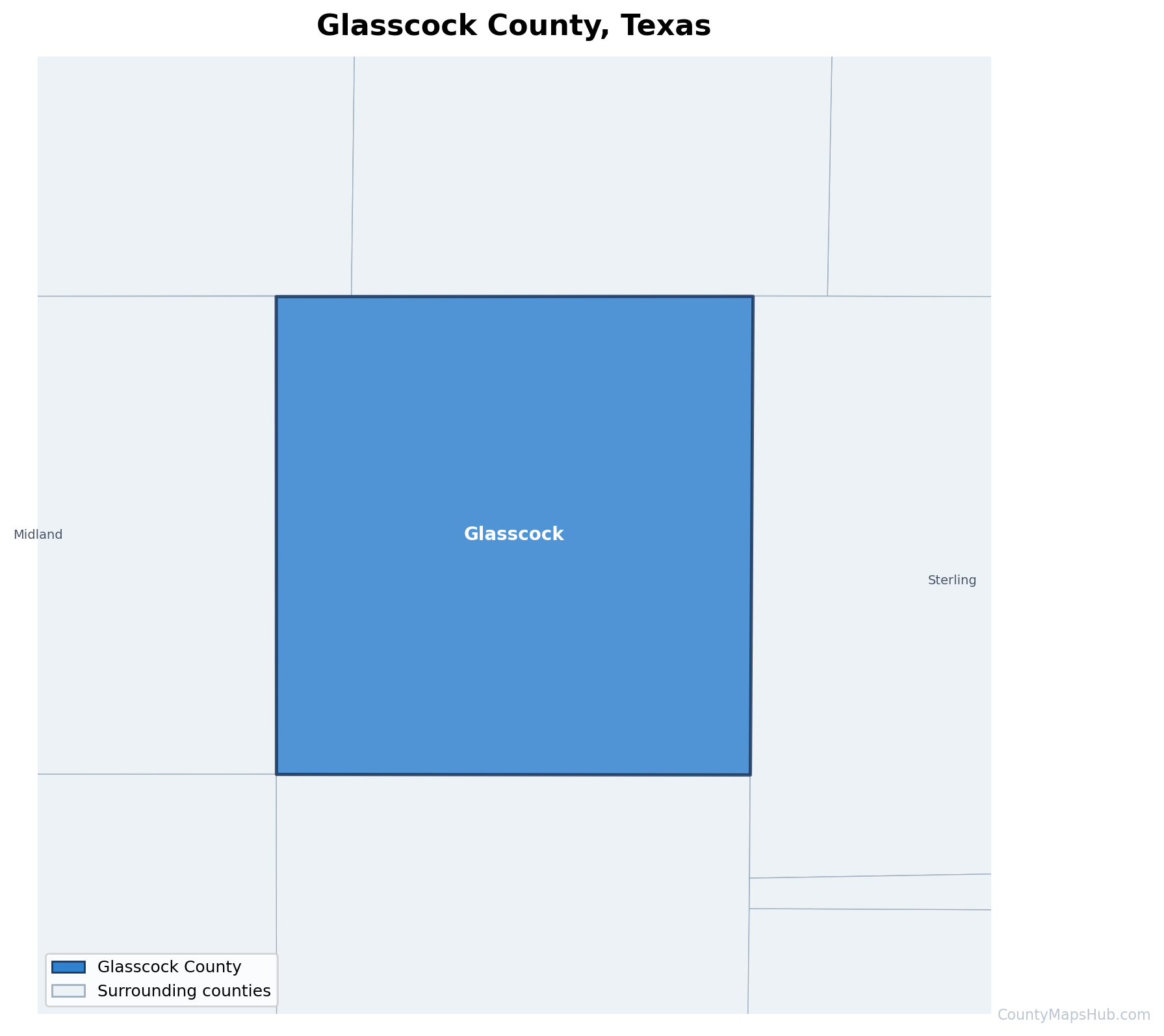
Glasscock County was established in 1887 in the heart of West Texas, carved from territory as the region opened to settlement and development. Named after George Washington Glasscock, a prominent figure in Texas history, the county reflects the pioneering spirit of those who settled the challenging terrain of the western frontier. Garden City serves as the county seat, functioning as the administrative and community center for this sparsely populated region.
Throughout its history, the county has been shaped by the ranching and agricultural traditions common to West Texas. The late 19th and early 20th centuries saw the establishment of ranches that utilized the vast open spaces for cattle grazing. Over time, the discovery of oil and natural gas resources transformed the local economy, bringing new opportunities while maintaining the region’s rural character. The county’s development reflects the broader story of West Texas: from frontier territory to an area balanced between traditional agriculture and modern energy production.
Population
According to the 2020 census, Glasscock County has a population of 1,116 residents, making it one of the least populous counties in Texas. Spread across 901 square miles, the county maintains an extremely low population density characteristic of rural West Texas communities. This small population is centered primarily around Garden City, with residents often engaged in ranching, agriculture, and energy sector activities. The intimate scale of the community fosters close-knit social bonds and a lifestyle distinctly different from Texas’s urban centers, preserving traditions and values associated with rural living.
Climate
Glasscock County experiences a semi-arid climate typical of the West Texas region, characterized by hot summers, mild winters, and limited annual precipitation. The area receives modest rainfall, with most precipitation occurring during spring and early summer months. Summer temperatures frequently exceed 90 degrees Fahrenheit, while winters are generally mild with occasional cold fronts bringing cooler conditions.
The semi-arid environment influences both the landscape and local activities, with vegetation adapted to drier conditions including native grasses, mesquite, and hardy shrubs. Clear skies are common throughout much of the year, contributing to significant temperature variations between day and night. Residents and visitors should prepare for intense sun exposure and the occasional dust storm, features common to the region’s climate patterns.
Tourist Attractions
Glasscock County offers visitors an authentic West Texas experience characterized by wide-open spaces and rural landscapes. The area appeals to those interested in exploring the quieter side of Texas, away from crowded tourist destinations. Outdoor enthusiasts can appreciate the stark beauty of the semi-arid terrain, with opportunities for activities such as bird watching, photography of expansive vistas, and stargazing under exceptionally dark skies unpolluted by urban light.
The county’s agricultural heritage and ranching culture provide insight into traditional Texas lifestyles. Visitors interested in the history of West Texas settlement and the development of the oil industry will find the region’s story compelling. The surrounding area offers access to regional attractions and serves as a gateway for travelers exploring the broader Permian Basin region, where the intersection of ranching tradition and energy development tells the ongoing story of West Texas.
Culture
The culture of Glasscock County reflects the values and traditions of rural West Texas, where community ties run deep and self-reliance remains an important characteristic. The lifestyle centers around ranching, agriculture, and energy production, with many families maintaining connections to the land spanning multiple generations. Local gatherings and community events strengthen social bonds in this sparsely populated area, where neighbors often know one another and mutual support is a way of life.
The cultural identity embraces cowboy heritage and the pioneering spirit of early settlers who adapted to the challenging environment. Traditional values emphasizing hard work, independence, and respect for the land continue to shape daily life. Regional cuisine reflects Texas traditions, with barbecue and Tex-Mex influences common in local dining. The county’s cultural fabric represents an enduring connection to West Texas history while adapting to the economic realities of modern energy development and changing agricultural practices.