Gonzales County
About
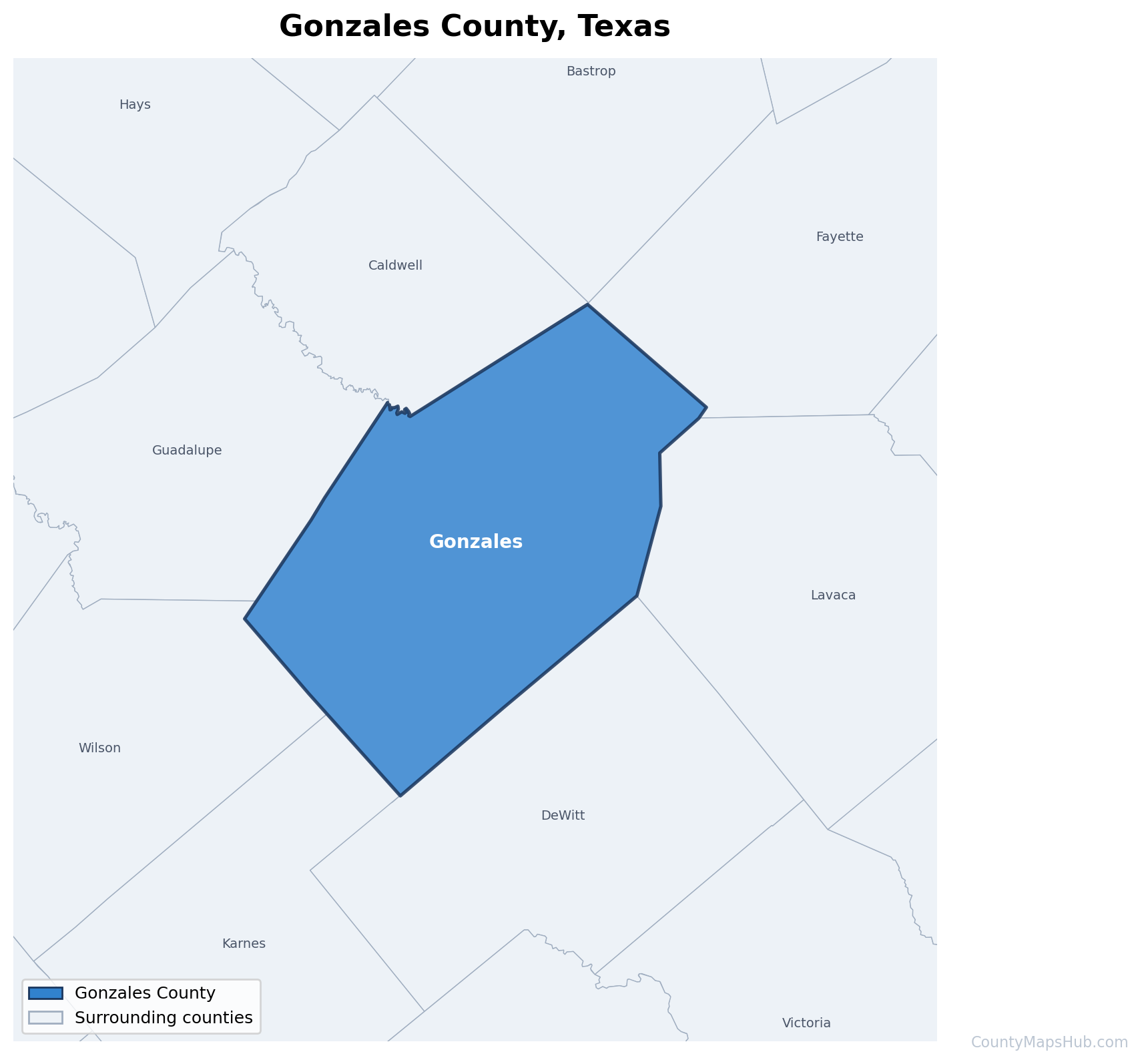
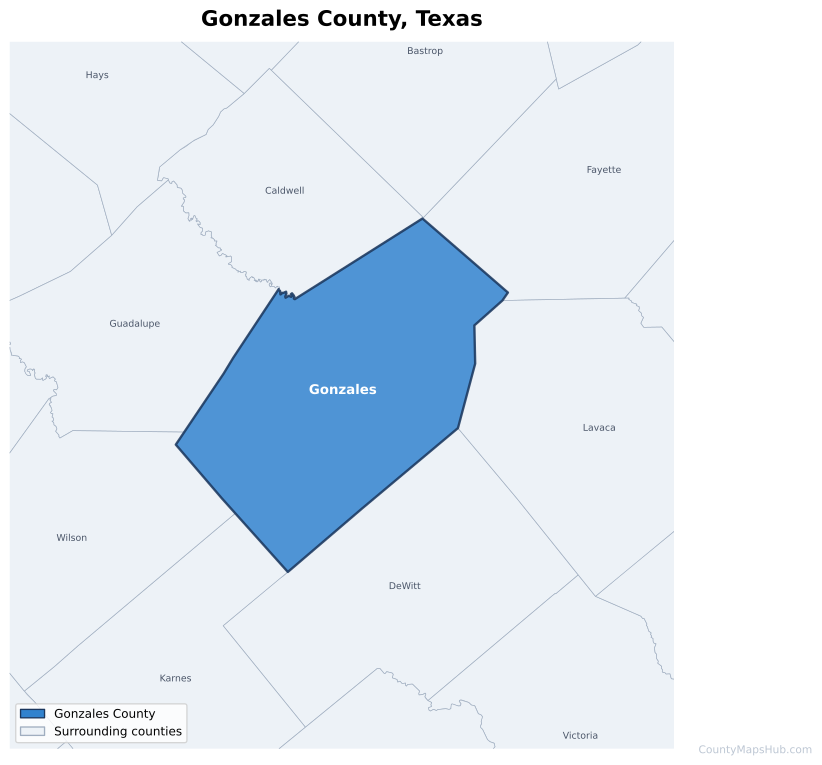
Gonzales County was established in 1836, making it one of the original counties formed during the early years of Texas independence. The county was named after Rafael Gonzales, honoring his contributions to the region’s development during this formative period. As one of Texas’s earliest counties, it witnessed the tumultuous events of the Texas Revolution and the subsequent evolution of the state.
Throughout the 19th and 20th centuries, the county developed as an agricultural region, with settlers drawn to its fertile lands and favorable location in South Central Texas. The county’s strategic position contributed to its growth as communities established themselves along transportation routes. Over the decades, the area balanced agricultural traditions with gradual modernization, maintaining its historical character while adapting to changing economic conditions.
Population
As of the 2020 Census, Gonzales County had a population of 19,653 residents spread across its 1,066 square miles. This population density reflects the county’s primarily rural character, with communities distributed throughout the area. The county seat serves as the main population center, providing governmental services and commercial activity for surrounding areas. The population represents a mix of long-established families and newer residents drawn to the region’s affordability and small-town atmosphere. The demographic composition reflects broader trends seen across rural Texas counties, with a blend of agricultural workers, small business owners, and service industry employees contributing to the local economy.
Climate
Gonzales County experiences a humid subtropical climate typical of South Central Texas, characterized by hot summers and mild winters. The region receives moderate rainfall throughout the year, with precipitation patterns supporting both agricultural activities and natural vegetation. Summer temperatures regularly reach into the 90s Fahrenheit, while winter months remain relatively temperate with occasional cold fronts bringing brief periods of cooler weather.
The humid subtropical conditions create a long growing season that has historically benefited farming and ranching operations. Spring and fall offer particularly pleasant weather, with comfortable temperatures and occasional rainfall. The climate supports diverse ecosystems, including grasslands and mixed vegetation, while also requiring residents to prepare for occasional severe weather events common to the Texas Gulf Coast region.
Tourist Attractions
Gonzales County offers visitors an authentic rural Texas experience with opportunities to explore the region’s historical heritage. The county features various historical sites and markers that commemorate its role in early Texas history, particularly relating to the revolutionary period. Visitors interested in 19th-century Texas can explore museums and preserved structures that tell the story of frontier life and community development.
Outdoor recreation opportunities abound throughout the county’s landscapes, with areas suitable for hunting, fishing, and wildlife observation. The rural setting provides a peaceful escape for those seeking to experience small-town Texas culture. Local events throughout the year celebrate the county’s agricultural heritage and community traditions, offering authentic glimpses into regional life. Antique shops, local eateries serving traditional Texas cuisine, and scenic drives through the countryside round out the visitor experience.
Culture
The cultural fabric of Gonzales County reflects its deep Texas roots and agricultural heritage. Community life centers around traditional values of self-reliance, neighborliness, and pride in local history. Churches play a significant role in social organization, and community gatherings often revolve around seasonal celebrations and agricultural cycles. The county maintains strong connections to its ranching and farming past, even as economic diversification gradually reshapes the local landscape.
Regional cuisine emphasizes Texas barbecue, Tex-Mex flavors, and home-style cooking that reflects the area’s cultural influences. High school sports, particularly football, serve as important community focal points bringing residents together. Local craftsmanship, including leatherwork and metalworking traditions, continues in some areas. The cultural atmosphere balances respect for historical traditions with the practical needs of contemporary rural life, creating a distinctly Texan character that appeals to both long-time residents and those seeking connections to the state’s heritage.