Grayson County
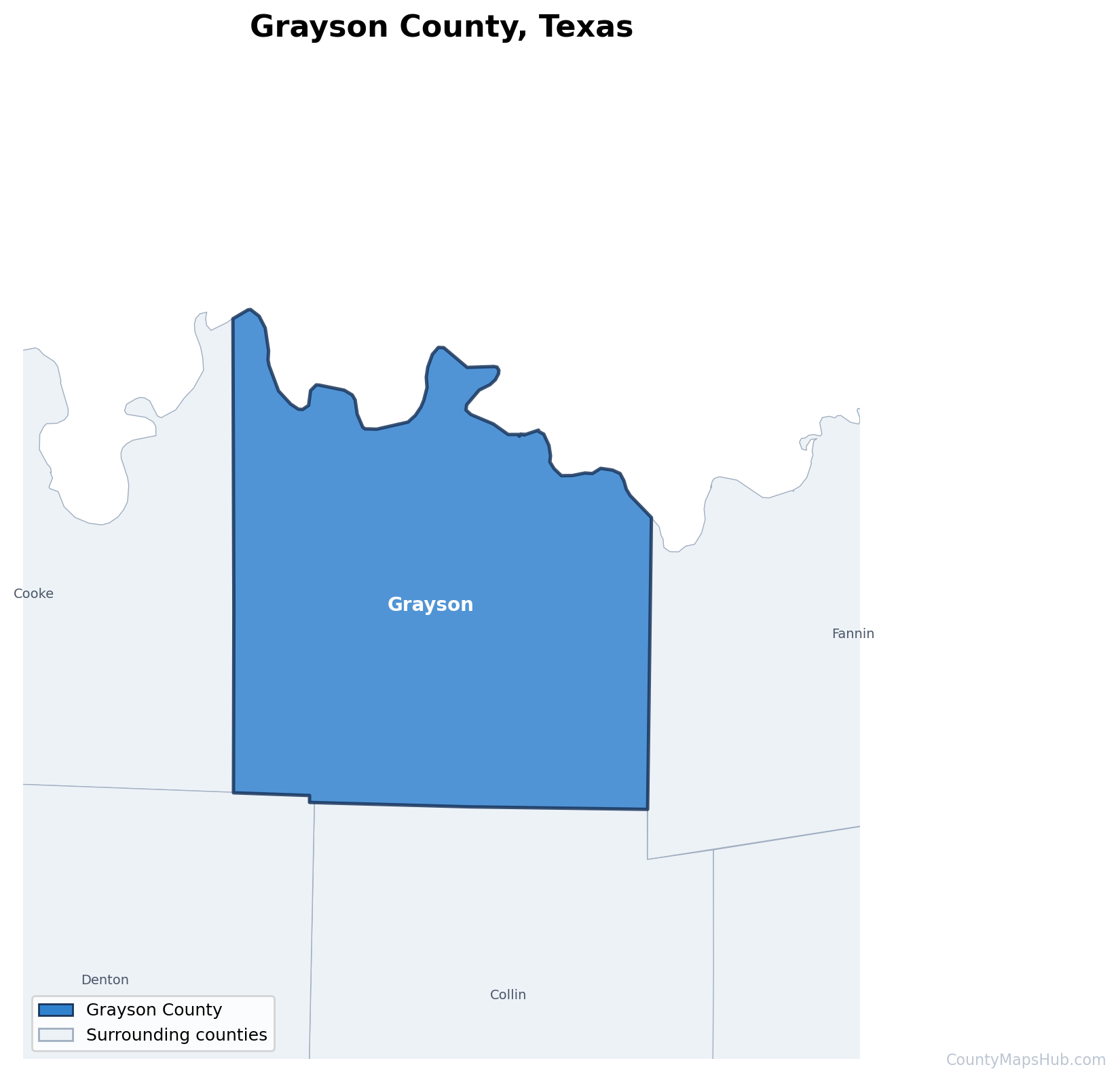
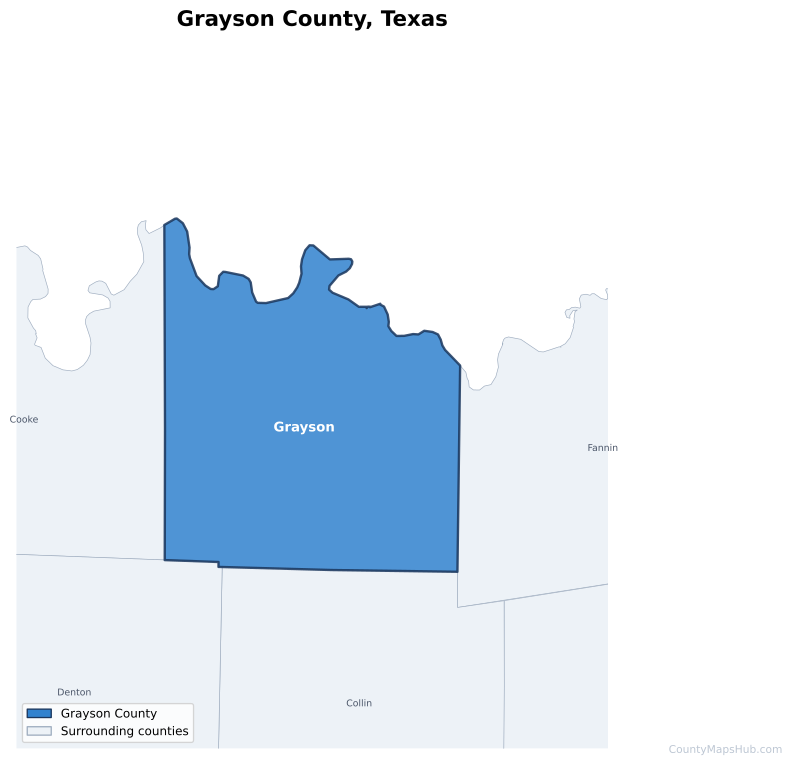
About
Grayson County was established in 1846 and named after Peter Wagener Grayson, an early Texas attorney general and signer of the Texas Declaration of Independence. The county developed during the mid-19th century as settlers moved into North Texas, establishing communities along waterways and transportation routes. Sherman, designated as the county seat, became a central hub for regional commerce and governance.
Throughout the latter half of the 19th century, the county’s economy grew with the arrival of railroads, which facilitated agricultural trade and connected the region to larger markets. Cotton production and cattle ranching became important economic activities. The county weathered the challenges of Reconstruction and continued to develop its agricultural and commercial infrastructure into the 20th century, evolving from a frontier territory into an established community with diversified economic interests.
Population
According to the 2020 census, Grayson County had a population of 135,543 residents across its 939 square miles. This population density reflects a blend of urban centers and rural communities that characterize North Texas counties. The demographic composition includes families with deep generational roots in the region as well as newer residents drawn by economic opportunities and the area’s proximity to larger metropolitan areas. The county seat of Sherman serves as the primary population center, providing governmental services, educational institutions, and commercial activities for residents throughout the county.
Climate
Grayson County experiences a humid subtropical climate typical of North Texas, characterized by hot summers and mild to cool winters. Summer temperatures frequently reach into the 90s Fahrenheit, while winter temperatures generally range from the 30s to 50s, with occasional cold fronts bringing freezing conditions. The region receives moderate rainfall distributed throughout the year, with spring months often seeing the highest precipitation levels.
Severe weather, including thunderstorms and occasional tornadoes, can occur during spring and early summer months. The growing season is relatively long, supporting agricultural activities that have historically been important to the county’s economy. Autumn and spring are generally pleasant seasons with moderate temperatures, making them popular times for outdoor activities and community events.
Tourist Attractions
Visitors to Grayson County can explore a variety of attractions that reflect North Texas heritage and natural landscapes. The region offers opportunities for outdoor recreation, including lakes and waterways suitable for fishing, boating, and water sports. Parks and natural areas provide settings for hiking, picnicking, and wildlife observation, appealing to nature enthusiasts and families seeking outdoor experiences.
The county’s historical character is preserved through local museums and heritage sites that showcase pioneer life, regional development, and cultural evolution. Downtown areas feature historic architecture, antique shops, and local businesses that reflect the community’s character. Seasonal festivals and community events celebrate regional traditions, agricultural heritage, and local arts, providing visitors with authentic experiences of North Texas culture and hospitality throughout the year.
Culture
Grayson County’s cultural identity reflects its North Texas heritage, blending Southern traditions with Western influences characteristic of the region. The community values its agricultural roots while embracing modern development and educational advancement. Local traditions often center around family, faith, and community involvement, with churches and civic organizations playing important roles in social life.
The arts community includes local theater groups, musical performances, and visual arts exhibitions that provide cultural enrichment. Regional cuisine features traditional Southern cooking alongside Texas barbecue and Tex-Mex influences, reflecting the state’s diverse culinary heritage. Educational institutions contribute to cultural life through sporting events, performances, and community programs. The county maintains connections to its past while fostering a welcoming environment for diverse populations, creating a cultural landscape that honors tradition while looking toward the future.