Hall County
About
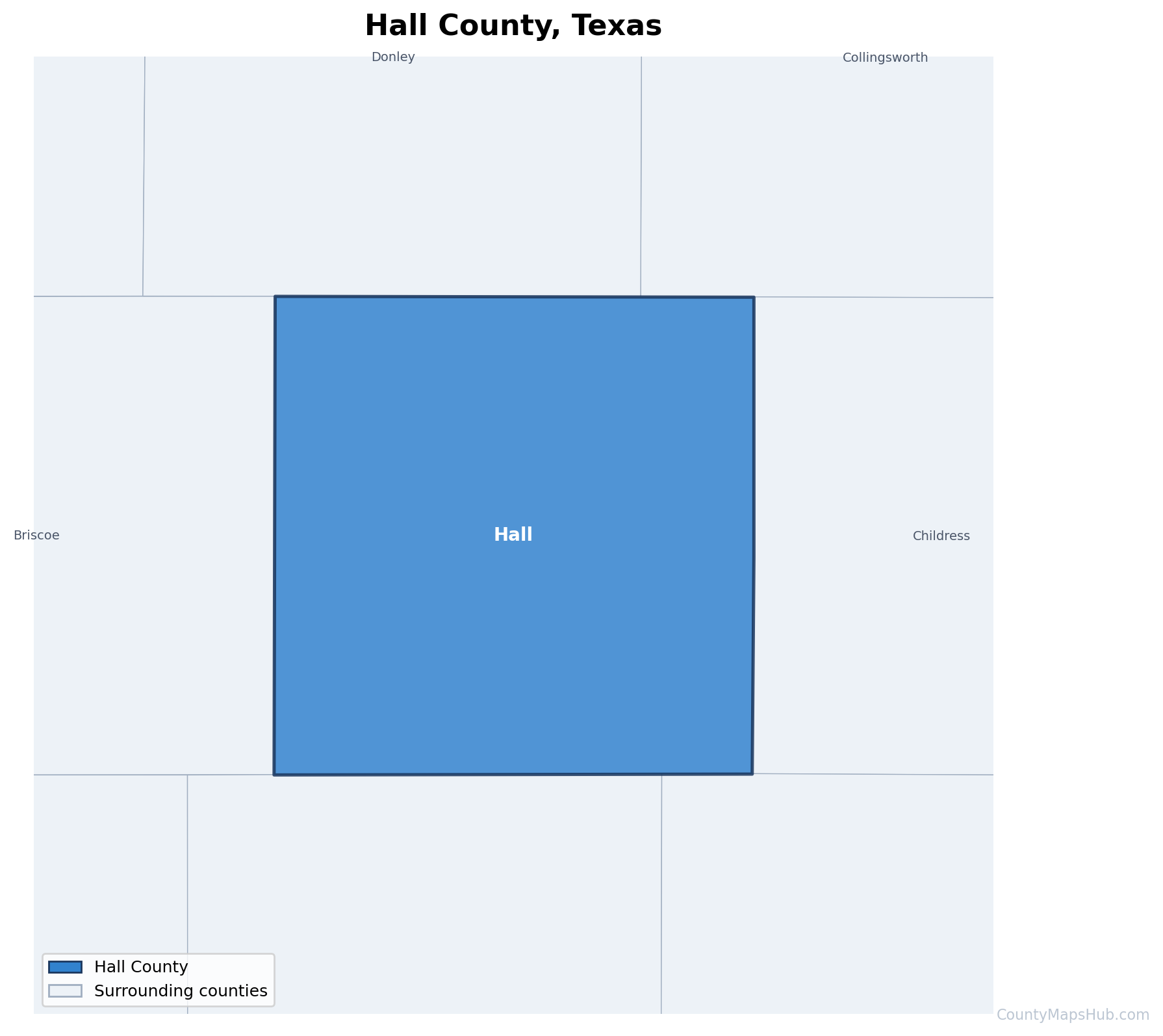
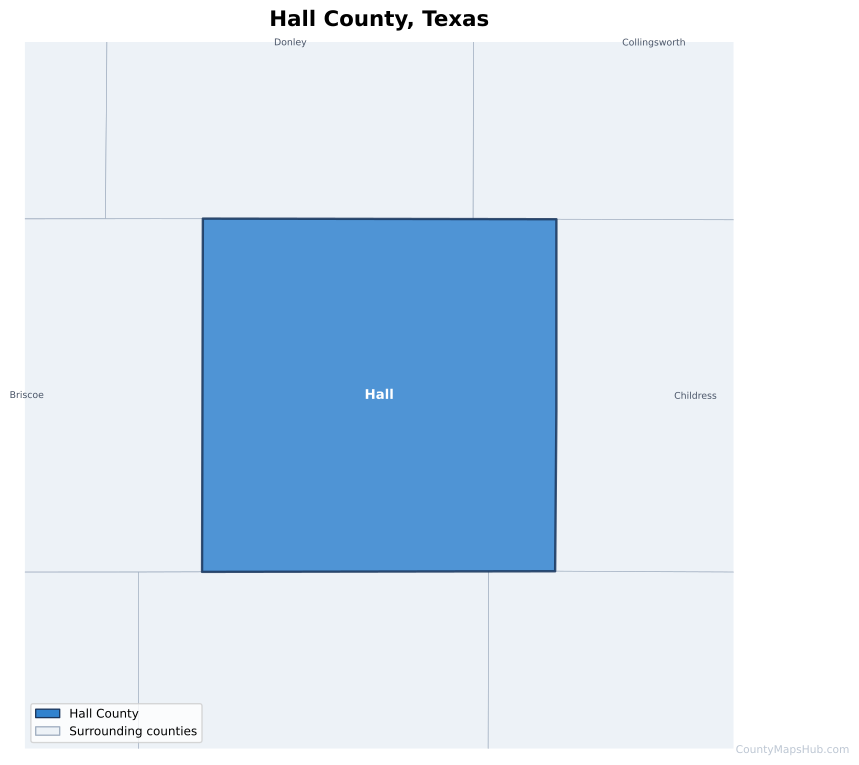
Hall County, Texas was established in 1876 during a period of westward expansion and settlement across the Texas Panhandle region. The county was named after Warren D.C. Hall, whose contributions to Texas history are commemorated through this geographic designation. Memphis serves as the county seat, anchoring local government and community life since the county’s organization.
Like many counties in this region of Texas, Hall County’s early development was shaped by ranching, agriculture, and the challenges of settling semi-arid lands. The late 19th and early 20th centuries saw the arrival of railroads and the establishment of farming communities that adapted to the demanding climate and terrain. Over the decades, the county has maintained its agricultural heritage while navigating the economic shifts common to rural Texas communities.
Population
According to the 2020 Census, Hall County has a population of 2,870 residents spread across its 903 square miles. This results in a low population density characteristic of rural Texas Panhandle counties, where wide-open spaces and agricultural land dominate the landscape. The small population reflects broader demographic trends in rural America, where residents maintain tight-knit communities centered around agriculture, local businesses, and shared regional identity. The county’s modest population contributes to a quiet, rural lifestyle that appeals to those seeking distance from urban centers.
Climate
Hall County experiences a semi-arid climate typical of the Texas Panhandle region, characterized by hot summers, mild winters, and limited annual precipitation. This climate zone presents both opportunities and challenges for agriculture and daily life, with residents adapting to temperature extremes and periodic drought conditions. The area receives most of its rainfall during late spring and early summer, supporting dryland farming and ranching operations that have historically defined the local economy.
Wind is a constant presence in this region, contributing to both the climate character and renewable energy potential. Temperature variations between seasons can be significant, with summer highs often exceeding 90 degrees Fahrenheit and winter temperatures occasionally dipping below freezing. The semi-arid conditions have shaped the native vegetation, architecture, and agricultural practices throughout the county’s history.
Tourist Attractions
Visitors to Hall County can experience the authentic character of rural Texas Panhandle life, where agriculture and ranching traditions remain vibrant. The county seat offers a glimpse into small-town Texas culture, with local establishments providing hospitality and regional cuisine. The surrounding landscapes feature the distinctive topography of the region, including rolling plains and open skies that create dramatic sunset vistas.
Outdoor enthusiasts may appreciate the wide-open spaces suitable for activities such as bird watching, photography, and exploring the natural environment characteristic of semi-arid Texas. The county’s rural roads provide opportunities for scenic drives through agricultural lands and ranch country. Those interested in Western heritage and the history of Texas settlement will find the area’s authentic rural character a draw, though visitors should be prepared for a quiet, understated experience focused on natural landscapes rather than commercial attractions.
Culture
Hall County embodies the cultural traditions of rural Texas Panhandle communities, where agricultural heritage, neighborly values, and self-reliance form the foundation of local identity. The lifestyle reflects generations of adaptation to semi-arid conditions and the rhythms of farming and ranching. Community gatherings, local events, and civic organizations play important roles in maintaining social cohesion in this sparsely populated region.
The cultural landscape is shaped by the practical demands of rural life, with residents often possessing diverse skills necessary for maintaining property, equipment, and livestock. Regional cuisine reflects both Southern and Western influences, with barbecue and hearty comfort foods being staples. The county’s culture values hard work, land stewardship, and the preservation of agricultural traditions that have sustained communities through economic changes and environmental challenges over nearly 150 years since the county’s establishment.