Hansford County
About
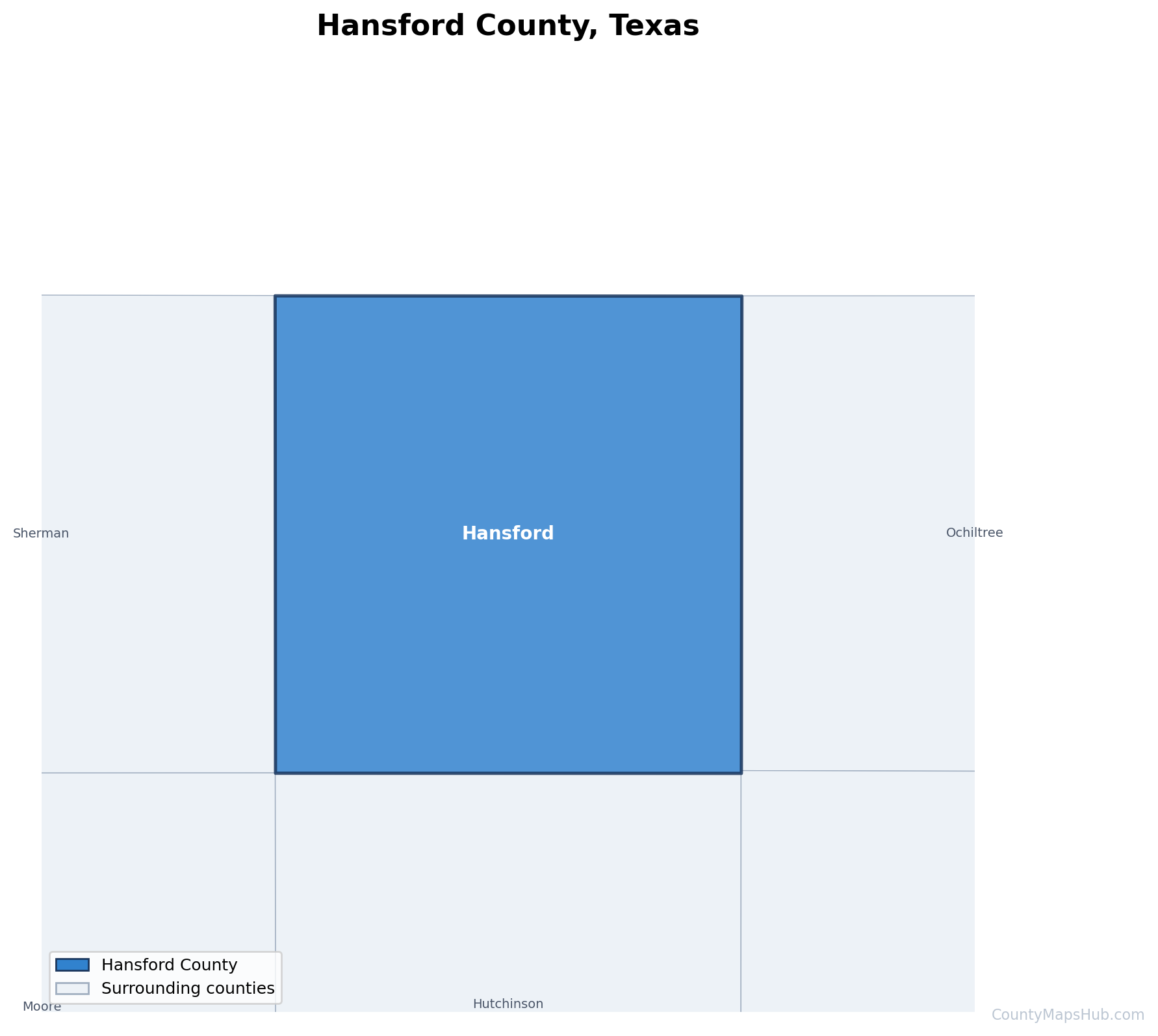
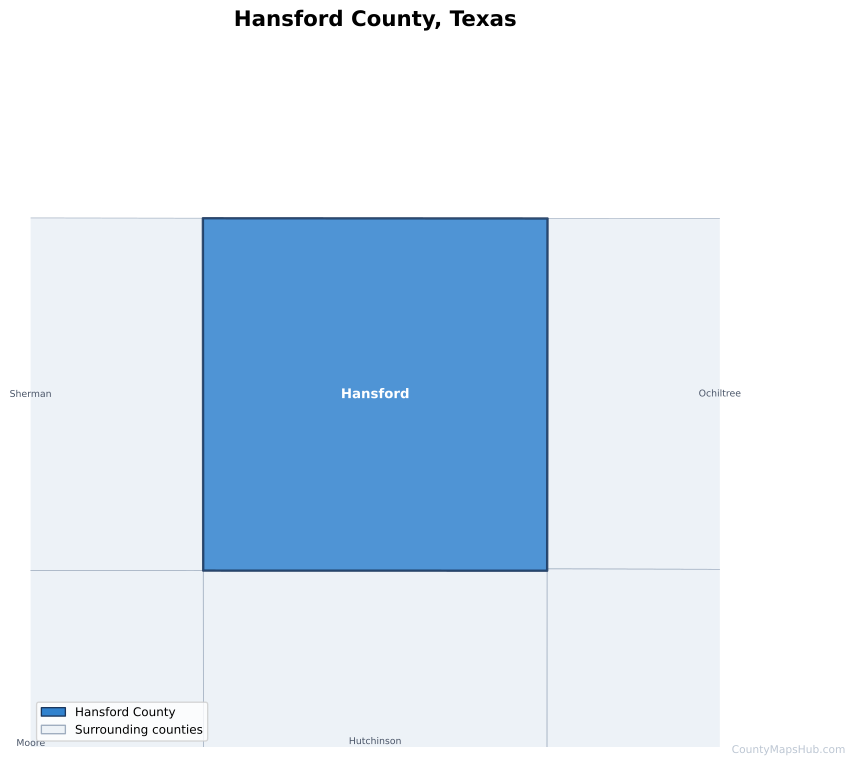
Hansford County was established in 1876 and named after John M. Hansford, honoring his contributions to the region. Located in the Texas Panhandle, the county reflects the broader settlement patterns of this high plains area during the late 19th century. Early development was shaped by ranching and agricultural activities that took advantage of the expansive grasslands characteristic of the region.
The county seat is located in Spearman, which has served as the administrative and commercial center for the county’s residents. Like many Texas Panhandle counties, Hansford’s history is intertwined with the challenges and opportunities of farming and ranching in a semi-arid environment. The community adapted to the demanding climate and landscape, developing agricultural practices suited to the local conditions and contributing to the economic foundation that continues today.
Population
According to 2020 census data, Hansford County has a population of 5,285 residents spread across its 920 square miles. This population density reflects the rural character typical of Texas Panhandle counties, where vast agricultural lands dominate the landscape. The community maintains a small-town atmosphere centered around Spearman, with residents engaged primarily in agriculture and related industries. The population has remained relatively stable over recent decades, reflecting the county’s established agricultural economy and rural lifestyle that continues to define the region.
Climate
Hansford County experiences a semi-arid climate characteristic of the Texas High Plains region. This climate zone features hot summers and cold winters, with temperature variations typical of continental climates at this latitude and elevation. Precipitation is limited and occurs primarily during the spring and early summer months, which influences agricultural practices throughout the county.
The semi-arid conditions require careful water management and drought-resistant farming techniques. Residents experience strong winds common to the open plains, along with occasional severe weather including thunderstorms and winter storms. The climate has shaped both the natural vegetation and the types of crops and livestock that thrive in the area, making water conservation and climate adaptation important considerations for the local agricultural economy.
Tourist Attractions
Hansford County offers visitors an authentic experience of Texas Panhandle rural life and wide-open spaces. The expansive landscape provides opportunities for those interested in observing the natural environment of the high plains, including native grasslands and wildlife adapted to semi-arid conditions. Visitors can appreciate the vast horizons and big skies that define this region of Texas.
The area appeals to travelers interested in agricultural heritage and small-town Texas culture. Local events and community gatherings throughout the year showcase the traditions of rural life in the Panhandle. The county’s roads offer scenic drives through working farmland and ranch country, providing glimpses into the ongoing agricultural operations that form the backbone of the local economy. Outdoor enthusiasts may find opportunities for activities suited to the open prairie environment.
Culture
The culture of Hansford County is deeply rooted in agricultural traditions and the values of rural Texas communities. Ranching and farming heritage influences social life, with community events often centered around agricultural seasons and livestock activities. The small population fosters close-knit relationships where neighbors know one another and community cooperation remains important.
Local culture reflects the broader Texas Panhandle identity, characterized by self-reliance, hard work, and adaptation to the challenging semi-arid environment. Religious institutions and schools serve as important gathering places for the community. The lifestyle emphasizes practical skills related to agriculture and land management, passed down through generations. Residents take pride in their heritage and the resilience required to thrive in this demanding but rewarding landscape, maintaining traditions while adapting to modern agricultural practices and technologies.