Hardeman County
About
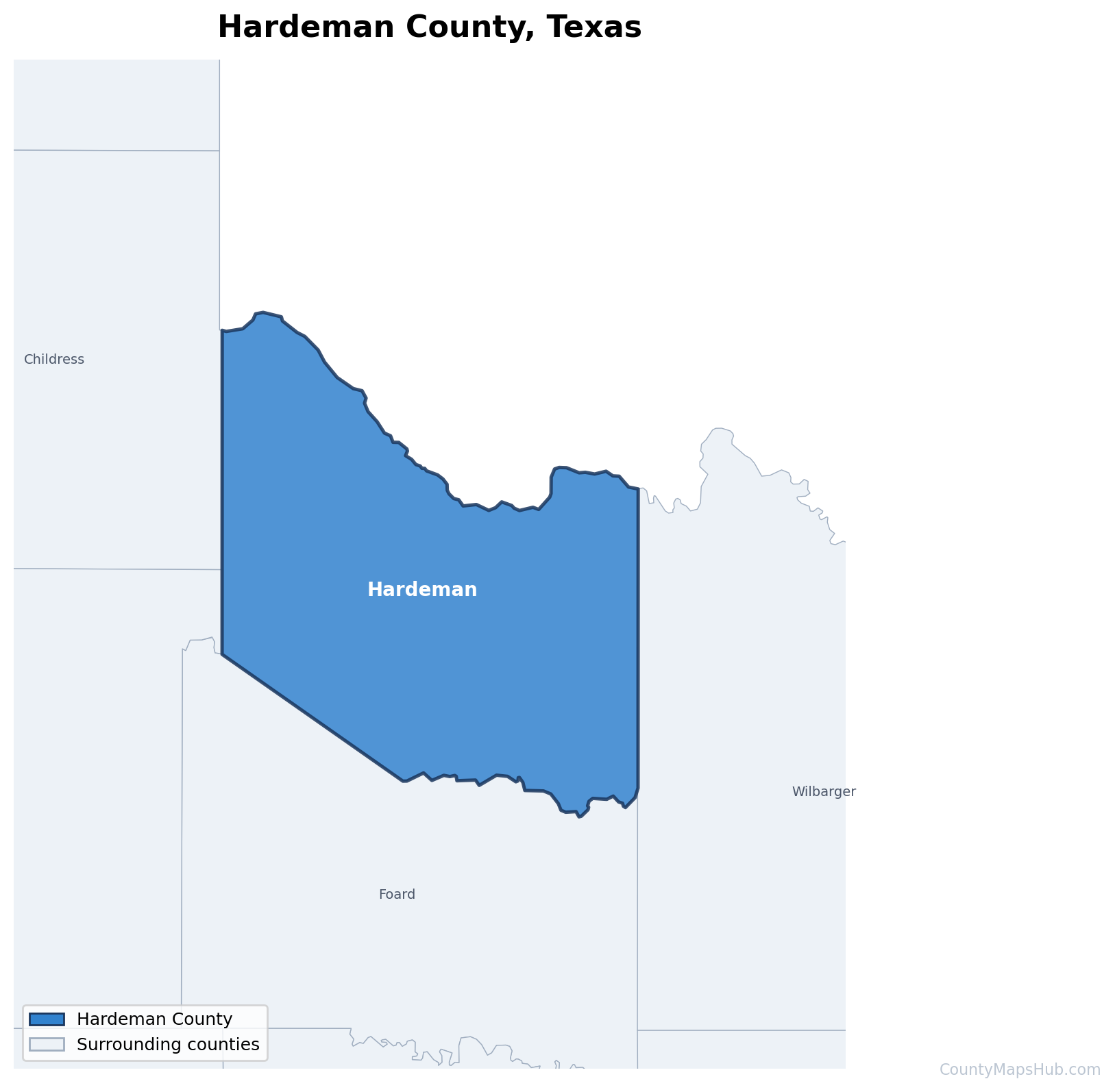
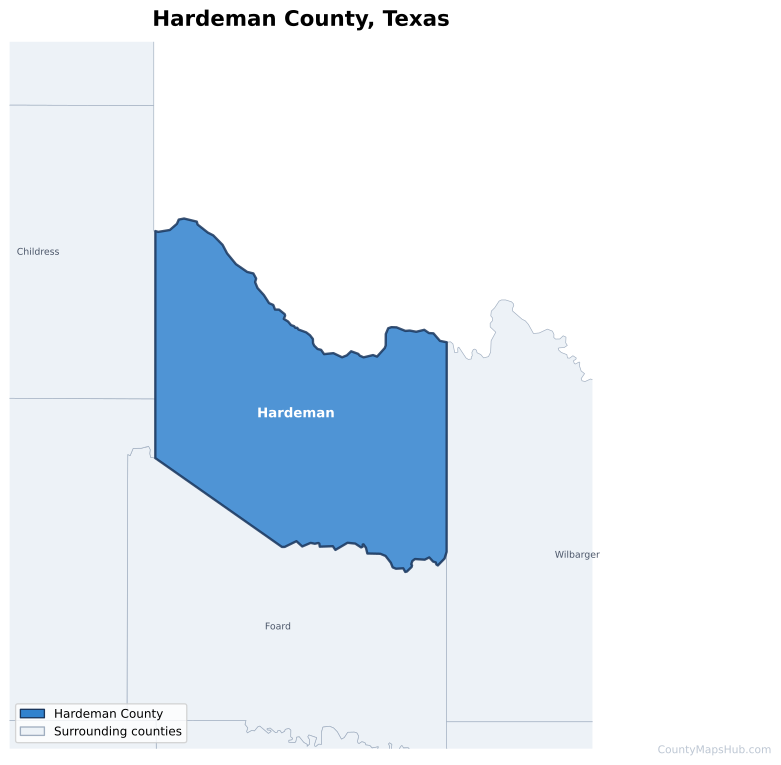
Hardeman County was established in 1858 and named after Bailey and Thomas Hardeman, notable figures in early Texas history. The county seat, Quanah, serves as the administrative and historical center of this North Texas region. Located in an area that was once part of the frontier, the county developed during a period when settlement patterns were expanding westward across the state.
The region’s early development was shaped by the challenges of the semi-arid environment and the need to establish sustainable communities in this part of Texas. Over the decades, the county evolved from its frontier origins into an established agricultural region, with ranching and farming playing significant roles in the local economy. The historical legacy of the county reflects the broader story of North Texas settlement and the adaptation of communities to the environmental conditions of the area.
Population
As of the 2020 census, Hardeman County has a population of 3,631 residents spread across its 695 square miles. This population density reflects the rural character typical of many North Texas counties in semi-arid regions. The county seat of Quanah serves as the primary population center, providing essential services and serving as a hub for the surrounding rural areas. The relatively small population size contributes to a close-knit community atmosphere where residents often know their neighbors and local institutions play central roles in daily life.
Climate
Hardeman County experiences a semi-arid climate characterized by hot summers and mild to cool winters, typical of this part of North Texas. Precipitation levels are moderate and can vary significantly from year to year, influencing agricultural activities and water resource management throughout the region. Summer temperatures often climb well into the upper 90s, while winter months bring cooler conditions with occasional freezing temperatures.
The semi-arid conditions mean that residents and farmers must carefully manage water resources and adapt their practices to periodic drought conditions. The climate supports grasslands and hardy vegetation suited to lower moisture levels, and these environmental factors have historically shaped land use patterns, including ranching and dryland farming operations that remain important to the local economy.
Tourist Attractions
Visitors to Hardeman County can experience the authentic character of rural North Texas, where wide open spaces and agricultural landscapes dominate the scenery. The county offers opportunities for those interested in exploring small-town Texas life and understanding the region’s frontier heritage. Outdoor enthusiasts may find opportunities for activities suited to the semi-arid environment, including wildlife observation and appreciation of the natural prairie landscapes.
The county seat provides access to local historical sites and community landmarks that reflect the area’s past. Travelers interested in Texas history and the development of frontier communities will find the region’s heritage compelling. The surrounding rural areas showcase the agricultural traditions that have sustained the county for generations, offering glimpses into ranching and farming operations that continue to define the local economy and way of life.
Culture
Hardeman County’s culture reflects the values and traditions of rural North Texas communities, where agricultural heritage and self-reliance remain important aspects of local identity. The social fabric is woven from generations of families who have adapted to the challenges of semi-arid living, creating strong community bonds and shared traditions. Local events and gatherings often center around agricultural seasons and community celebrations that bring residents together.
The cultural landscape is characterized by small-town values, where community institutions such as schools, churches, and civic organizations play vital roles in maintaining social cohesion. Traditional Texas hospitality is evident in daily interactions, and the slower pace of life offers a contrast to urban centers. The heritage of ranching and farming continues to influence local customs, language, and community priorities, preserving a way of life that honors the county’s historical roots while adapting to contemporary challenges.