Harris County
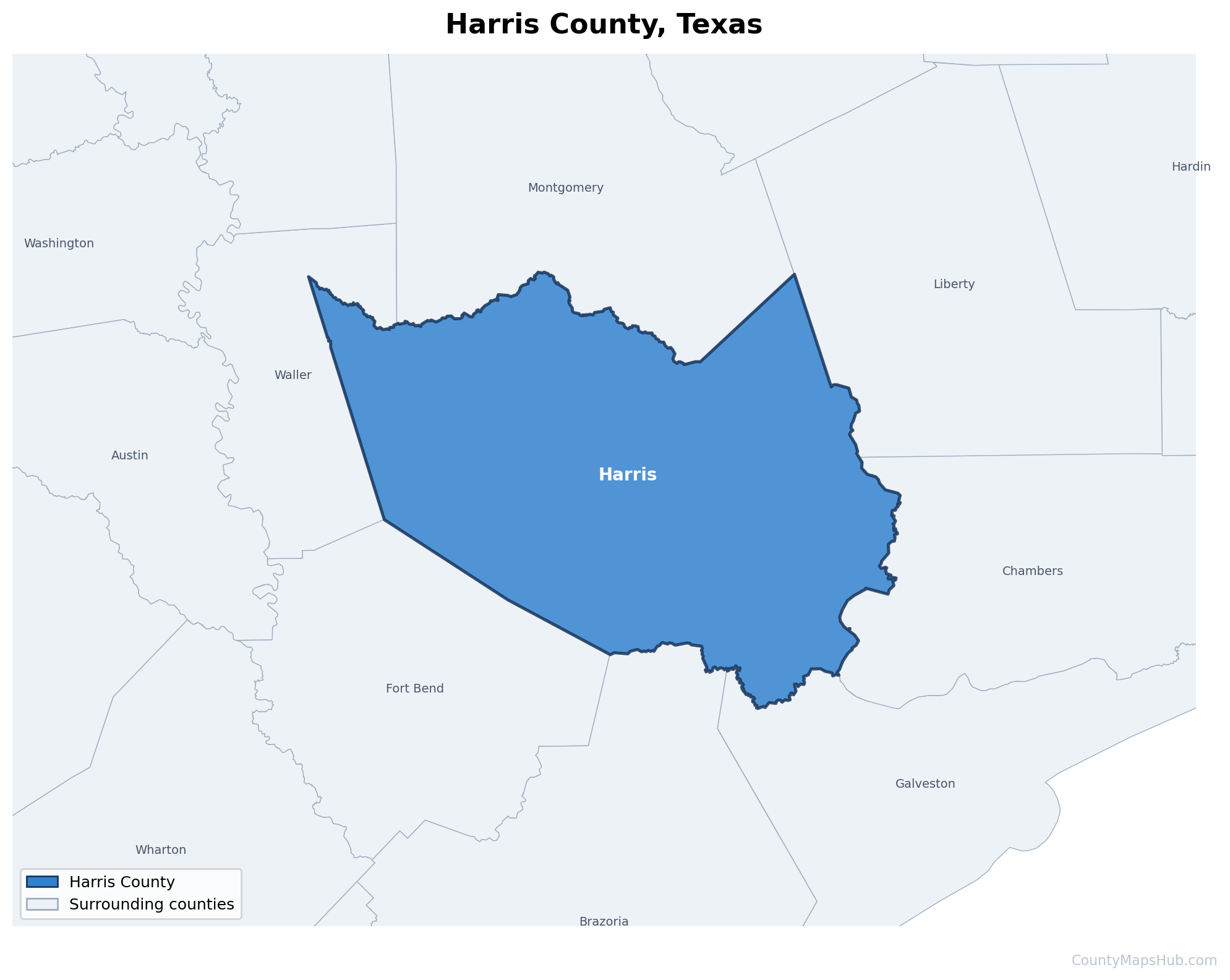
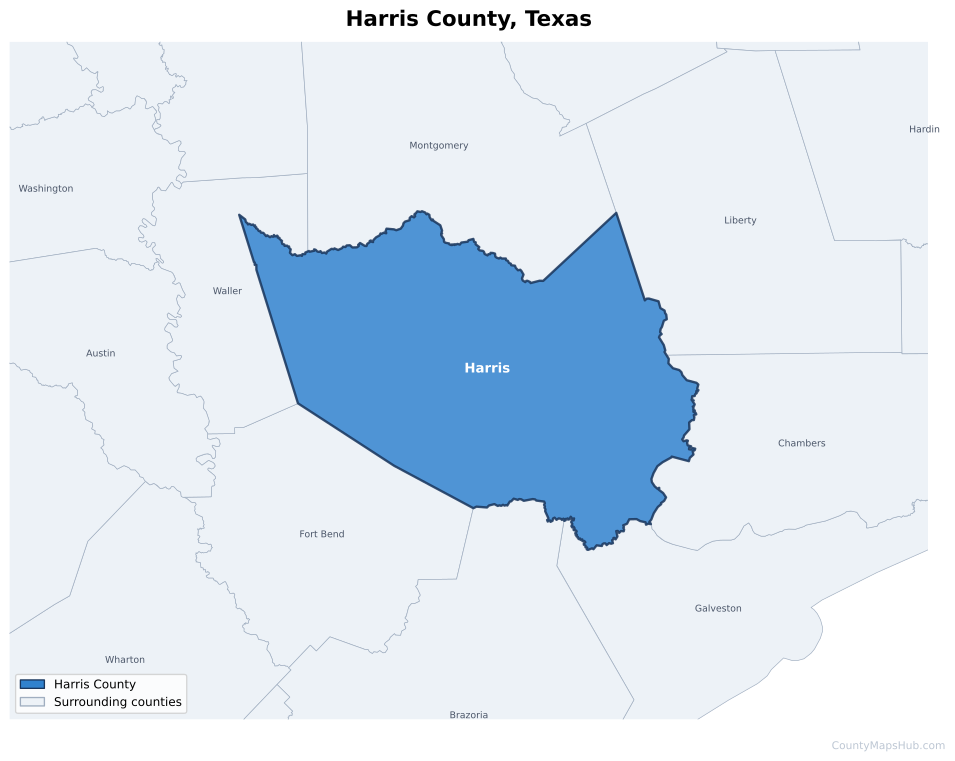
About
Harris County was established in 1836, the same year Texas gained independence from Mexico, making it one of the original counties of the Republic of Texas. The county was named after John Richardson Harris, an early settler and entrepreneur who founded the trading post that would eventually grow into the city of Houston. Harris played a pivotal role in attracting settlers to the region along Buffalo Bayou, establishing the foundations for what would become one of the most populous counties in the United States.
Throughout the 19th and 20th centuries, the county’s development was closely tied to its strategic location along Buffalo Bayou and the subsequent creation of the Port of Houston. This maritime gateway transformed the region from a frontier settlement into a major center of commerce and industry. The discovery of oil in Southeast Texas further accelerated growth, establishing the county as a hub for the energy industry. Over the decades, the county has evolved into a diverse economic powerhouse, with significant contributions from healthcare, aerospace, and international trade sectors.
Population
As of 2020, Harris County had a population of 4,731,145 residents, making it the most populous county in Texas and among the largest in the United States. This substantial population reflects more than a century of sustained growth driven by economic opportunity and migration. The county’s residents are distributed across several major cities including Houston, Pasadena, Baytown, and Deer Park, along with numerous smaller communities. The large and diverse population base supports a complex economy and creates a vibrant, multicultural environment that characterizes the modern county.
Climate
Harris County experiences a humid subtropical climate characterized by hot, humid summers and mild winters. Summer temperatures frequently reach the 90s Fahrenheit, with high humidity levels creating a muggy atmosphere that is typical of Gulf Coast regions. The area receives abundant rainfall throughout the year, with the wettest months typically occurring in late spring and early fall. Winters are generally mild, with temperatures rarely dropping below freezing for extended periods.
The county’s proximity to the Gulf of Mexico influences its weather patterns significantly, bringing moisture-laden air and the potential for tropical storms and hurricanes during the Atlantic hurricane season from June through November. Residents and visitors should be prepared for sudden thunderstorms and occasional severe weather. The warm climate supports lush vegetation and allows for year-round outdoor activities, though the summer heat and humidity can be intense for those unaccustomed to subtropical conditions.
Tourist Attractions
Harris County offers diverse attractions centered around its major urban areas and natural features. Buffalo Bayou serves as a scenic waterway that has been developed with parks and trails, providing recreational opportunities for kayaking, hiking, and cycling. The Port of Houston stands as one of the busiest ports in the nation and offers educational tours that showcase the scale of international maritime commerce. The Texas Medical Center represents the world’s largest medical complex and, while primarily a healthcare facility, contributes to the county’s reputation as a center of medical innovation and research.
Visitors to the county can explore numerous museums covering art, natural history, and science, along with professional sports venues, theaters, and performing arts centers concentrated in the major cities. The region’s parks and green spaces offer respite from urban development, while diverse dining options reflect the multicultural character of the population. Shopping districts range from large regional malls to unique local boutiques. The county’s attractions appeal to a wide range of interests, from families seeking educational experiences to business travelers and cultural enthusiasts.
Culture
Harris County’s cultural landscape reflects the diverse backgrounds of its millions of residents, creating a rich tapestry of traditions, languages, and customs. The region has significant Hispanic, African American, Asian, and European communities, each contributing to the county’s cultural vitality through festivals, cuisine, religious institutions, and community organizations. This diversity is evident in the variety of restaurants, markets, and cultural centers found throughout the area, offering authentic experiences from around the world.
The arts scene in the county encompasses professional theater companies, symphony orchestras, opera, ballet, and contemporary performance spaces that attract internationally recognized artists. Local galleries and public art installations contribute to the visual arts community. Educational institutions and libraries serve as cultural hubs, hosting lectures, exhibitions, and community programs. The county’s cultural identity balances its Western heritage with its role as an international gateway, creating a dynamic environment where tradition and innovation coexist. Annual celebrations and community events throughout the year showcase this cultural diversity and foster connections among residents.