Hartley County
About
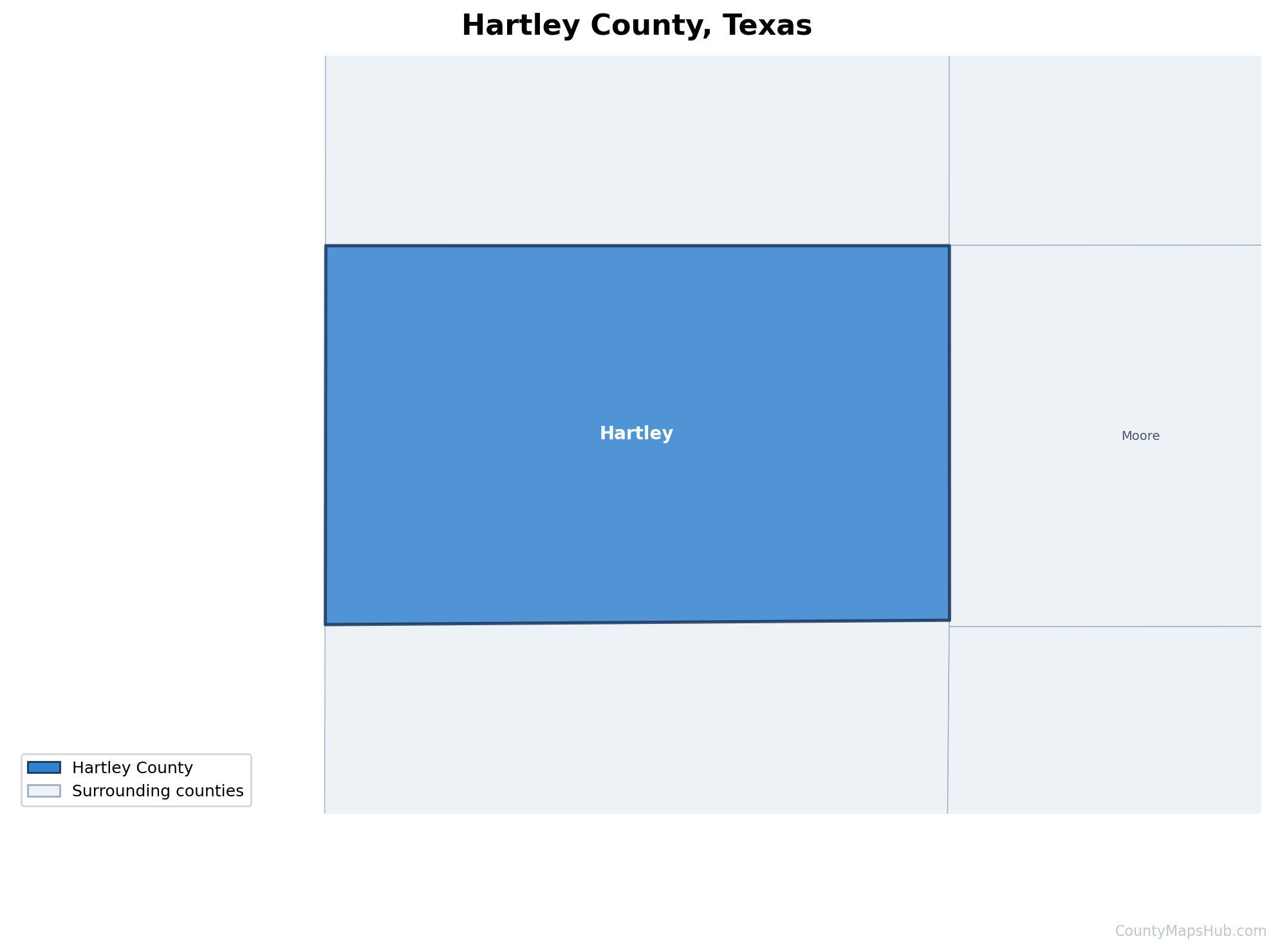
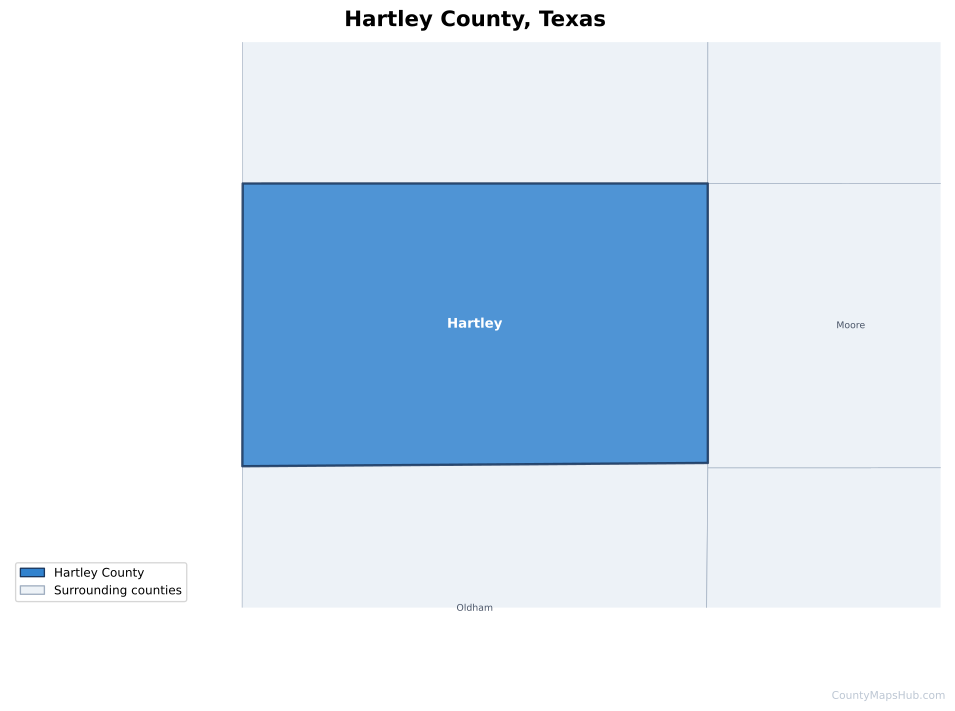
Hartley County was established in 1876 and named after Oliver Cromwell Hartley, honoring his contributions to the region. The county reflects the broader settlement patterns of the Texas Panhandle, where ranching and agriculture became the economic foundations following organized county government. Located in the northwestern portion of the state, the area witnessed the transformation from open range to established communities as settlers adapted to the challenges of the semi-arid landscape.
The development of Channing as the county seat provided a central location for government services and commerce. Throughout its history, the county has maintained its agricultural character while adapting to changing economic conditions. The late nineteenth and early twentieth centuries saw the establishment of transportation routes and infrastructure that connected this remote region to broader markets, shaping the community development patterns that persist today.
Population
According to 2020 census data, Hartley County has a population of 5,576 residents spread across its 1,463 square miles. This relatively low population density reflects the county’s rural character and its economy centered on agriculture and ranching. The small population is typical of Texas Panhandle counties where vast expanses of land support agricultural operations rather than dense urban development. Channing serves as the county seat, providing essential services to residents throughout the region. The population distribution reflects settlement patterns common to semi-arid regions where communities cluster around available resources and transportation corridors.
Climate
Hartley County experiences a semi-arid climate characteristic of the Texas Panhandle, with low annual precipitation and significant temperature variations between seasons. Summers are warm with long daylight hours, while winters can bring cold temperatures and occasional snow. The semi-arid conditions mean that rainfall is limited and often occurs in intense bursts rather than steady precipitation throughout the year.
The climate significantly influences local agriculture, with farming and ranching practices adapted to water conservation and drought-resistant crops. Wide temperature swings between day and night are common, and the region experiences moderate to strong winds, particularly during spring months. These climatic conditions have shaped both the natural landscape and human activities in the county since its establishment.
Tourist Attractions
Visitors to Hartley County can experience the authentic character of the Texas Panhandle with its expansive landscapes and agricultural heritage. The region offers opportunities for those interested in rural Texas history and the pioneering spirit that shaped the area. The wide-open spaces provide striking views of the high plains, and the clear skies make for excellent stargazing conditions away from urban light pollution.
Outdoor enthusiasts may find opportunities for activities suited to the prairie environment, including wildlife observation and photography of the distinctive semi-arid landscape. The county’s rural roads offer scenic drives through working ranch land, providing glimpses into the agricultural operations that have sustained the region for generations. Visitors interested in small-town Texas culture will find Channing representative of the close-knit communities that characterize the Panhandle region.
Culture
Hartley County embodies the ranching and agricultural traditions that define much of the Texas Panhandle. The culture reflects values of self-reliance, community cooperation, and adaptation to the challenging semi-arid environment. Local traditions often center around agricultural cycles and the livestock industry, with community events bringing together residents from across the county’s expansive geography.
The cultural identity is shaped by the county’s frontier heritage and the ongoing importance of agriculture to the local economy. Residents maintain connections to the pioneering history while adapting to modern technological advances in farming and ranching. The small population fosters strong community bonds, where neighbors support one another and local institutions serve as gathering places. This cultural landscape represents a continuation of settlement patterns established when the county was organized in 1876, preserving aspects of rural Texas life that have largely disappeared in more urbanized areas of the state.