Hays County
About
Hays County was established in 1848, carved from territory during the early years of Texas statehood. Named after John Coffee Hays, a prominent Texas Ranger captain and military officer who played a significant role in the Texas Revolution and the Mexican-American War, the county reflects the frontier heritage of Central Texas. The region’s early development was shaped by its location along important transportation routes and its access to water resources.
The county seat, San Marcos, became the administrative center and developed as a hub for commerce and education in the region. Throughout the 19th and early 20th centuries, the county’s economy was primarily agricultural, with ranching and farming dominating the landscape. The post-World War II era brought gradual changes as the county’s proximity to major urban centers began to influence its growth patterns, leading to increased residential development and diversification of its economic base.
Population
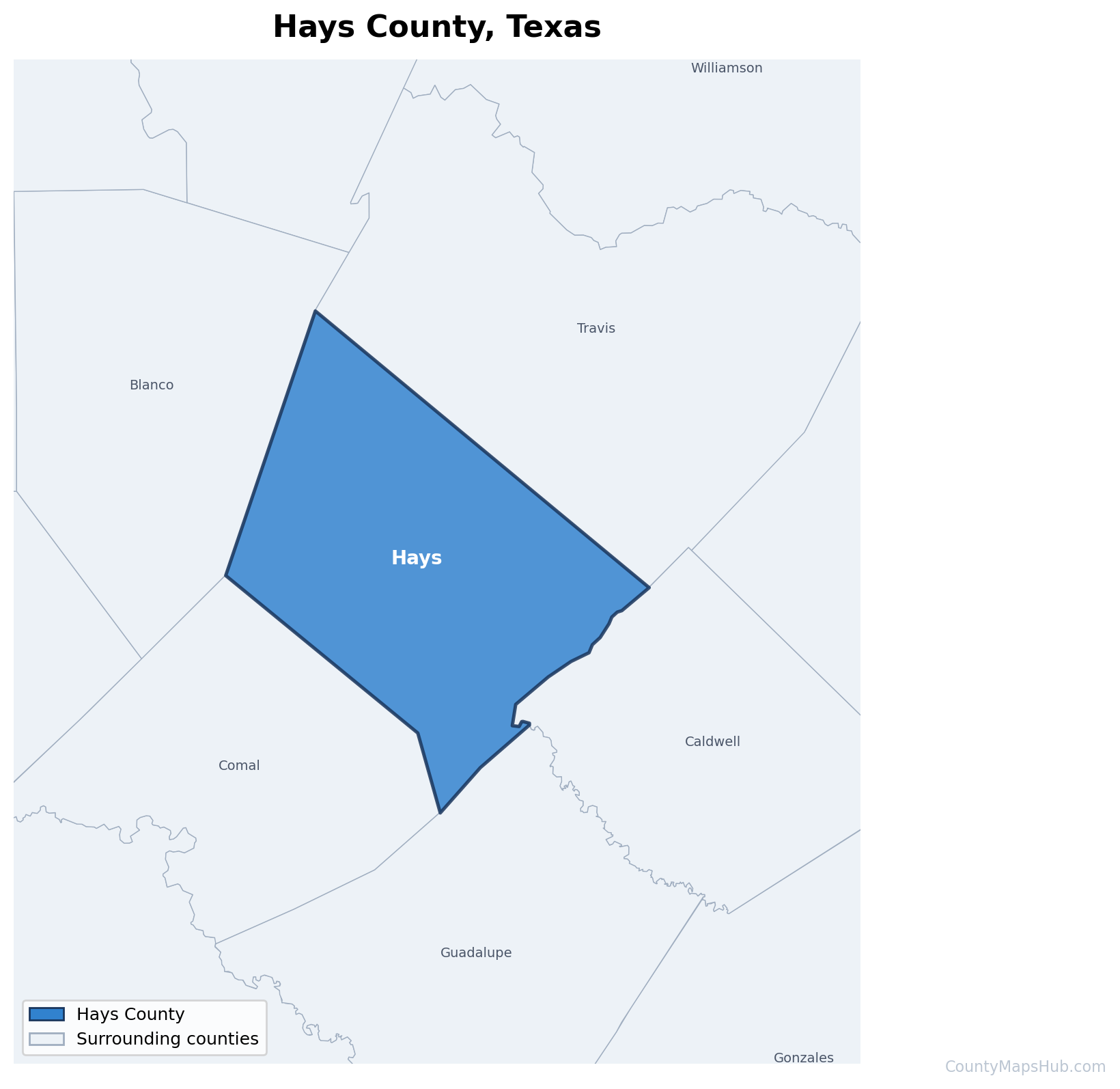
According to the 2020 census, Hays County recorded a population of 241,067 residents, reflecting significant growth that has characterized the region in recent decades. Spanning 678 square miles, the county has experienced demographic shifts driven by its strategic location in Central Texas and its appeal to families and professionals seeking opportunities in the region. The population density and distribution patterns demonstrate the county’s transformation from a predominantly rural area to one with increasing suburban characteristics, particularly in communities connected to regional employment centers and educational institutions.
Climate
Hays County experiences a humid subtropical climate, characterized by hot summers and mild winters typical of Central Texas. Summer temperatures regularly reach into the 90s Fahrenheit, while winter months remain relatively temperate with occasional cold fronts bringing cooler conditions. The region receives moderate rainfall distributed throughout the year, with peak precipitation typically occurring in spring and fall.
The climate supports diverse vegetation and outdoor activities year-round. Spring brings particularly pleasant weather, while summer heat is often moderated by occasional afternoon thunderstorms. The mild winters allow for extended growing seasons and make the area attractive for residents and visitors seeking to enjoy outdoor recreation throughout most of the year.
Tourist Attractions
The county offers diverse attractions that appeal to nature enthusiasts, history buffs, and recreational visitors. The region’s natural features include scenic landscapes, waterways, and cave systems that provide opportunities for hiking, swimming, and exploration. Local parks and natural areas attract visitors seeking outdoor experiences ranging from gentle nature walks to more challenging adventures in the Hill Country terrain.
Cultural and recreational facilities throughout the county serve both residents and tourists. Visitors can explore local museums that preserve regional heritage, attend community events that celebrate the area’s traditions, and enjoy recreational facilities along the county’s waterways. The county’s location provides easy access to regional attractions while maintaining its own distinct character as a destination for those interested in experiencing authentic Central Texas culture and natural beauty.
Culture
Hays County’s cultural identity reflects a blend of traditional Texas heritage and contemporary influences shaped by its growing and diverse population. The region maintains connections to its frontier past while embracing the cultural contributions of residents from various backgrounds. Community events throughout the year celebrate local traditions, agricultural heritage, and the artistic expressions of the region’s creative community.
The county’s cultural landscape includes educational institutions that contribute to intellectual and artistic life, as well as community organizations that preserve historical narratives and promote cultural exchange. Local traditions around food, music, and seasonal celebrations reflect both the broader Texas Hill Country culture and the specific character that has developed in this Central Texas county. The combination of long-established residents and newcomers creates a dynamic cultural environment that honors the past while adapting to contemporary trends.