Henderson County
About
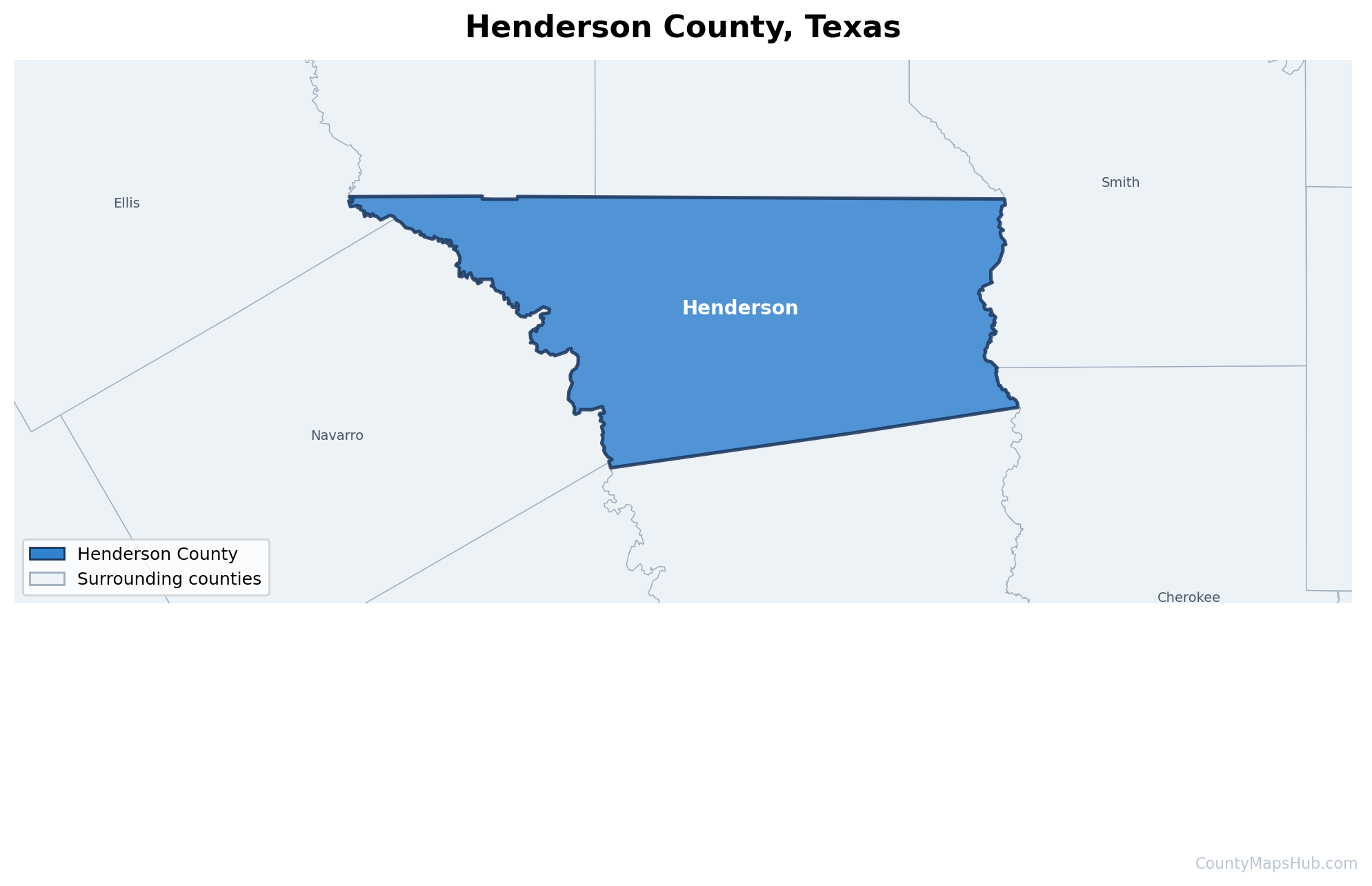
Henderson County was established in 1846 during a period of rapid territorial organization following Texas’s annexation to the United States. The county was named after James Pinckney Henderson, who served as the first governor of the state of Texas and was a prominent figure in the early republic’s diplomatic and political affairs. Athens was designated as the county seat, serving as the administrative and commercial center for the developing region.
Throughout the nineteenth century, the county developed as an agricultural area typical of East Texas, with settlers cultivating cotton and other crops suited to the region’s climate and soil. The arrival of rail lines in the late 1800s connected Henderson County to broader markets and facilitated population growth. Over the following decades, the county’s economy diversified beyond agriculture to include various industries, while maintaining its character as a community rooted in East Texas traditions and values.
Population
According to the 2020 census, Henderson County had a population of 82,150 residents. This population is distributed across the county’s 874 square miles, creating a mix of small-town communities and rural areas characteristic of East Texas. The county seat of Athens serves as the largest population center and primary hub for county services, commerce, and civic life. Population growth over recent decades has reflected broader trends in Texas, with people drawn to the area’s combination of affordable living, proximity to larger metropolitan areas, and the appeal of East Texas’s natural environment and community-oriented lifestyle.
Climate
Henderson County experiences a humid subtropical climate, characterized by hot summers and mild winters typical of East Texas. Summer temperatures regularly climb into the 90s Fahrenheit, with high humidity levels that are moderated somewhat by the region’s wooded landscapes and proximity to lakes and waterways. Winters are generally mild, with occasional cold fronts bringing brief periods of freezing temperatures but rarely sustained cold spells.
The area receives moderate to abundant rainfall distributed throughout the year, with spring often being the wettest season. This precipitation supports the region’s lush vegetation and contributes to the growth of pine and hardwood forests that define much of the county’s landscape. Thunderstorms are common during spring and summer months, occasionally producing severe weather. The climate supports a long growing season and contributes to the county’s agricultural productivity and natural beauty.
Tourist Attractions
Henderson County offers visitors a variety of recreational opportunities centered on its natural environment and East Texas character. The region features several lakes and waterways that provide venues for fishing, boating, and water sports, drawing outdoor enthusiasts from across the state. Wooded areas and rural landscapes offer opportunities for hiking, wildlife observation, and experiencing the distinctive ecology of the East Texas Piney Woods.
The county seat and surrounding communities provide access to local museums, antique shops, and dining establishments that reflect regional heritage and hospitality. Visitors can explore historic downtown areas, attend seasonal community events, and experience small-town Texas culture. The county’s location within East Texas makes it a convenient stopping point for travelers exploring the region, offering a blend of recreational activities and cultural experiences that showcase the area’s identity and traditions.
Culture
Henderson County embodies the cultural character of East Texas, where Southern traditions blend with Texas independence and pride. The region’s heritage reflects its agricultural roots and the waves of settlement that shaped the area from the mid-nineteenth century forward. Community life centers around local schools, churches, and civic organizations that foster strong social networks and maintain traditions passed down through generations.
The cultural landscape includes appreciation for country and gospel music, traditional Southern cuisine, and outdoor recreation that connects residents to the land. High school football and other community sports serve as important social gatherings that bring towns together. Local festivals and events throughout the year celebrate regional heritage, seasonal harvests, and community spirit. The values of hospitality, self-reliance, and neighborliness remain central to the county’s identity, creating a welcoming environment that honors its past while adapting to contemporary life in Texas.