Hockley County
About
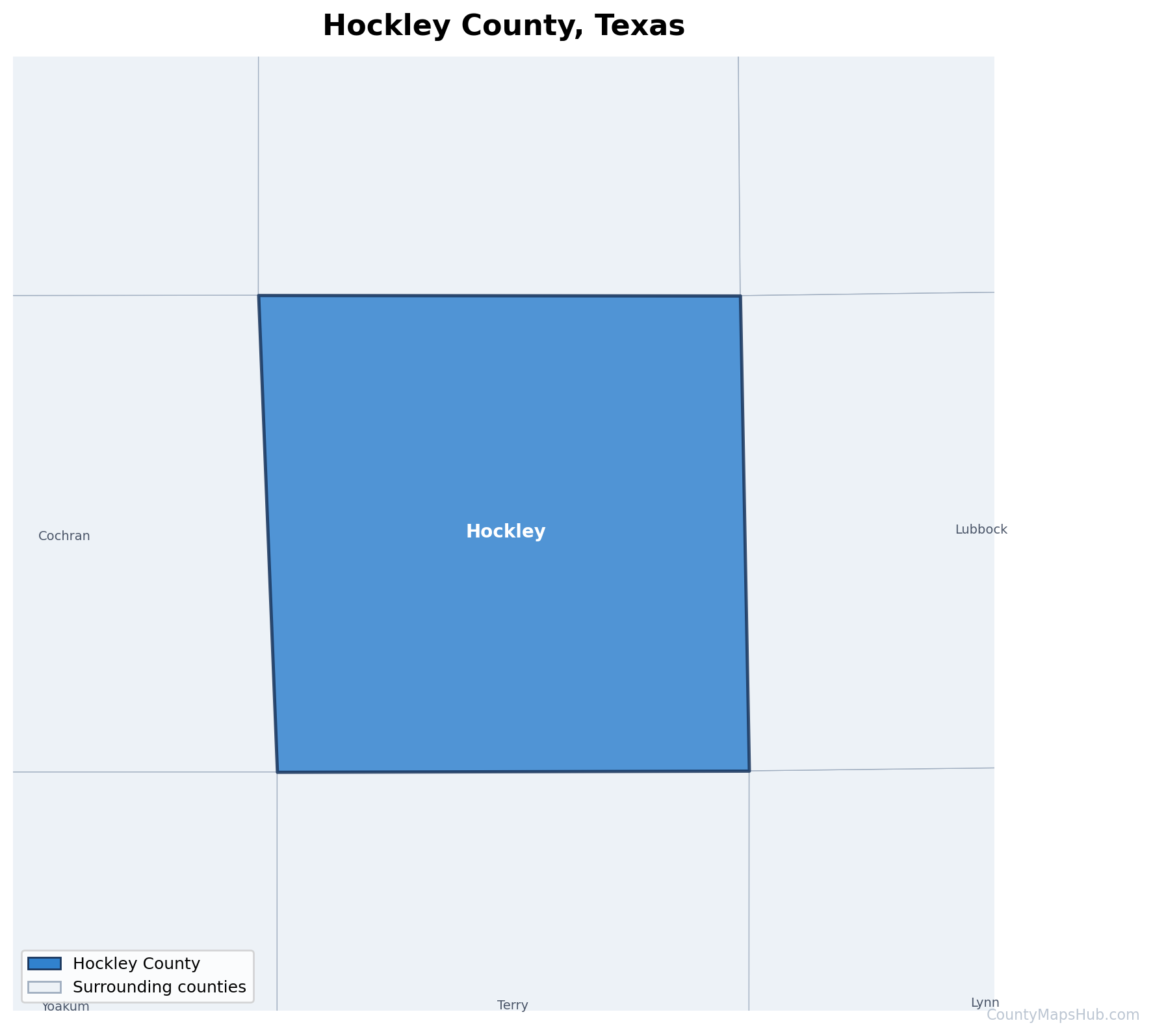
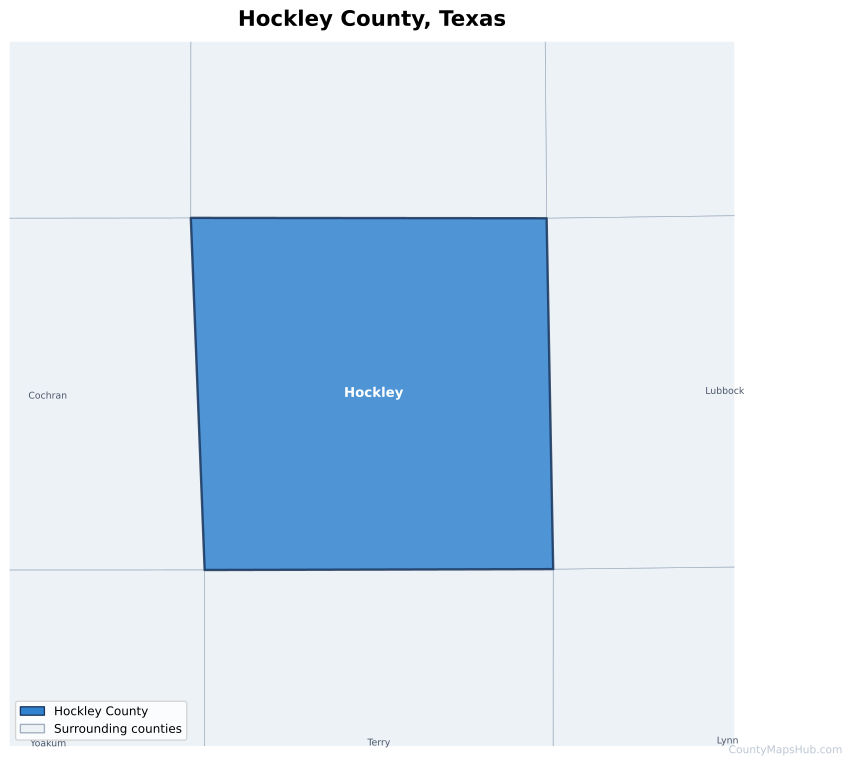
Hockley County was established in 1876 and named after George Washington Hockley, a significant figure in early Texas history. The county is situated in the South Plains region of West Texas, an area that witnessed gradual settlement following the end of the Indian Wars and the expansion of ranching and agricultural development in the late 19th century. Early settlers faced the challenges of a remote and arid landscape, relying on cattle ranching and dryland farming as primary economic activities.
As transportation networks improved and irrigation technology advanced in the early 20th century, the region transitioned from open-range ranching to more diversified agriculture. Levelland, the county seat, became the administrative and commercial hub for surrounding farming communities. The discovery and development of oil and gas resources in the Permian Basin area further contributed to the county’s economic foundation, complementing its agricultural base and providing new opportunities for growth and stability throughout the modern era.
Population
According to the 2020 Census, Hockley County had a population of 21,537 residents. This population is distributed across the county’s 908 square miles, reflecting the rural character typical of many South Plains counties. The population density supports a community-oriented lifestyle where agriculture and related industries remain central to local identity and economic activity. Levelland serves as the primary population center and county seat, providing essential services, schools, and commercial facilities for residents throughout the county.
Climate
Hockley County experiences a semi-arid climate characterized by low annual precipitation, wide temperature variations, and abundant sunshine throughout much of the year. Summers are typically hot with temperatures frequently exceeding 90 degrees Fahrenheit, while winters are generally mild but can occasionally bring cold fronts and brief freezing conditions. Rainfall is sparse and often unpredictable, averaging well below the national mean, which has historically shaped agricultural practices and water management strategies in the region.
The semi-arid conditions result in low humidity and clear skies for much of the year, contributing to high evaporation rates and the necessity for irrigation in farming operations. Wind is a common feature of the local climate, particularly in spring months, and dust storms can occasionally occur. These climatic conditions have influenced both the natural vegetation of the area, dominated by short grasses and hardy shrubs, and the types of crops that thrive with supplemental irrigation.
Tourist Attractions
Visitors to Hockley County can experience the distinctive character of the Texas South Plains, where wide-open landscapes and agricultural heritage define the regional identity. The area offers opportunities for those interested in rural Texas culture, including farm tours, local festivals celebrating the harvest season, and community events that reflect the values and traditions of small-town life. The vast skies and minimal light pollution make the region appealing for stargazing and appreciating the natural beauty of the high plains environment.
Outdoor enthusiasts may enjoy exploring the surrounding countryside, which provides a glimpse into the working ranches and farmland that have sustained the local economy for generations. Regional museums and historical markers offer insights into pioneer life and the development of agriculture in this challenging climate. Local dining establishments serve traditional Texas cuisine, and community gatherings provide a welcoming atmosphere for visitors seeking an authentic experience of West Texas hospitality.
Culture
The culture of Hockley County is deeply rooted in agricultural traditions and the values of self-reliance, hard work, and community cooperation that have characterized the South Plains for over a century. Ranching and farming remain not only economic activities but also core elements of local identity, with generational family operations still common throughout the area. Community events often center around agricultural calendars, school activities, and church gatherings, fostering strong social bonds among residents.
The heritage of the region reflects a blend of Anglo-American pioneer settlement and Hispanic influences that have shaped the broader West Texas cultural landscape. Local traditions emphasize hospitality, neighborly assistance, and a straightforward, practical approach to life shaped by the demanding environment. High school sports, particularly football, serve as important social focal points, bringing communities together and fostering civic pride. The cultural fabric of the county values education, faith, and family, maintaining continuity with the past while adapting to the economic and social changes of the modern era.