Howard County
About
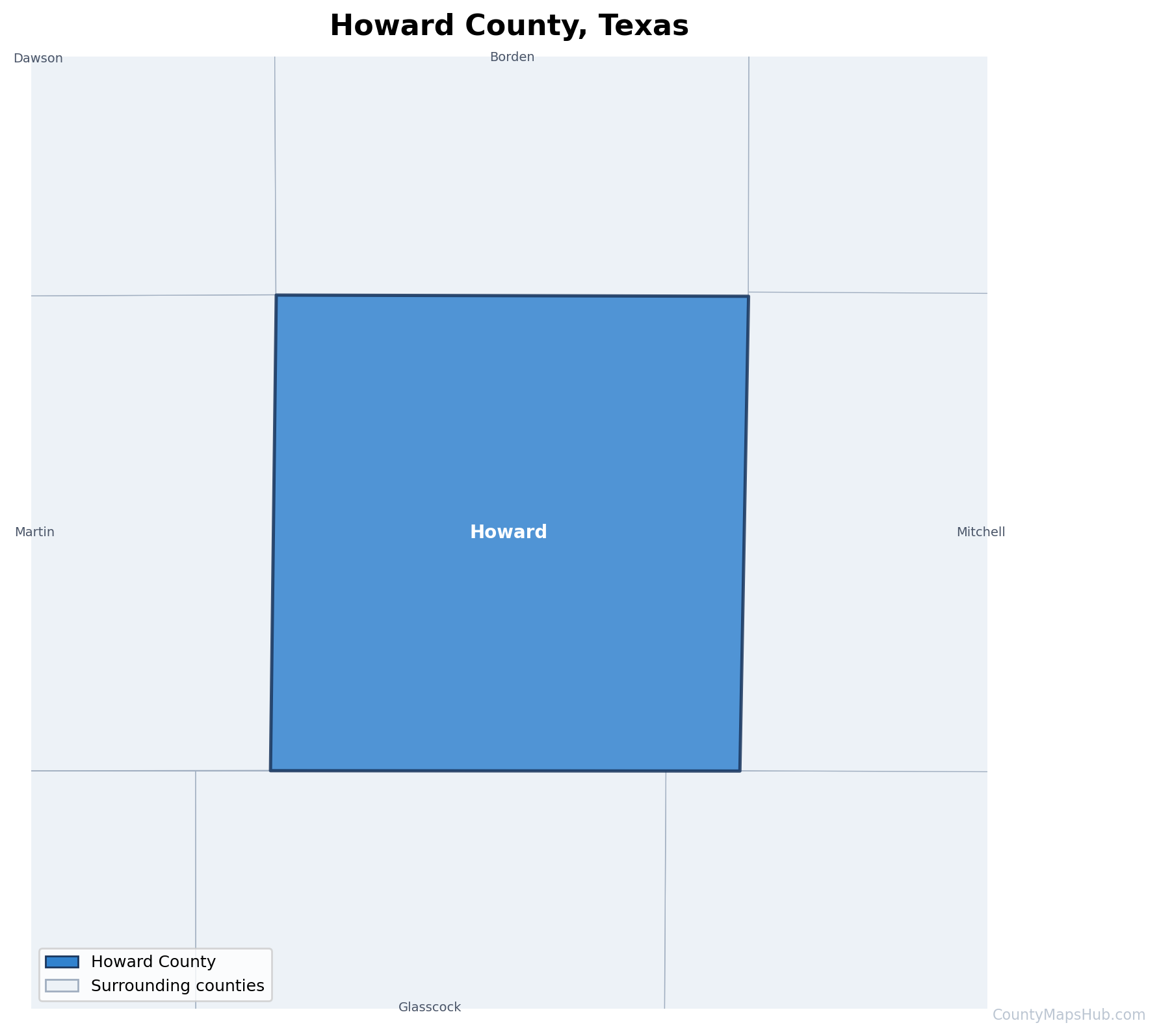
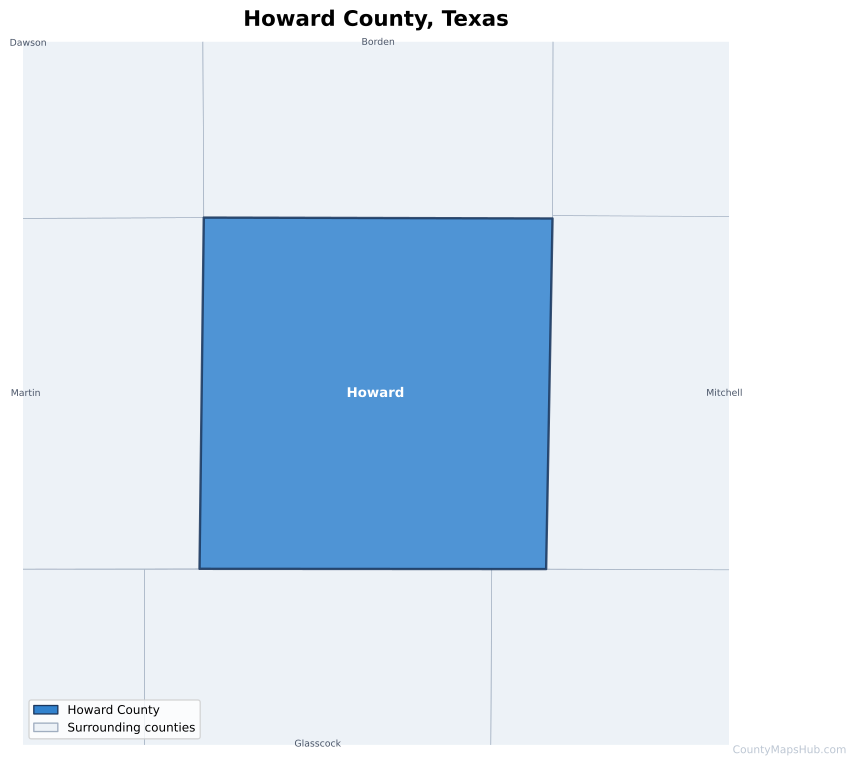
Howard County was established in 1876 during a period of westward expansion in Texas. The county was named after Volney Erskine Howard, a prominent figure in Texas history. Big Spring, designated as the county seat, became the administrative center for this West Texas region.
The development of Howard County reflects the broader story of settlement in the arid regions of West Texas. Early inhabitants faced the challenges of a semi-arid environment, requiring adaptation and resourcefulness. Over the decades, the county evolved from frontier territory into an established community, with agriculture, ranching, and later energy development shaping its economic foundation. The county’s history embodies the resilience characteristic of West Texas communities that carved out thriving settlements in challenging terrain.
Population
According to 2020 census data, Howard County has a population of 34,860 residents spread across its 903 square miles. This population density reflects the typical settlement patterns of West Texas counties, where communities cluster around key towns while vast stretches remain sparsely populated. The demographic composition represents a blend of longtime residents with deep roots in the region and newer arrivals drawn by employment opportunities. The county’s population has experienced fluctuations over the years tied to economic cycles, particularly those related to agriculture and energy industries that have historically dominated the local economy.
Climate
Howard County experiences a semi-arid climate characterized by hot summers, mild winters, and limited annual precipitation. The region receives considerably less rainfall than more humid parts of Texas, which has significantly influenced land use patterns and agricultural practices throughout the county’s history. Temperature variations between seasons can be substantial, with summer highs frequently exceeding 95 degrees Fahrenheit while winter temperatures occasionally dip below freezing.
The semi-arid conditions create distinctive landscapes dominated by hardy vegetation adapted to drought conditions. Clear skies are common throughout much of the year, contributing to high solar radiation levels. Wind is a consistent feature of the local climate, sometimes reaching notable speeds across the open terrain. These climatic conditions have shaped both the natural environment and human activities, requiring water conservation strategies and influencing the types of crops and livestock that can thrive in the region.
Tourist Attractions
Howard County offers visitors an authentic West Texas experience characterized by wide-open spaces and a connection to the region’s frontier heritage. The landscape itself provides opportunities for outdoor enthusiasts to explore the semi-arid terrain, with its distinctive geological features and expansive views under vast skies. The county’s natural environment attracts those interested in bird watching, photography, and experiencing the solitude of the high plains region.
Visitors to the area can explore local museums that preserve the history of settlement and development in this part of Texas. The county seat serves as a hub for discovering regional culture and amenities. Seasonal events throughout the year celebrate local traditions and community heritage. The surrounding countryside offers scenic drives through terrain that showcases the rugged beauty characteristic of West Texas, with opportunities to observe native wildlife and plant species adapted to the semi-arid environment.
Culture
The cultural identity of Howard County is deeply rooted in West Texas traditions, where ranching heritage and frontier values continue to influence contemporary life. The community maintains strong connections to its agricultural past while adapting to modern economic realities. Local customs reflect the independent spirit and neighborly cooperation that characterized early settlement days, with residents taking pride in their ability to thrive in a challenging environment.
Regional cuisine reflects Tex-Mex influences alongside traditional American fare, with local establishments serving dishes that have sustained West Texans for generations. Community gatherings, whether centered on high school sports, livestock shows, or civic celebrations, play an important role in maintaining social bonds. The culture emphasizes practical skills, hard work, and resilience—values forged by generations who built lives in the semi-arid landscape. Artistic expression often draws inspiration from the stark beauty of the surrounding terrain and the enduring themes of Western heritage.