Hudspeth County
About
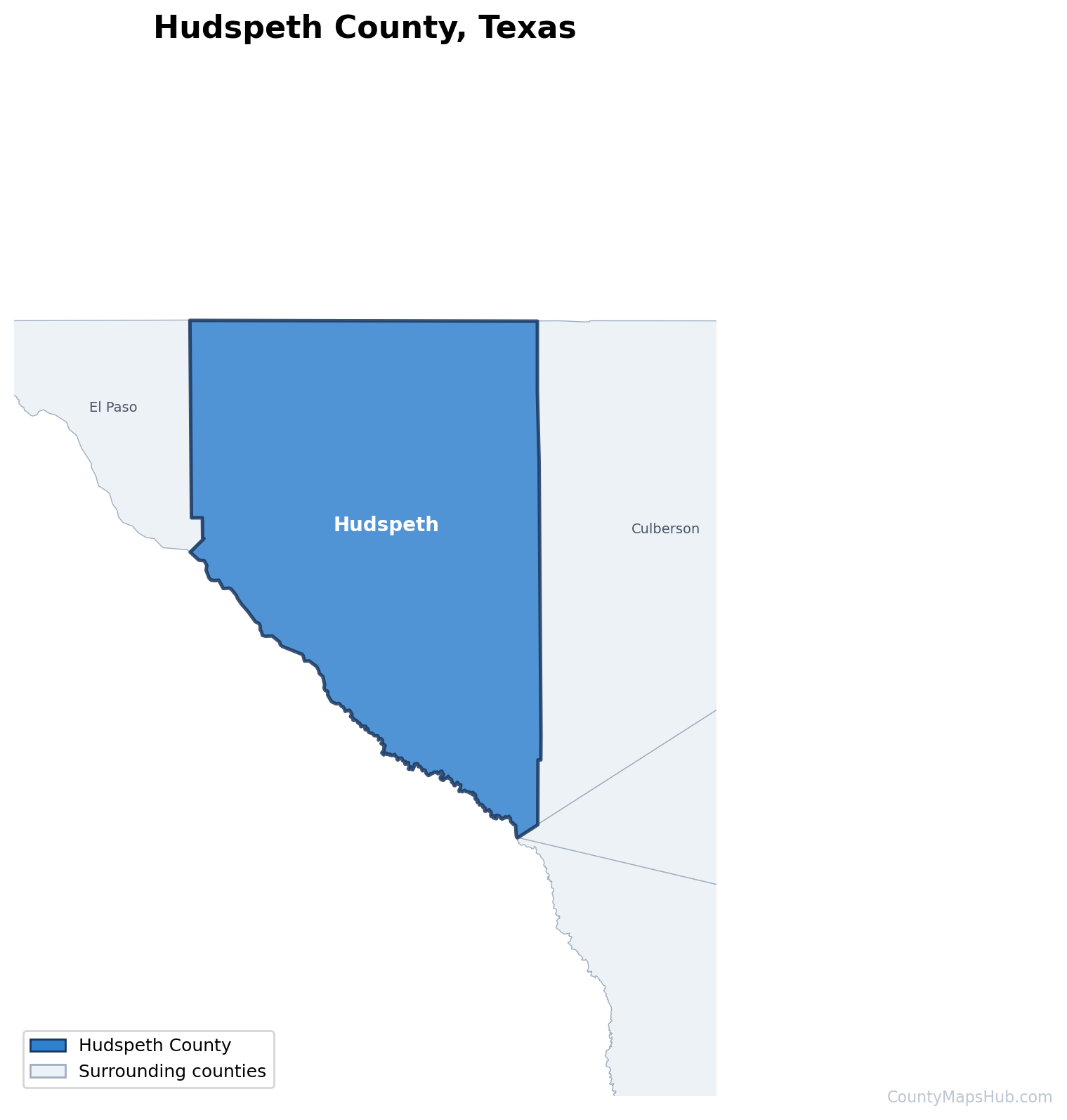
Hudspeth County was established in 1917, carved from El Paso County as Texas continued organizing its vast western territories. The county was named after Claude Benton Hudspeth, a prominent Texas rancher, lawyer, and politician who served in both the state legislature and the United States Congress during the early twentieth century. His influence in West Texas development and his advocacy for the region’s interests made him a fitting namesake for this expansive county.
The area’s history reflects the broader narrative of far West Texas, where Native American presence, Spanish colonial exploration, and later Anglo-American settlement shaped the cultural landscape. The establishment of the county seat in Sierra Blanca positioned the community as a regional hub for the surrounding ranching and transportation networks. Throughout the twentieth century, the county’s development remained closely tied to cattle ranching, mining activities, and the transportation corridors that connected West Texas to New Mexico and beyond, maintaining its character as a frontier region of wide-open spaces and resilient communities.
Population
According to the 2020 Census, Hudspeth County recorded a population of 3,202 residents, making it one of the least densely populated counties in Texas. Spread across 4,571 square miles, the county exemplifies the sparse settlement patterns characteristic of far West Texas desert regions. The small population reflects the challenging environmental conditions and the predominance of large-scale ranching operations that require vast land areas but relatively few residents. Despite its low population density, the county maintains essential services and a tight-knit community structure centered around its county seat, where residents share strong connections forged by the demands of life in a remote, arid environment.
Climate
Hudspeth County experiences an arid climate typical of the Chihuahuan Desert region of West Texas, characterized by low annual precipitation, abundant sunshine, and significant temperature variations between day and night. Summer temperatures frequently exceed 100 degrees Fahrenheit, while winters bring cooler conditions with occasional freezing temperatures at night. Rainfall is sparse and unpredictable throughout the year, generally averaging less than twelve inches annually, with slightly higher precipitation during the late summer monsoon season.
The harsh desert climate has profoundly shaped both the natural environment and human activities in the county. Vegetation consists primarily of drought-resistant species including creosote bush, mesquite, various cacti, and hardy grasses adapted to moisture scarcity. The clear, dry air and minimal light pollution create exceptional stargazing opportunities. Water conservation remains a critical consideration for residents and agricultural operations, with groundwater resources carefully managed to sustain the county’s ranching economy and small communities in this demanding environment.
Tourist Attractions
Hudspeth County offers visitors an authentic West Texas desert experience characterized by vast, unspoiled landscapes and a profound sense of solitude. The region appeals to those seeking outdoor adventures in remote settings, with opportunities for exploring desert terrain, observing wildlife adapted to arid conditions, and experiencing the stark beauty of the Chihuahuan Desert ecosystem. The county’s expansive vistas provide photographers and nature enthusiasts with dramatic scenery, particularly during sunrise and sunset when the desert landscape takes on vivid colors.
The area’s historical character attracts travelers interested in Old West heritage and the frontier history of Texas. Visitors can experience the authentic atmosphere of a sparsely populated desert county where ranching traditions remain vital to local identity. The region’s position along historic transportation routes offers insights into the challenges faced by earlier travelers crossing this demanding landscape. For those seeking respite from urban congestion, the county provides a genuine escape into one of Texas’s most remote and least developed areas, where the night sky remains unmarred by artificial light and the pace of life reflects enduring frontier values.
Culture
The cultural identity of Hudspeth County reflects its position as a true frontier region where Western ranching traditions remain central to daily life. The small population maintains strong community bonds forged by shared challenges of living in a remote, demanding environment. Local culture emphasizes self-reliance, neighborly cooperation, and respect for the land and its limitations. Hispanic and Anglo cultural influences blend in the region, reflecting the broader cultural heritage of the Texas-Mexico borderlands and creating a distinctive bicultural character that shapes local customs, cuisine, and social interactions.
Community gatherings and local events provide essential opportunities for social connection in this sparsely populated area, where distances between neighbors can be considerable. The ranching lifestyle continues to define much of the county’s cultural character, with rodeo traditions, livestock management practices, and land stewardship values passed down through generations. Educational and civic institutions serve as important community anchors, bringing residents together despite geographic dispersal. The culture values resilience, adaptability, and an appreciation for the stark beauty of the desert environment that has shaped generations of residents who have chosen to make their lives in this challenging but rewarding landscape.