Hutchinson County
About
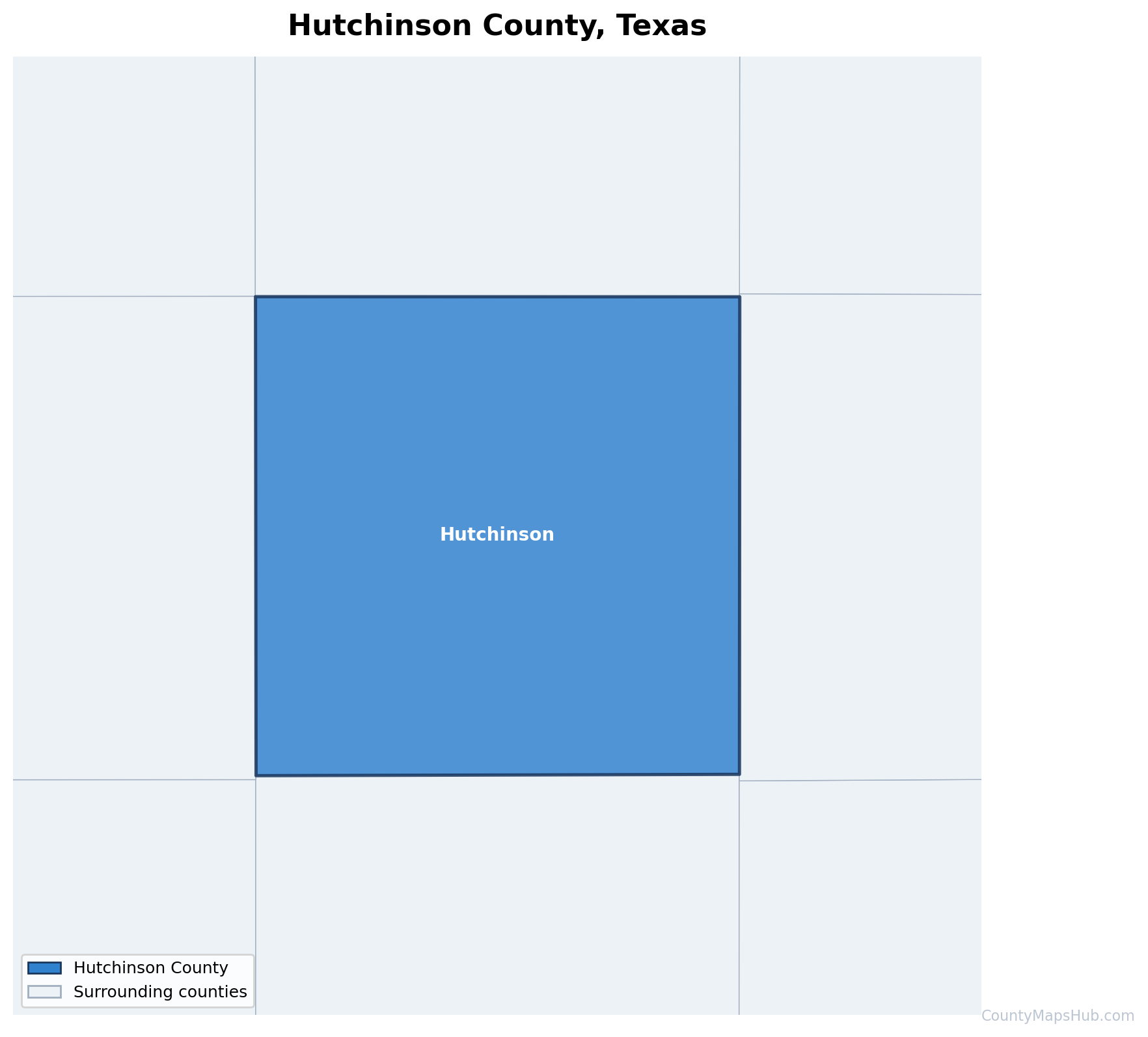
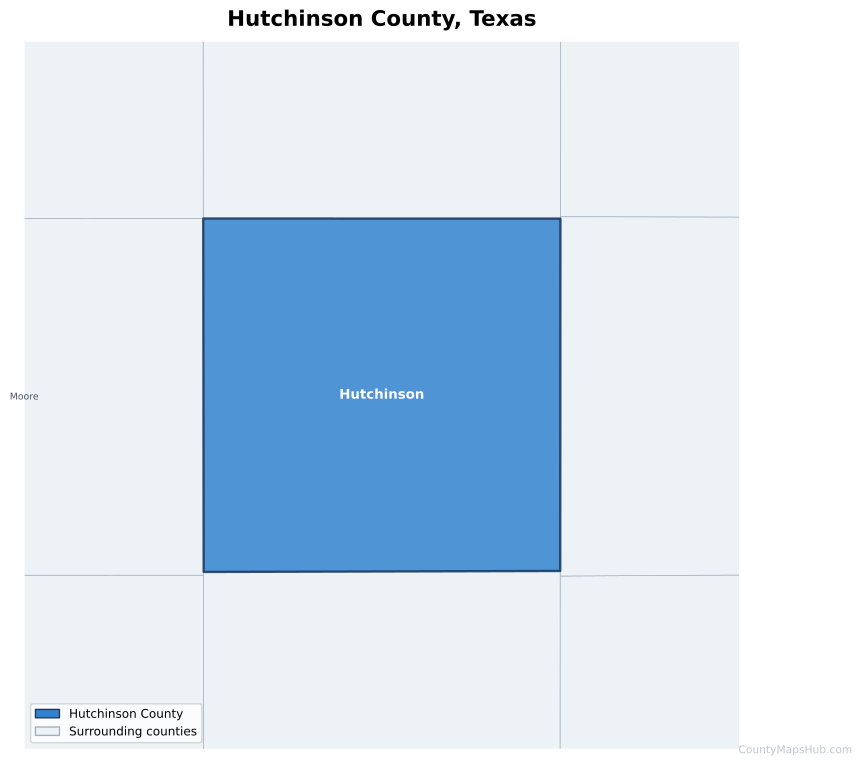
Hutchinson County was established in 1876 and named after Anderson Hutchinson, reflecting the pioneering spirit of Texas expansion during the latter half of the 19th century. The county’s formation occurred during a period of significant development in the Texas Panhandle, as settlers moved into the region following the decline of open-range cattle operations and the establishment of more permanent communities. Stinnett serves as the county seat, providing administrative and governmental services to residents across the region.
Throughout its history, the county has been shaped by the economic forces common to the Texas Panhandle, including agriculture, energy development, and ranching. The landscape and climate influenced settlement patterns and economic activities, with residents adapting to the semi-arid conditions characteristic of this part of Texas. Over the decades, the county has witnessed the transformation from frontier territory to an established community with modern infrastructure, while maintaining connections to its historical roots in agriculture and natural resource development.
Population
According to 2020 census data, Hutchinson County had a population of 20,617 residents living within its 887 square miles. This population density reflects the rural character typical of Texas Panhandle counties, where communities are often dispersed across considerable distances. The county seat of Stinnett and surrounding areas provide residential, commercial, and service centers for the population. Demographic patterns in the region generally reflect a mix of long-established families with historical ties to the area and newer residents drawn by employment opportunities in local industries. The population has remained relatively stable over recent decades, characteristic of many rural Texas counties where economic factors influence growth patterns.
Climate
Hutchinson County experiences a semi-arid climate, characterized by low annual precipitation, high evaporation rates, and significant temperature variations between seasons. Summers are typically hot with abundant sunshine, while winters can bring cold temperatures and occasional winter storms moving down from the northern plains. The semi-arid conditions mean that water conservation and management are important considerations for agriculture, municipal services, and residential use.
The region experiences relatively low humidity throughout much of the year, with most precipitation occurring during spring and early summer months. Wind is a consistent feature of the local climate, influenced by the county’s location on the flat expanses of the Texas Panhandle. These climatic conditions have historically influenced land use patterns, agricultural practices, and the types of vegetation that thrive naturally in the area.
Tourist Attractions
Visitors to Hutchinson County can explore the natural landscapes characteristic of the Texas Panhandle, where wide-open spaces and expansive skies create distinctive scenery. The semi-arid environment supports unique ecosystems adapted to the regional climate, and outdoor enthusiasts may find opportunities for activities suited to the terrain. Regional parks and recreational areas provide spaces for community gatherings and outdoor recreation, reflecting the importance of public spaces in rural Texas communities.
The county’s cultural heritage can be appreciated through local historical sites and community facilities that preserve the story of settlement and development in this part of Texas. Visitors interested in regional history may find museums and historical markers that document the area’s past. The county seat and surrounding communities offer authentic small-town Texas experiences, with local events and gatherings that reflect the traditions and values of Panhandle residents. The agricultural landscape itself serves as a testament to the adaptability and resourcefulness of those who have made this region their home.
Culture
Hutchinson County’s culture reflects the values and traditions common to rural Texas Panhandle communities, where agricultural heritage, neighborly cooperation, and self-reliance remain important cultural touchstones. Community events throughout the year bring residents together, celebrating local traditions and fostering connections across generations. The social fabric of the county is woven through schools, civic organizations, and faith communities that serve as gathering places and support networks for residents.
The cultural identity of the region is influenced by its ranching and agricultural roots, with rodeos and livestock-related activities holding special significance in community life. Local cuisine tends to feature hearty, traditional fare suited to the working lifestyle of rural Texas, with barbecue and Tex-Mex influences common throughout the area. The arts and crafts of the region often reflect Western themes and practical traditions, passed down through families and celebrated in local venues. This cultural landscape maintains continuity with the past while adapting to contemporary life in the Texas Panhandle.