Jeff Davis County
About
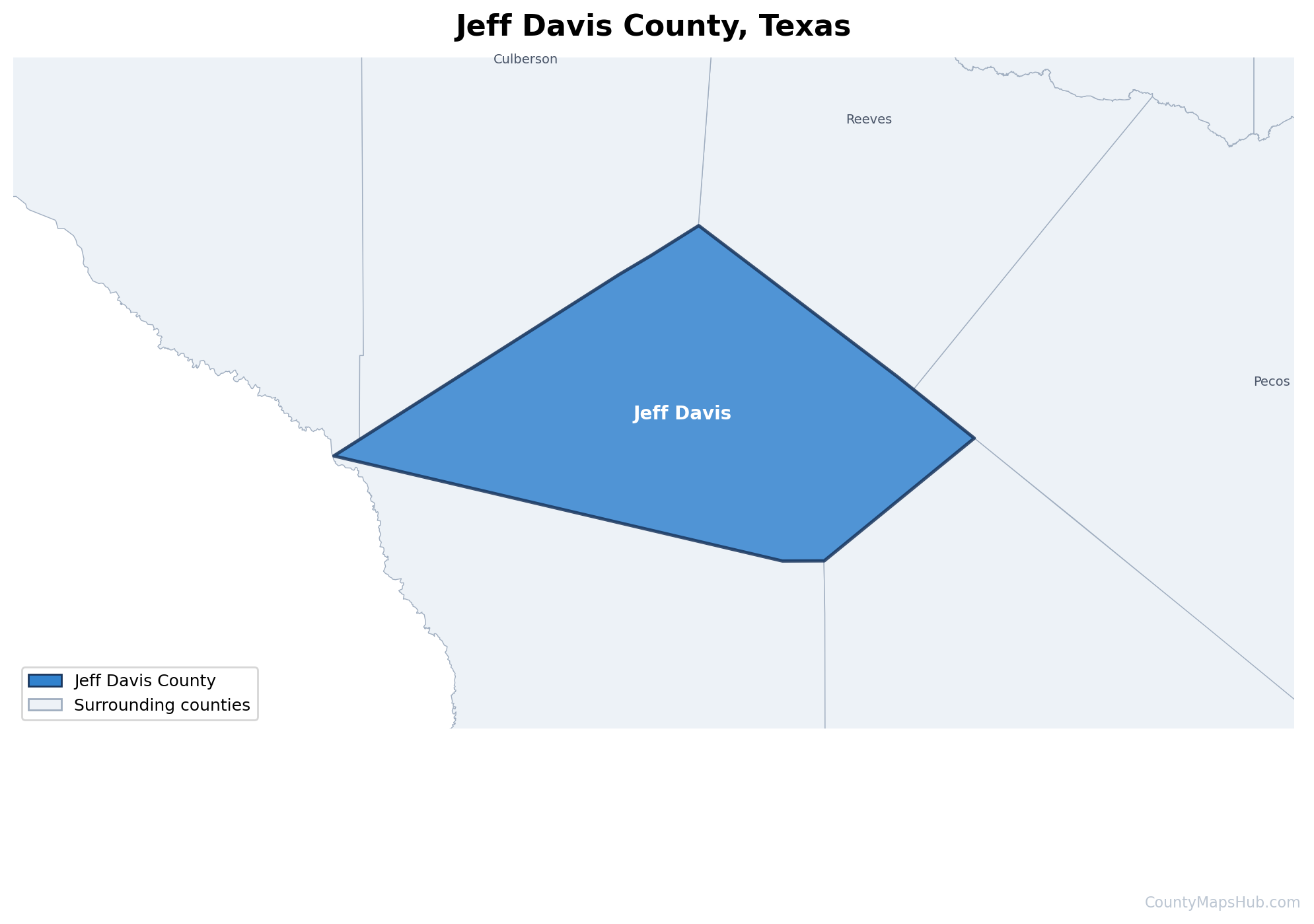
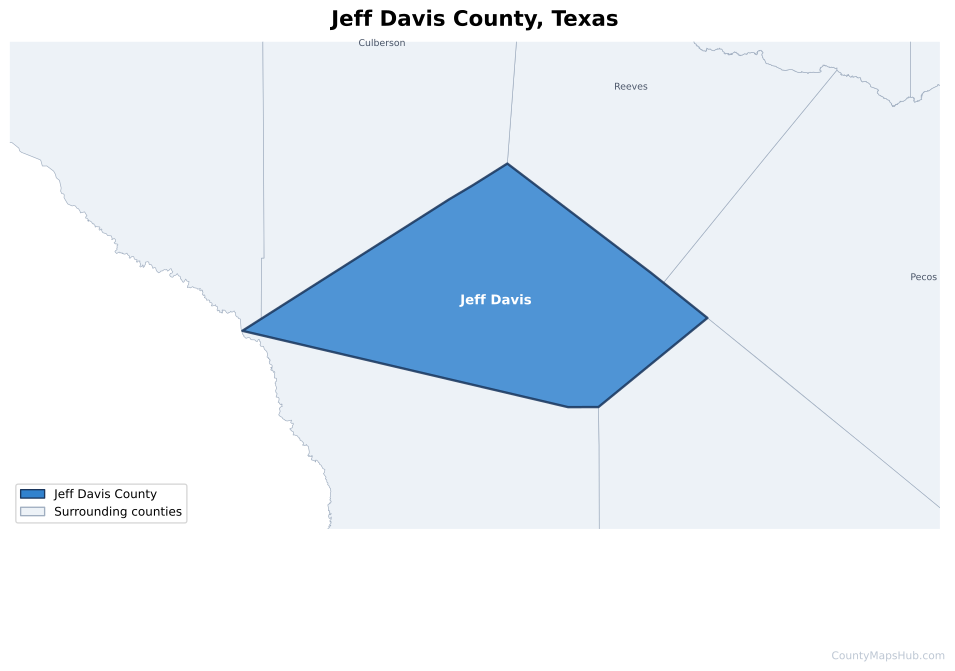
Jeff Davis County was established in 1887 in the mountainous terrain of West Texas. Named after Jefferson Davis, the county was organized during a period when the region was transitioning from frontier territory to settled communities. Fort Davis serves as the county seat, anchoring local government and commerce in this remote corner of the state.
The county’s development reflected the broader patterns of West Texas settlement, with ranching and agriculture adapting to the challenging high desert environment. The establishment of the county government in the late 19th century brought formal infrastructure to an area previously characterized by scattered settlements and vast open ranges. Over the decades, the region maintained its rural character while developing the institutions necessary for community life in this distinctive landscape.
Population
According to the 2020 census, Jeff Davis County has a population of 1,996 residents spread across its 2,265 square miles, making it one of Texas’s most sparsely populated counties. This low population density reflects the county’s remote location and challenging terrain, with residents concentrated primarily in and around the county seat. The small population creates a tight-knit community atmosphere where neighbors know one another and civic engagement remains personal and direct. Despite its modest size, the community supports essential services and maintains the cultural traditions of West Texas rural life.
Climate
Jeff Davis County experiences an arid climate typical of the Trans-Pecos region of West Texas, characterized by low annual precipitation and significant temperature variations between day and night. The high elevation of much of the county moderates summer temperatures compared to lower desert areas, while winters can bring occasional freezing conditions, particularly at night. Clear skies dominate throughout the year, providing exceptional stargazing opportunities and intense sunshine.
The limited rainfall requires adaptation by both residents and the natural environment, with vegetation consisting primarily of drought-resistant species. The arid conditions create dramatic landscapes where rocky peaks contrast with desert valleys, and where water sources become focal points for both wildlife and human activity.
Tourist Attractions
The county’s dramatic high desert landscapes attract visitors seeking outdoor recreation and natural beauty. The region offers opportunities for hiking, camping, wildlife observation, and photography amid distinctive geological formations and sweeping vistas. The area’s remote character and minimal light pollution make it particularly appealing to astronomy enthusiasts and those seeking solitude in nature. Mountain ranges provide scenic drives and challenging terrain for adventurous travelers.
Visitors can explore the region’s frontier heritage through preserved historic sites and structures that tell the story of settlement in this demanding environment. The county’s position in the Davis Mountains creates unique ecosystems where desert and mountain environments intersect, supporting diverse plant and animal life. Seasonal weather patterns bring subtle changes to the landscape, from spring wildflower displays to dramatic summer thunderstorms that briefly transform dry arroyos into rushing streams.
Culture
Jeff Davis County embodies the independent spirit and self-reliance characteristic of West Texas communities. The sparse population and isolated location have fostered strong traditions of neighborliness and mutual support, where residents often travel considerable distances for social gatherings and community events. Ranching heritage remains central to local identity, influencing everything from daily routines to social customs and economic activities.
The county’s cultural life reflects the blend of frontier traditions, Hispanic influences, and contemporary rural Texas values. Local celebrations and gatherings often center around agricultural cycles, historical commemorations, and seasonal transitions. The challenging environment has shaped a culture that values resourcefulness, respect for the land, and appreciation for the stark beauty of the surrounding landscapes. This remote corner of Texas maintains traditions and lifeways that have largely disappeared from more urbanized parts of the state.