Jim Wells County
About
Jim Wells County was established in 1911, carved from portions of neighboring South Texas counties during a period of regional growth and development. The county was named after James B. Wells Jr., a prominent figure in Texas politics and law during the late 19th and early 20th centuries. Wells was instrumental in the development of South Texas and played a significant role in state Democratic Party politics.
The early decades following the county’s formation saw the development of ranching and agricultural operations that capitalized on the region’s grasslands and climate. The discovery of oil and natural gas in South Texas during the early to mid-20th century brought economic transformation to the area. Like many South Texas counties, Jim Wells County’s history reflects the broader patterns of Spanish colonial influence, Mexican territorial period, Texas Republic era, and subsequent American statehood, with layers of cultural heritage contributing to its unique regional identity.
Population
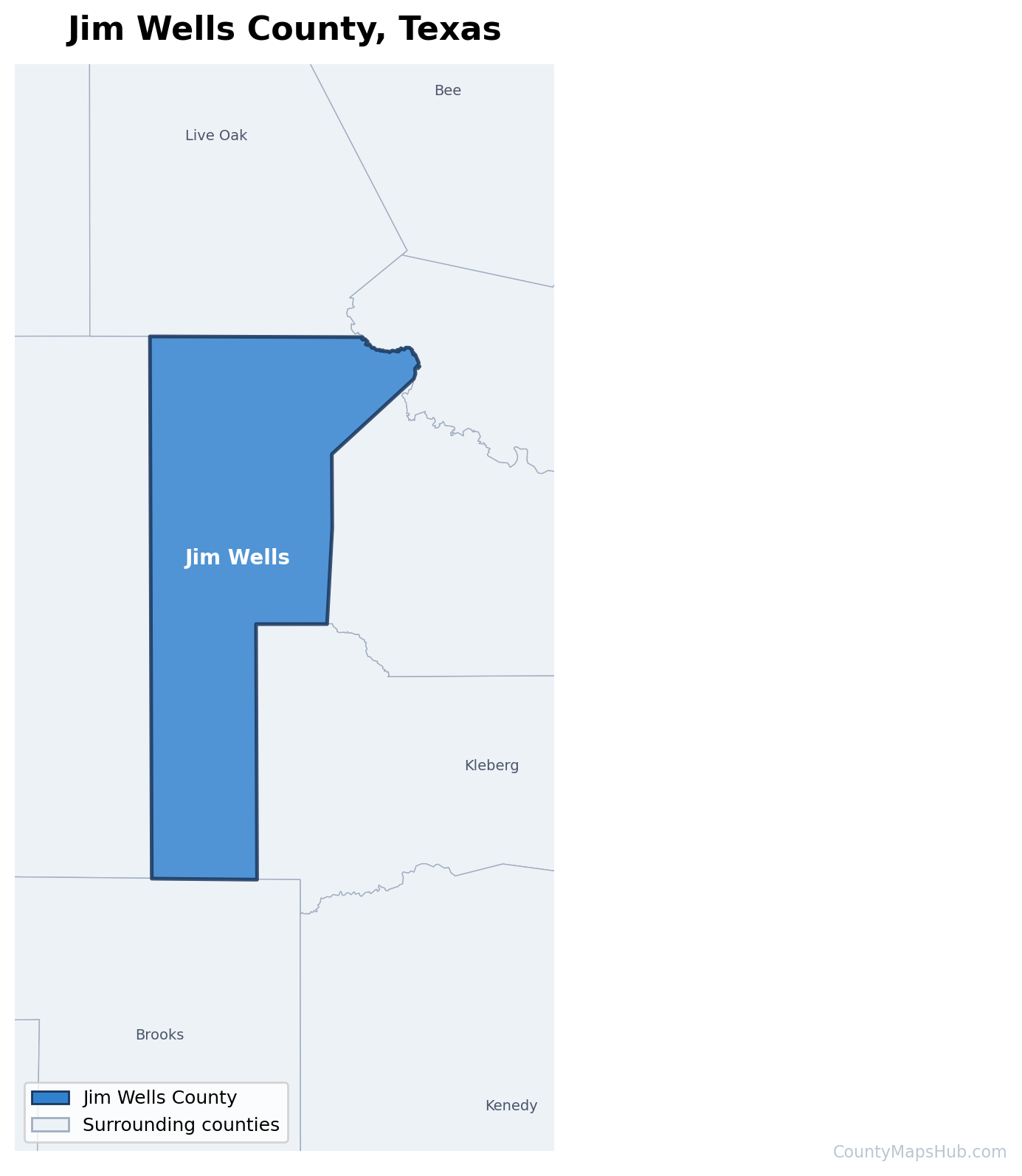
As of the 2020 Census, Jim Wells County recorded a population of 38,891 residents. The county seat of Alice serves as the primary population center and hub for government, commerce, and community services. With a total area of 865.0 square miles, the county maintains a modest population density that reflects its mix of small-town living and rural landscapes. The demographic composition reflects the broader South Texas cultural heritage, with generations of families contributing to a stable community base. Population trends in the county have been influenced by economic factors including agriculture, energy sector employment, and regional commerce along transportation corridors connecting South Texas communities.
Climate
Jim Wells County experiences a semi-arid climate characterized by hot summers, mild winters, and limited annual precipitation. Summer temperatures regularly exceed 90 degrees Fahrenheit, with the warmest months typically occurring from June through September. Winter months bring more moderate conditions, with occasional cold fronts from the north providing brief periods of cooler weather, though freezing temperatures are relatively uncommon.
The semi-arid classification reflects annual rainfall totals that support grassland and brush vegetation rather than dense forests. Precipitation tends to be unevenly distributed throughout the year, with slightly higher rainfall during spring and fall months. The climate supports ranching operations and drought-resistant agricultural practices. Residents and visitors should be prepared for strong sunshine year-round and occasional severe weather events typical of South Texas, including tropical systems that can affect the region during hurricane season.
Tourist Attractions
Jim Wells County offers visitors an authentic South Texas experience with opportunities to explore the region’s ranching heritage and small-town atmosphere. The county seat provides access to local historical sites, community parks, and facilities that showcase the area’s development over the past century. Visitors interested in regional history can explore museums and historical markers that document the county’s establishment and growth since 1911.
Outdoor enthusiasts will find opportunities for wildlife observation, as the South Texas region is known for its distinctive brush country ecosystem and diverse bird populations. The county’s rural landscapes offer scenic drives through working ranches and agricultural lands. Those interested in regional culture can experience local dining establishments featuring South Texas cuisine and attend community events that celebrate the area’s heritage. The proximity to other South Texas destinations makes the county a convenient stop for travelers exploring the region between major metropolitan areas and the Gulf Coast.
Culture
Jim Wells County reflects the rich cultural tapestry of South Texas, where Mexican-American heritage blends with ranching traditions and small-town community values. The region’s culture is expressed through local cuisine, with South Texas culinary traditions featuring prominently in family gatherings and community celebrations. Spanish language and bilingual communication are common throughout the county, reflecting generations of cultural continuity and cross-border connections.
Community life centers around family networks, religious institutions, and local traditions that have been maintained since the county’s establishment. Regional music traditions, including conjunto and Tejano styles, form an important part of the cultural landscape. Annual celebrations and community gatherings provide opportunities for residents to maintain connections and honor shared heritage. The county’s culture emphasizes hospitality, strong work ethic tied to ranching and agriculture, and pride in South Texas identity. These cultural characteristics create a distinctive sense of place that differentiates the region from other parts of Texas while contributing to the state’s broader cultural diversity.