Johnson County
About
Johnson County was established in 1854, carved out of the expanding settlement patterns of north-central Texas during the antebellum period. The county was named after Middleton Tate Johnson, a prominent figure in early Texas history who served in various governmental capacities during the Republic of Texas era and early statehood. The region’s development was closely tied to agricultural expansion and the growth of cattle ranching, which characterized much of north-central Texas during the mid-19th century.
The county seat, Cleburne, became the governmental and commercial center for the region, facilitating trade and administrative functions for surrounding rural communities. Throughout the late 19th and early 20th centuries, the county experienced growth driven by agriculture, livestock production, and eventually transportation networks that connected it to larger urban centers. The area weathered the challenges of Reconstruction, economic fluctuations, and the transformation of the Texas economy from primarily agricultural to more diversified industries over subsequent decades.
Population
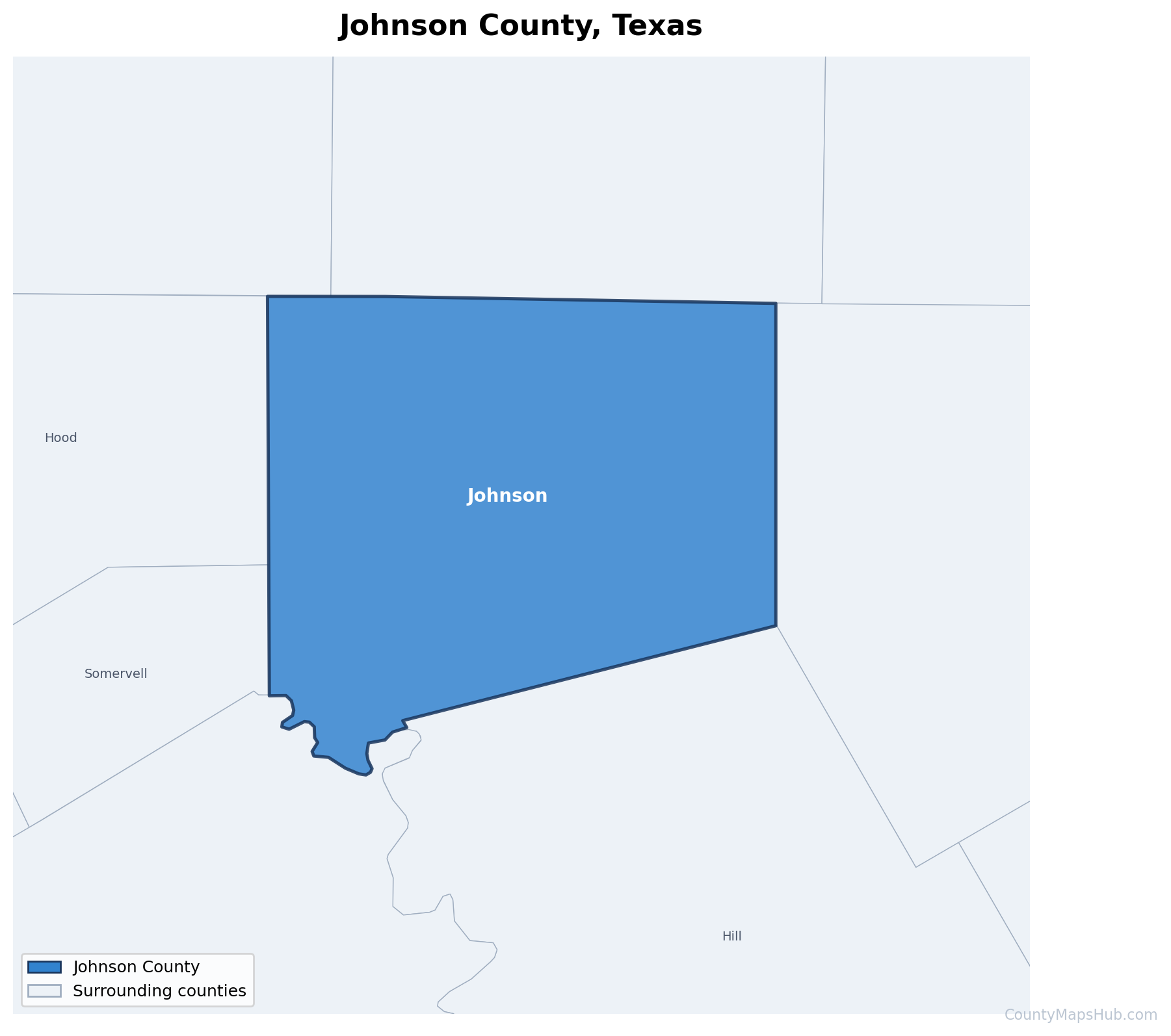
According to the 2020 Census, Johnson County recorded a population of 179,927 residents, reflecting significant growth in recent decades as part of the broader expansion of the Dallas-Fort Worth metropolitan region. The county spans 729 square miles, creating a population density that balances suburban development with rural agricultural land uses. This population growth has been driven by families and individuals seeking more affordable housing options while maintaining access to employment opportunities in nearby metropolitan areas. The demographic composition reflects the broader trends of north-central Texas, with a mix of long-established families with deep roots in the region and newer arrivals drawn by economic opportunity and quality of life considerations.
Climate
Johnson County experiences a humid subtropical climate, characterized by hot summers and mild to cool winters typical of north-central Texas. Summer temperatures regularly reach the 90s Fahrenheit, with high humidity levels that can make conditions feel even warmer. Winters are generally moderate, with occasional cold fronts bringing brief periods of freezing temperatures and rare winter precipitation events.
The region receives moderate rainfall distributed throughout the year, with peak precipitation typically occurring in spring months when severe thunderstorms are also most common. These spring storm systems can occasionally produce significant weather events including hail, strong winds, and tornadoes. The transitional seasons of spring and fall tend to offer the most comfortable weather conditions, with mild temperatures and lower humidity levels that make outdoor activities particularly enjoyable.
Tourist Attractions
Visitors to Johnson County can explore a variety of attractions that showcase the natural beauty and cultural heritage of north-central Texas. The region offers opportunities for outdoor recreation including hiking, fishing, and wildlife observation at various public lands and waterways. Local parks and nature areas provide spaces for family gatherings, sports activities, and enjoying the Texas landscape. The area’s agricultural heritage remains visible in working ranches and farmland that dot the countryside.
Cultural attractions include local museums that preserve and interpret the region’s history, from early settlement days through modern development. The county seat features historic downtown areas with period architecture that reflects different eras of Texas building styles. Throughout the year, communities host various festivals and events celebrating local traditions, seasonal harvests, and regional culture. Antique shops, local dining establishments, and craft markets provide opportunities to experience the character of small-town Texas while enjoying the hospitality for which the region is known.
Culture
Johnson County embodies the cultural traditions of north-central Texas, where agricultural heritage blends with growing suburban influences from nearby metropolitan areas. The region maintains strong connections to ranching and farming traditions that have shaped community values and social structures for generations. Local culture emphasizes family connections, community involvement, and the preservation of rural Texas traditions even as development continues. Churches and community organizations play central roles in social life, hosting gatherings and supporting civic initiatives.
The culinary landscape reflects classic Texas fare, with barbecue, Tex-Mex cuisine, and Southern-influenced cooking forming the foundation of local food culture. High school sports, particularly football, generate strong community support and serve as important social gatherings. Country and western music, rodeo culture, and outdoor recreational activities remain popular pastimes. As the county continues to grow, longtime residents and newcomers alike contribute to an evolving cultural identity that respects traditional values while adapting to demographic changes and economic development.