Karnes County
About
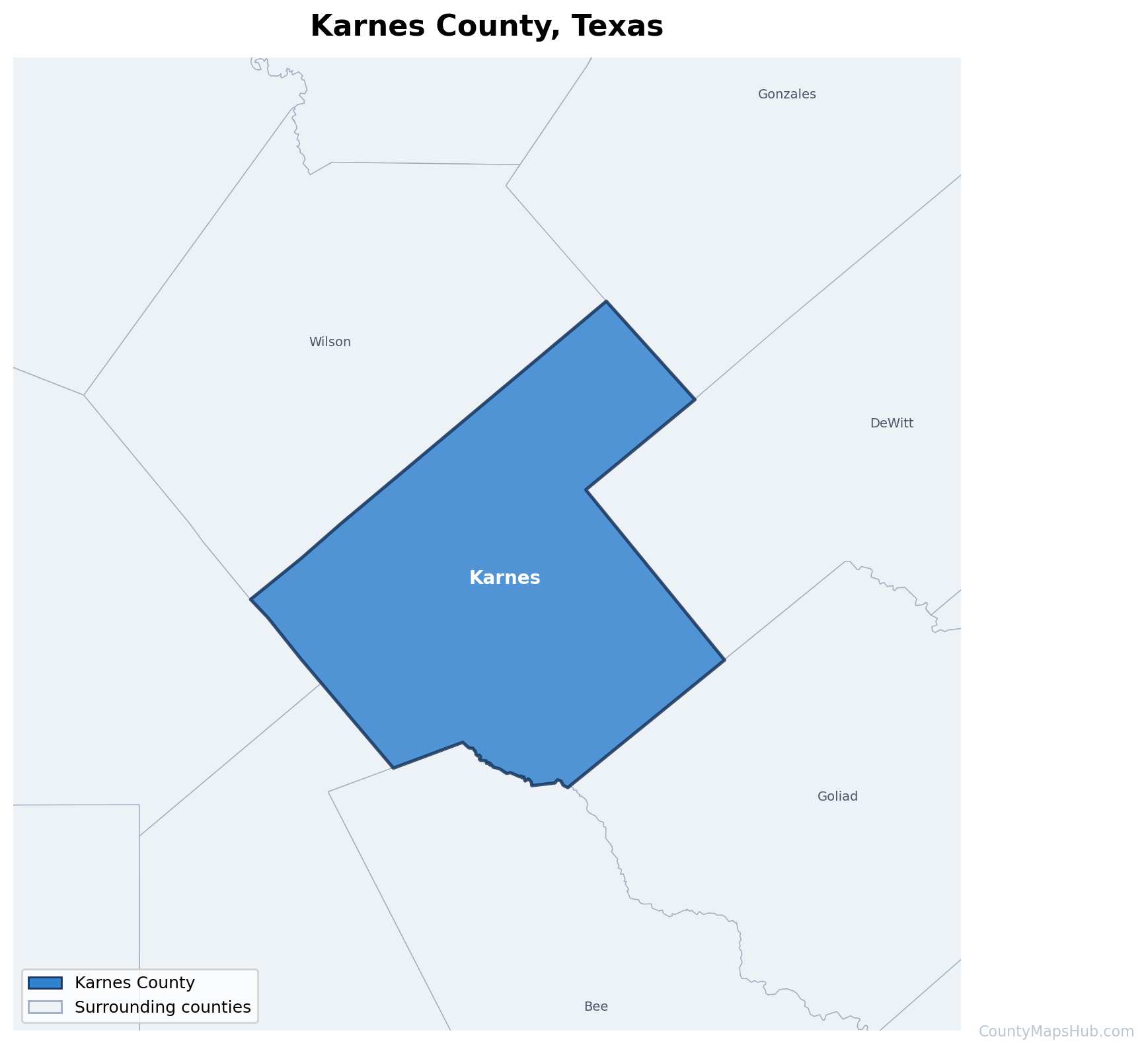
Karnes County was established in 1854 in the heart of South Texas, named after Henry Wax Karnes, a notable figure in early Texas history. The county seat, Karnes City, has served as the governmental center since the county’s organization. During the mid-19th century, the region developed as ranching and agricultural lands attracted settlers to the area.
Throughout its history, the county has reflected broader patterns of South Texas development, transitioning from frontier territory to an established agricultural region. The 750 square miles of Karnes County have witnessed significant economic evolution over the decades, adapting to changing industries while maintaining connections to its historical roots. The county’s development has been shaped by its location in the South Texas plains, where land use patterns have evolved from traditional ranching to include various forms of resource development and modern agriculture.
Population
According to 2020 census data, Karnes County had a population of 14,710 residents spread across its 750 square miles. This population density reflects the county’s largely rural character, typical of many South Texas counties where small towns and unincorporated communities are interspersed with agricultural lands. The population has historically been shaped by economic opportunities in agriculture, ranching, and more recently, energy sector development. Demographic patterns in the county reflect the broader cultural heritage of South Texas, with communities maintaining strong ties to regional traditions while adapting to contemporary economic realities.
Climate
Karnes County experiences a humid subtropical climate characterized by hot summers and mild winters typical of the South Texas region. The climate supports a long growing season with warm temperatures prevailing for much of the year. Rainfall patterns generally follow the subtropical model, with precipitation distributed throughout the year though with seasonal variations.
The humid subtropical designation means the area receives sufficient moisture to support various agricultural activities, though periodic drought conditions can occur as is common throughout Texas. Temperature variations between summer and winter are moderate compared to northern regions, with freezing temperatures being relatively uncommon. This climate zone creates favorable conditions for livestock operations and certain crop production that have historically been important to the local economy.
Tourist Attractions
Karnes County offers visitors an authentic South Texas experience with opportunities to explore the region’s rural landscapes and small-town atmosphere. The area’s historical significance provides context for understanding the development of South Texas during the 19th and 20th centuries. Visitors interested in Texas history can explore local heritage sites and experience the character of traditional South Texas communities.
The natural environment of the county features the rolling terrain and native vegetation typical of the South Texas plains. Outdoor enthusiasts may find opportunities for wildlife observation, as the region supports diverse species adapted to the subtropical climate. The county’s rural roads and open spaces offer scenic drives through working ranch lands and agricultural areas that have defined the region’s economy for generations. Local community events throughout the year reflect the area’s cultural traditions and provide visitors with opportunities to experience regional hospitality.
Culture
Karnes County’s cultural identity is deeply rooted in South Texas traditions that blend various historical influences into a distinct regional character. The area reflects the ranching heritage that has shaped much of rural Texas, with community values emphasizing connection to the land and agricultural traditions. Local customs and social life often revolve around shared community events that bring together residents from across the county’s towns and rural areas.
The cultural landscape includes influences from various groups that have contributed to South Texas development over generations. Traditional foodways, music, and celebrations reflect this diverse heritage while maintaining a distinctly South Texas flavor. Small-town life in the county emphasizes strong community bonds, with local institutions serving as gathering places for residents. The preservation of regional traditions coexists with adaptation to modern economic realities, creating a cultural environment that honors the past while looking toward the future.