Kaufman County
About
Kaufman County was established in 1848 and named after David Spangler Kaufman, a prominent Texas politician and diplomat who served in the Republic of Texas Congress and later as a U.S. Congressman. The county was formed during the period of rapid expansion following Texas statehood in 1845, when the young state was organizing its governmental structure and subdividing larger counties into more manageable administrative units.
The area that would become Kaufman County was originally inhabited by various Native American groups before European settlement began in earnest during the 1840s. Early settlers were drawn to the region’s fertile soil and access to water resources, establishing agricultural communities that would form the foundation of the county’s economy. The county seat, the city of Kaufman, was established to serve as the governmental and commercial center for the growing population.
Throughout the nineteenth and twentieth centuries, Kaufman County evolved from a primarily agricultural region into a more diverse economy. The arrival of railroads facilitated trade and commerce, connecting local farmers and ranchers to larger markets. In recent decades, the county has experienced significant growth due to its proximity to the Dallas-Fort Worth metropolitan area, transforming portions of the county while maintaining its historical character in other areas.
Population
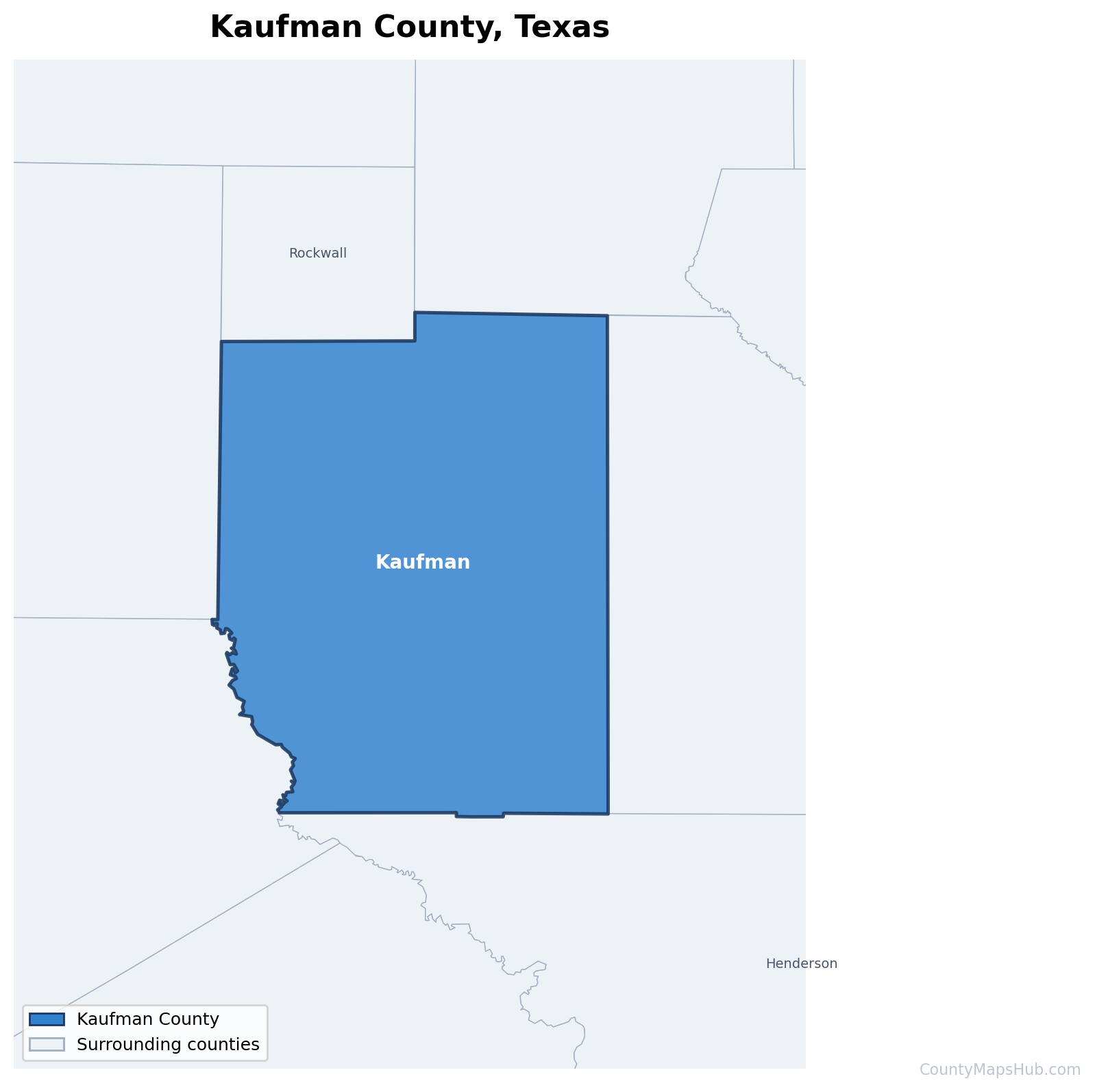
As of the 2020 census, Kaufman County recorded a population of 145,310 residents, reflecting substantial growth over previous decades. This population increase is largely attributed to the county’s location within the greater Dallas-Fort Worth metropolitan region, making it an attractive option for families and individuals seeking more affordable housing while maintaining access to urban employment opportunities. The county spans 786 square miles, providing a mix of developed areas and open spaces that accommodate both residential growth and agricultural land use. The population distribution reflects a blend of longtime residents whose families have deep roots in the county’s agricultural heritage and newer arrivals drawn by economic opportunities and quality of life considerations.
Climate
Kaufman County experiences a humid subtropical climate characterized by hot summers and mild to cool winters. Summer temperatures regularly climb into the 90s Fahrenheit, with high humidity levels that can make conditions feel even warmer. Thunderstorms are common during the spring and early summer months, occasionally bringing severe weather including hail and strong winds.
Winter months are generally mild compared to northern regions, with occasional cold fronts bringing brief periods of freezing temperatures. Precipitation is distributed throughout the year, with slightly higher amounts typically occurring in spring. The growing season is long, which historically supported the county’s agricultural activities. Residents should be prepared for the possibility of severe weather during peak storm seasons and the heat and humidity that characterize Texas summers.
Tourist Attractions
Kaufman County offers visitors a chance to experience authentic Texas culture and natural beauty. The region features opportunities for outdoor recreation including fishing, hiking, and wildlife observation at various public lands and waterways. Local parks provide spaces for family activities and community gatherings, while the county’s lakes attract anglers and boating enthusiasts throughout the warmer months.
Those interested in Texas history can explore the county’s historical architecture and heritage sites that reflect its nineteenth-century origins and agricultural past. The county seat and surrounding communities feature examples of traditional Texas courthouse architecture and historic downtown districts. Seasonal events and local festivals celebrate the area’s agricultural heritage and community spirit, offering visitors a glimpse into small-town Texas life. Antique shops and local businesses in various communities provide opportunities to discover regional crafts and products.
Culture
The cultural character of Kaufman County reflects its roots as a traditional Texas agricultural community combined with the influences of its growing suburban population. Long-standing residents maintain connections to ranching and farming traditions that have shaped the county since its establishment, while newer residents bring diverse perspectives from the broader metropolitan area. This blend creates a unique cultural environment where rural values coexist with suburban amenities.
Community life in Kaufman County centers around local schools, churches, and civic organizations that foster strong neighborhood bonds. High school sports, particularly football, remain an important part of community identity, drawing residents together for Friday night games and seasonal competitions. The county’s cultural landscape includes a mix of country and western traditions, barbecue culture, and Texan hospitality. Local restaurants and gathering places serve regional cuisine, and community events throughout the year provide opportunities for residents to celebrate their shared heritage and build connections across the county’s diverse population.