King County
About
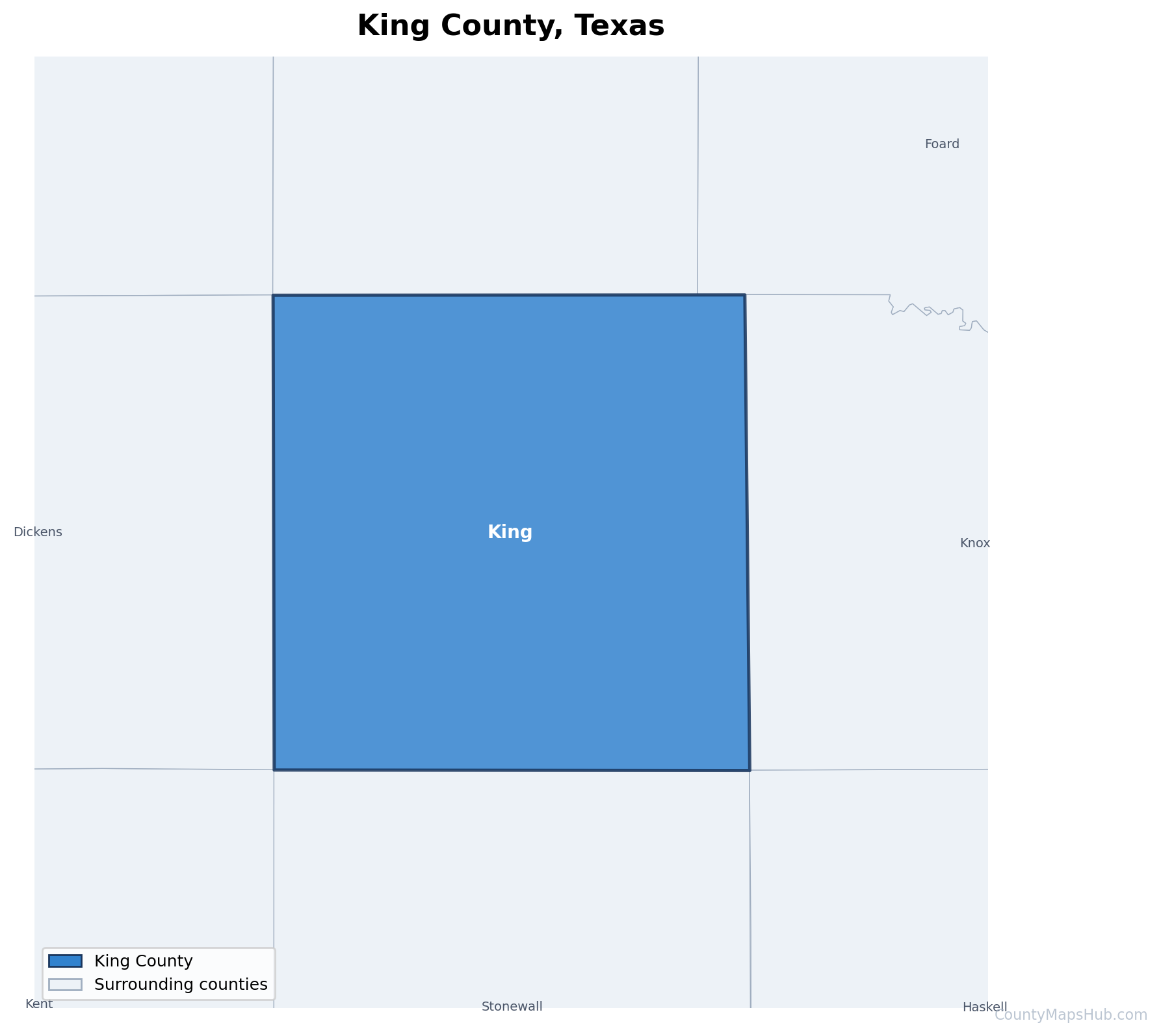
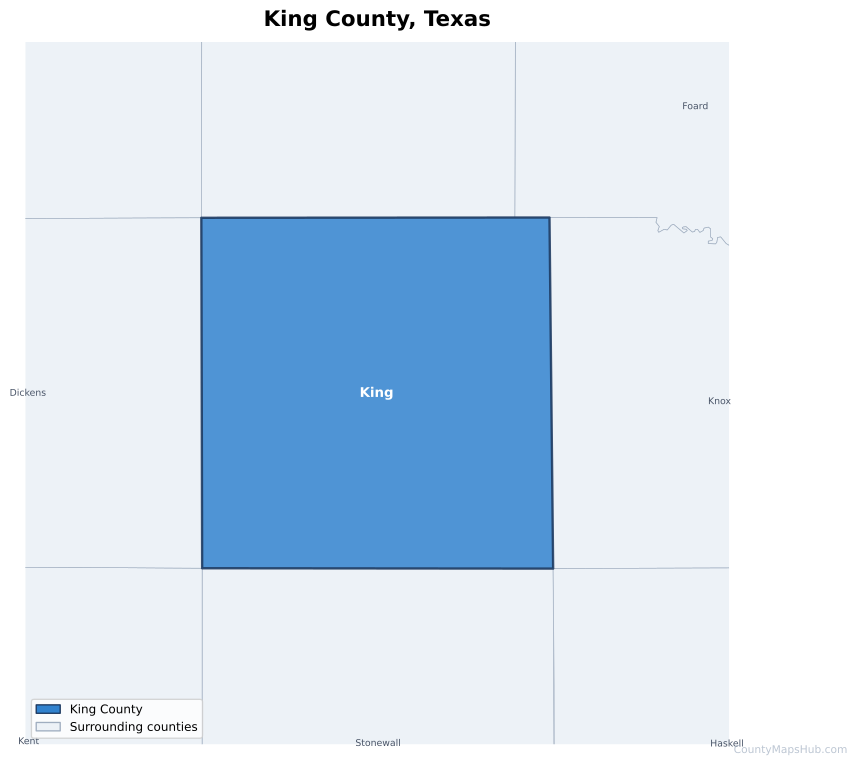
King County was established in 1876 during a period of westward expansion in Texas. The county was named after William P. King, honoring his contributions to the region. Located in the Rolling Plains of West Texas, the area that became King County was part of the frontier territory that saw significant development in the late 19th century as ranching operations expanded across the state.
With Guthrie serving as the county seat, King County represents the heritage of rural Texas communities that developed around agriculture and livestock industries. The county’s formation coincided with the broader settlement patterns of West Texas, where vast expanses of land were organized into governmental units to serve the needs of growing populations. Throughout its history, the region has maintained its character as part of Texas’s agricultural heartland, shaped by the challenges and opportunities of life on the plains.
Population
According to the 2020 census, King County has a population of 265 residents, making it one of the least populated counties in Texas. This small population is distributed across the county’s 914 square miles, resulting in a very low population density characteristic of rural West Texas counties. The limited population reflects the county’s rural agricultural character and the economic realities of ranching and farming in semi-arid regions. Despite its small size, the community maintains essential services and a distinct identity rooted in the traditions of West Texas rural life.
Climate
King County experiences a semi-arid climate typical of the Rolling Plains region of West Texas. The area receives limited annual precipitation, with most rainfall occurring during spring and early summer months. Temperatures vary considerably between seasons, with hot summers where daytime highs frequently exceed 90 degrees Fahrenheit, and cooler winters that can bring occasional freezing conditions.
The semi-arid climate significantly influences local agriculture and land use patterns, favoring ranching operations over crop cultivation in many areas. The region experiences abundant sunshine throughout the year, and weather conditions can include strong winds, particularly during spring months. Residents and visitors should be prepared for the temperature extremes and occasional severe weather events typical of the Texas plains.
Tourist Attractions
King County offers visitors an authentic glimpse into rural West Texas life and the expansive landscapes of the Rolling Plains. The wide-open spaces and scenic vistas provide opportunities for those interested in experiencing the natural beauty of semi-arid grasslands and the distinctive character of sparsely populated Texas counties. Visitors can observe the region’s ranching heritage and the lifestyle that has defined this area for generations.
Outdoor enthusiasts may find opportunities for activities suited to the plains environment, including wildlife observation and photography of the dramatic Texas skies. The county seat of Guthrie provides a window into small-town Texas culture. Those interested in authentic rural experiences and the history of West Texas settlement will appreciate the opportunity to explore one of the state’s least populated counties, where the landscape remains largely unchanged from earlier eras.
Culture
The cultural identity of King County is deeply rooted in the ranching traditions and pioneer spirit of West Texas. The small population fosters a close-knit community where neighbors know one another and self-reliance remains an important value. The county’s heritage reflects the resilience required to thrive in a challenging semi-arid environment, and local culture celebrates the skills and traditions associated with livestock management and rural life.
Community gatherings and local events typically center around agricultural activities and the rhythms of ranch life. The isolation and vast spaces of the region have cultivated a distinct way of life that values independence, hard work, and connection to the land. Visitors to King County can experience a way of life that has largely disappeared in more urbanized parts of Texas, where the pace is slower and the connection between people and the environment remains fundamental to daily existence.