Kleberg County
About
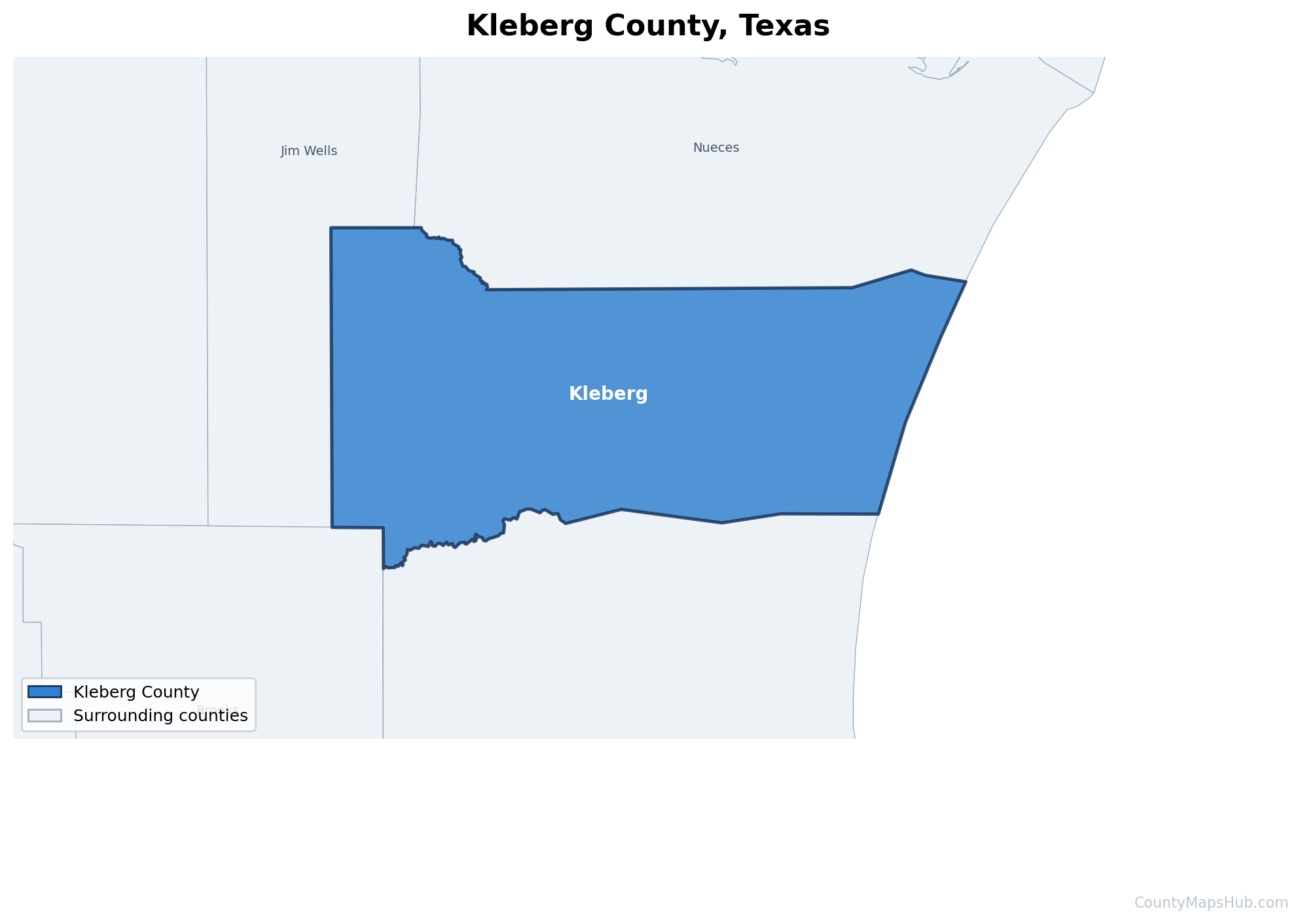
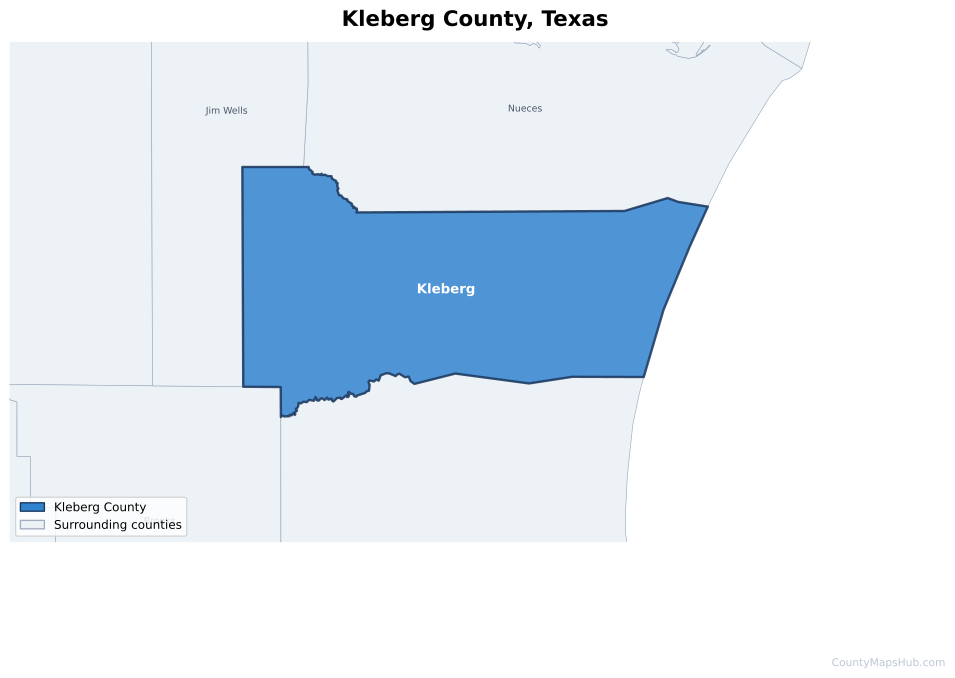
Kleberg County was established in 1913, making it one of the younger counties in the Texas coastal region. Named after Robert Justus Kleberg Sr., a prominent figure in South Texas development, the county was carved from territories that had previously been part of the expansive ranchlands characteristic of this region. The establishment of the county coincided with a period of growth and modernization in South Texas, as agricultural and ranching enterprises expanded throughout the early twentieth century.
The county seat, Kingsville, became the administrative and economic center of the region. Throughout the twentieth century, the area developed its identity within the broader context of South Texas culture and economy. The county’s history is intertwined with the ranching heritage that has defined much of the coastal plains region, where vast properties supported cattle operations and agricultural activities that shaped settlement patterns and economic development for generations.
Population
According to 2020 census data, Kleberg County has a population of 31,040 residents spread across its 872 square miles. This population density reflects the rural character common to many South Texas counties, where settlement concentrates in urban centers while surrounding areas remain devoted to agricultural and ranching uses. The county seat of Kingsville serves as the primary population center, providing services, employment, and community resources for residents throughout the region. The demographic composition reflects the broader cultural patterns of South Texas, with influences from both Anglo-American and Hispanic traditions shaping community life and social institutions.
Climate
Kleberg County experiences a semi-arid climate typical of the South Texas coastal region. This climate zone is characterized by hot summers, mild winters, and limited annual rainfall compared to more humid areas of the state. Temperatures can be quite warm during summer months, while winters remain generally temperate, allowing for year-round outdoor activities and supporting the agricultural operations that have historically defined the local economy.
The semi-arid conditions influence vegetation patterns, water resource management, and land use practices throughout the county. Drought-resistant plants and grasses naturally occur across the landscape, and agricultural operations must adapt to the limited moisture availability. The proximity to the Gulf of Mexico moderates some temperature extremes while contributing to occasional tropical weather systems that can bring significant rainfall events during the late summer and fall months.
Tourist Attractions
Visitors to Kleberg County can explore the heritage of South Texas ranching culture and the natural landscapes of the coastal plains region. The area offers opportunities for outdoor recreation, including hunting, fishing, and wildlife observation in the prairies and brushlands that characterize the terrain. Birdwatching attracts enthusiasts seeking species native to this transitional zone between coastal and inland ecosystems.
The county seat provides access to local museums and cultural institutions that preserve the history of South Texas development. Visitors interested in regional heritage can discover exhibits related to ranching traditions, early settlement patterns, and the natural history of the area. The semi-arid landscape itself presents a distinctive environment for those exploring the diversity of Texas geography, with native flora and fauna adapted to the climate conditions creating unique viewing opportunities throughout the year.
Culture
Kleberg County’s cultural identity reflects the blended heritage of South Texas, where Anglo-American and Hispanic traditions have intermingled for generations. This cultural fusion appears in local cuisine, music, language, and community celebrations that honor both historical influences. The ranching legacy remains central to the regional character, with equestrian traditions, western heritage, and agricultural practices continuing to shape community values and social structures.
Family connections and long-standing community ties characterize social life in the county, with many residents maintaining roots in the area across multiple generations. Religious institutions, civic organizations, and educational facilities serve as gathering points for community engagement. The cultural landscape encompasses both preservation of historical traditions and adaptation to contemporary life, balancing respect for heritage with ongoing economic and social development in the South Texas region.