Knox County
About
Knox County was established in 1858 and named after Henry Knox, a distinguished military officer who served as the first United States Secretary of War under President George Washington. The county’s formation reflected the westward expansion of Texas settlement during the mid-nineteenth century, as pioneers sought new agricultural opportunities in the state’s interior regions. Benjamin, designated as the county seat, became the administrative and commercial center for the developing rural community.
Throughout its history, Knox County has remained primarily agricultural, with ranching and farming shaping the local economy and culture. The semi-arid climate and rolling terrain influenced settlement patterns and land use practices. Like many rural Texas counties, Knox County experienced population shifts over the decades as mechanization reduced labor demands and younger generations migrated to urban centers for economic opportunities.
Population
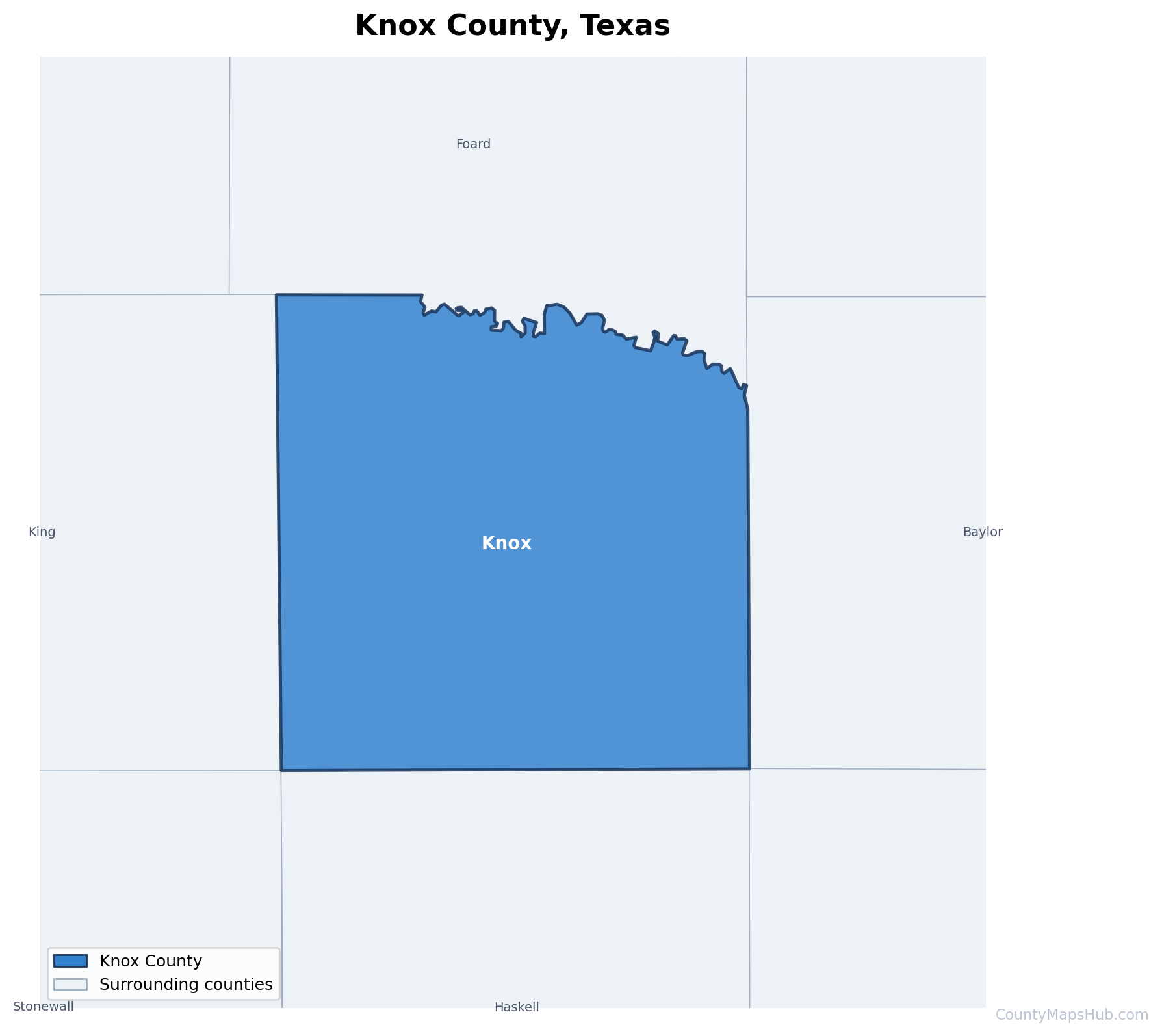
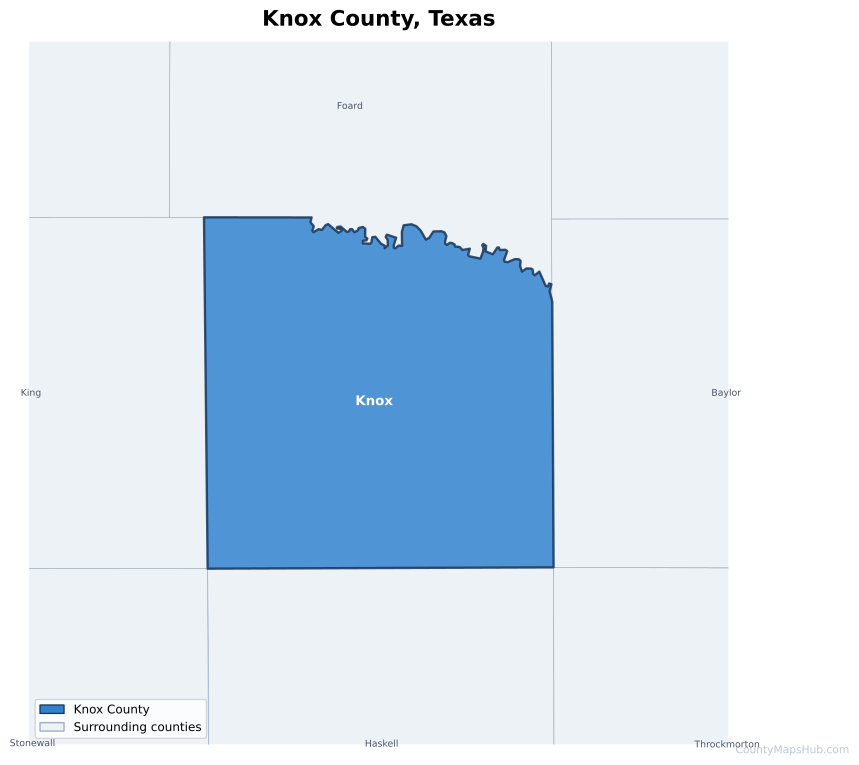
According to the 2020 census, Knox County recorded a population of 3,409 residents, reflecting the area’s character as a sparsely populated rural county. The population density remains quite low across the county’s 854 square miles, with residents concentrated primarily in small communities and dispersed across agricultural properties. This modest population size is typical of West Texas counties where ranching and farming predominate, and where residents maintain strong community ties despite geographic distances between neighbors.
Climate
Knox County experiences a semi-arid climate characteristic of the Texas Rolling Plains region. This climate pattern features hot summers with temperatures frequently exceeding 90 degrees Fahrenheit, and mild to cool winters with occasional freezing conditions. Precipitation is limited and irregular throughout the year, averaging less than the state mean, which has historically influenced agricultural practices and water resource management.
The semi-arid conditions support native grasslands and adapted vegetation, with periodic drought cycles presenting ongoing challenges for ranchers and farmers. Clear skies and low humidity are common throughout much of the year, contributing to wide daily temperature variations. These climatic conditions have shaped the county’s landscape and continue to influence economic activities and lifestyle patterns for residents.
Tourist Attractions
Visitors to Knox County can experience the authentic character of rural West Texas, where wide open spaces and agricultural landscapes dominate the scenery. The region offers opportunities for those interested in understanding traditional ranching culture and small-town Texas life. Outdoor enthusiasts may appreciate the area for birdwatching, wildlife observation, and photography of the distinctive semi-arid terrain.
The county seat of Benjamin provides a glimpse into small-town Texas heritage, with historic architecture and local establishments reflecting the area’s frontier roots. Those traveling through the region can explore the rolling plains landscape, which offers a peaceful contrast to urban environments. Regional museums and cultural sites in the broader area provide context for understanding the settlement history and development of West Texas communities.
Culture
Knox County embodies the cultural traditions of rural West Texas, where ranching heritage and agricultural values remain central to community identity. Social life often revolves around local events, school activities, and community gatherings that bring together residents from across the county’s dispersed population. The strong sense of neighborliness and self-reliance characteristic of frontier communities continues to influence local culture.
Regional traditions reflect a blend of Anglo-American and Hispanic influences common throughout this part of Texas. Local cuisine, music, and celebrations often incorporate elements from ranching culture and agricultural calendars. The pace of life tends to be slower and more closely connected to the land and seasonal cycles than in urban areas, with many families maintaining multi-generational ties to the region and its agricultural economy.