Lampasas County
About
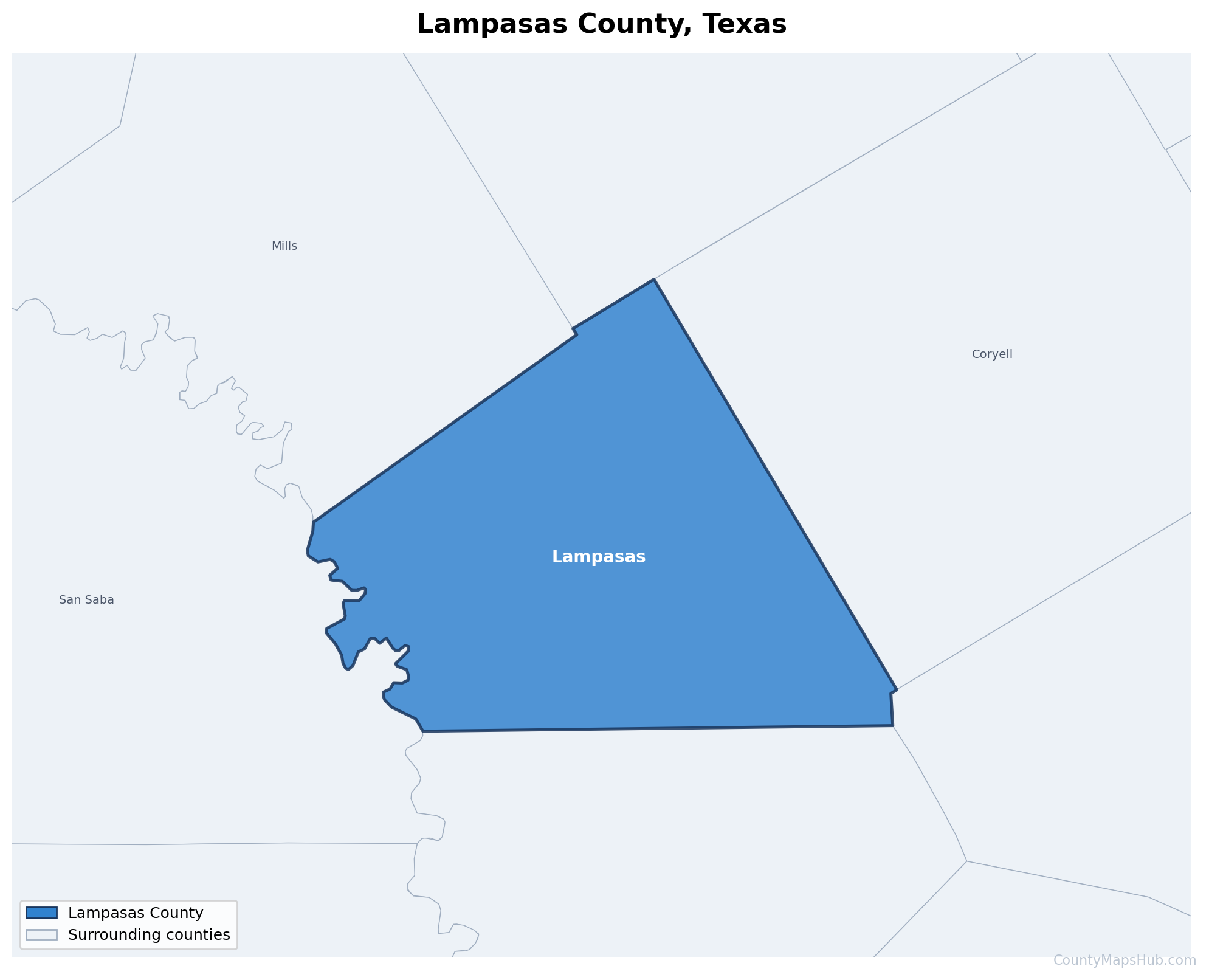
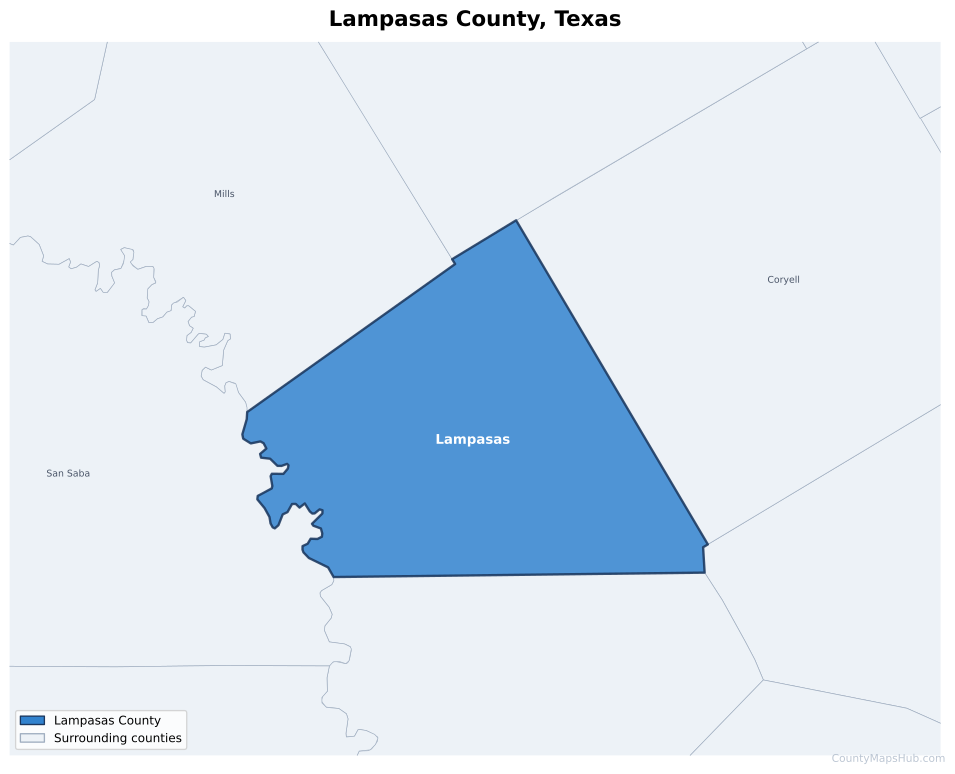
Lampasas County was established in 1856, forming part of the expanding network of counties across Central Texas during the mid-19th century. The county derives its name from the Lampasas River, which flows through the region and has served as a vital water source for settlements and agriculture throughout its history. The area’s development reflected the broader patterns of westward expansion in Texas, with early settlers drawn to the region’s natural resources and strategic location.
The county seat, Lampasas, grew as a center of commerce and governance, serving the surrounding agricultural communities. Throughout the late 1800s and early 1900s, the region transitioned from frontier territory to an established county with developing infrastructure. The economy traditionally centered on ranching and farming, taking advantage of the rolling terrain and available water resources that characterize this part of the Texas Hill Country region.
Population
According to the 2020 census, Lampasas County has a population of 21,796 residents distributed across its 712 square miles. This population density reflects the county’s character as a rural region with small-town communities interspersed throughout the landscape. The population has remained relatively stable, maintaining the county’s identity as a less densely populated area compared to the rapidly growing metropolitan regions of Central Texas. The demographic makeup includes families with multi-generational ties to the area as well as newer residents attracted by the county’s quality of life and proximity to larger urban centers.
Climate
Lampasas County experiences a humid subtropical climate, characterized by hot summers and mild to cool winters typical of Central Texas. Summer temperatures regularly reach the upper 90s Fahrenheit, while winters generally see moderate conditions with occasional freezes. The region receives variable precipitation throughout the year, with spring and early summer typically being the wettest periods, supporting the area’s agricultural activities and maintaining the flow of local waterways.
The climate supports a diverse ecosystem where grasslands meet wooded areas, creating habitats for native wildlife and vegetation. Residents and visitors can expect warm, sunny conditions for much of the year, though occasional severe weather including thunderstorms may occur during spring months. The temperate winters make outdoor activities feasible year-round, contributing to the appeal of the region for those who appreciate seasonal variety without extreme cold.
Tourist Attractions
Lampasas County offers visitors opportunities to experience authentic Central Texas landscapes and small-town atmosphere. The region features natural attractions including scenic drives through rolling hills, access to recreational areas along waterways, and opportunities for outdoor activities such as hiking, fishing, and wildlife observation. The county’s rural character provides a peaceful retreat from urban environments, attracting those seeking quiet getaways and nature-based experiences.
Local museums and historical sites preserve the heritage of the area, offering insights into pioneer life and the county’s development over more than a century and a half. Visitors can explore downtown areas featuring historic architecture and local businesses. The region also serves as a base for exploring the broader Texas Hill Country, with its characteristic limestone formations, spring-fed creeks, and scenic vistas that have made Central Texas a popular destination for travelers.
Culture
The cultural identity of Lampasas County reflects traditional Texas values rooted in ranching heritage and small-town community life. Social gatherings, local events, and community celebrations maintain connections among residents and preserve regional traditions. The area’s cultural fabric includes influences from the various groups who have settled in Central Texas over generations, creating a blend of Southern hospitality and Western independence characteristic of this part of the state.
Local institutions such as schools, churches, and civic organizations play central roles in community life, fostering the close-knit atmosphere typical of rural Texas counties. Agricultural traditions remain important to the local identity, with livestock and farming continuing as economic and cultural touchstones. The region’s proximity to larger cities allows residents to maintain their rural lifestyle while accessing broader cultural and economic opportunities, creating a balance that defines modern life in counties throughout the Texas Hill Country.