La Salle County
About
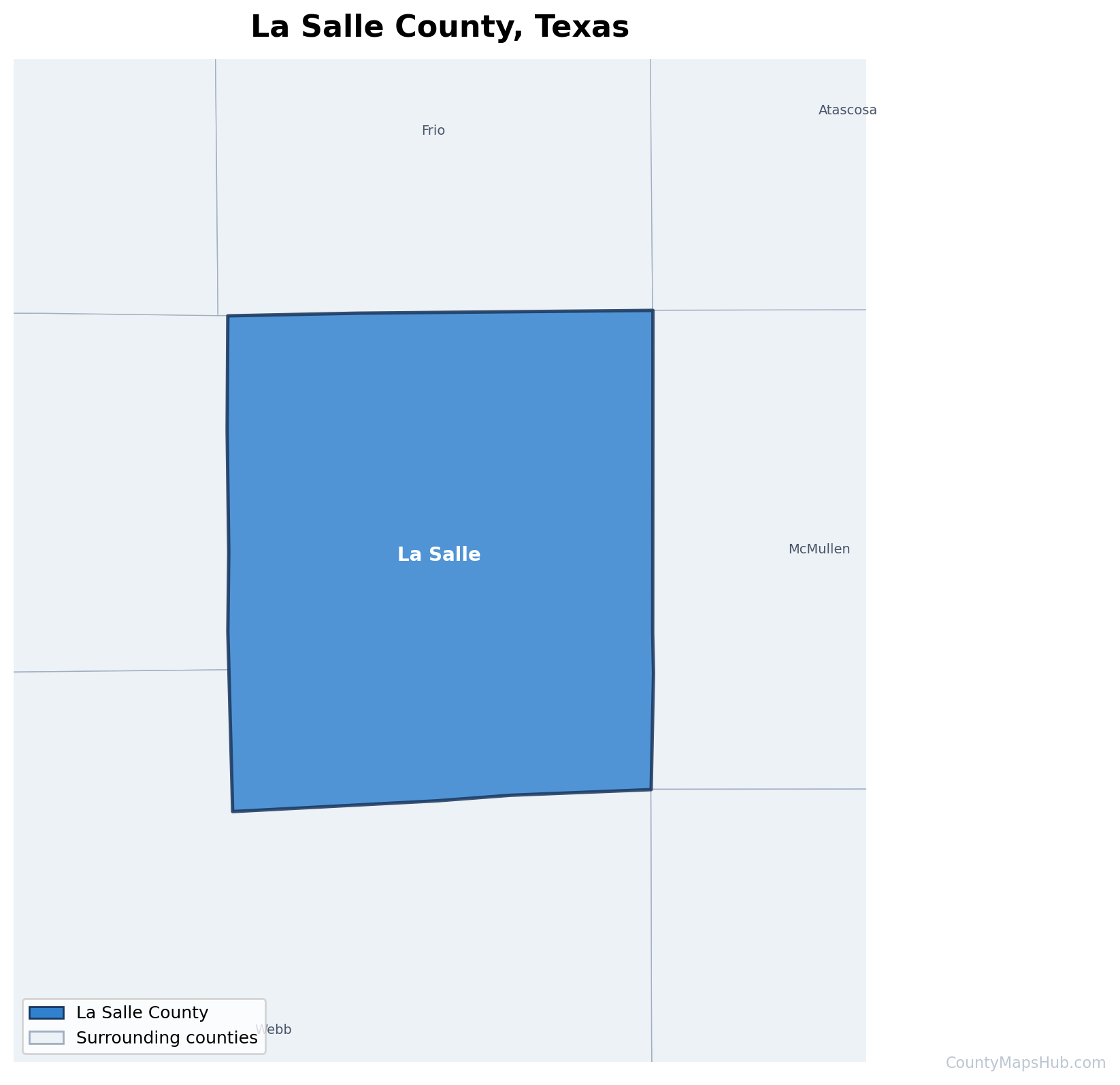
La Salle County was established in 1858 and named after René-Robert Cavelier La Salle, the famous French explorer who navigated the Mississippi River and claimed the Louisiana territory for France in the 17th century. The county’s location in South Texas placed it along historical routes used for ranching, trade, and travel between the Gulf Coast and the interior of Texas and Mexico. Cotulla serves as the county seat, anchoring the local government and community life.
Throughout its history, the region has been shaped by the ranching economy and the challenges of developing a sustainable community in a semi-arid environment. The county’s establishment came during a period of rapid territorial organization in Texas, as settlement patterns expanded beyond the original Anglo colonies. Over the decades, the area has maintained its rural character while adapting to changing economic conditions in South Texas, including developments in agriculture, energy, and transportation that have influenced the broader region.
Population
As of the 2020 census, La Salle County had a population of 6,664 residents spread across its 1,489 square miles, resulting in a low population density characteristic of rural South Texas counties. This relatively small population reflects the county’s agricultural and ranching heritage, where large land parcels support livestock operations and other rural economic activities. The demographic composition typically mirrors broader South Texas patterns, with communities maintaining strong connections to regional cultural traditions. Population trends in such rural counties often fluctuate with economic opportunities in agriculture, energy sectors, and proximity to larger urban centers in the state.
Climate
La Salle County experiences a semi-arid climate typical of inland South Texas, characterized by hot summers, mild winters, and limited annual precipitation. Summer temperatures regularly exceed 95 degrees Fahrenheit, while winter months bring cooler conditions with occasional cold fronts from the north. Rainfall is sporadic and insufficient to support most forms of agriculture without irrigation, making water resource management a critical concern for residents and ranchers.
The semi-arid conditions influence vegetation patterns, favoring drought-resistant native plants, brush species, and grasses adapted to limited moisture. These climatic factors have historically shaped land use decisions, with ranching proving more viable than traditional crop farming in many areas. Residents adapt to the climate through water conservation practices and planning around the seasonal weather patterns that define life in this part of Texas.
Tourist Attractions
Visitors to La Salle County can experience the authentic character of rural South Texas, where wide-open landscapes and ranching heritage define the regional identity. The area offers opportunities for outdoor enthusiasts interested in birdwatching, as the South Texas region serves as a corridor for migratory species and hosts diverse native bird populations. Hunting and wildlife observation attract visitors during appropriate seasons, taking advantage of the county’s expansive rural spaces.
Those interested in regional history can explore the broader context of South Texas settlement patterns, ranching culture, and the influences of Spanish and Mexican heritage that shaped the area. The county’s position along historical routes provides context for understanding trade and migration patterns in Texas history. Local traditions, community events, and the distinct landscape of the semi-arid brushlands offer visitors a glimpse into a lifestyle centered on ranching, resilience, and adaptation to the challenging but beautiful South Texas environment.
Culture
La Salle County reflects the cultural heritage of South Texas, where influences from Spanish colonial history, Mexican traditions, and Anglo settlement have blended over centuries. The region’s culture emphasizes ranching traditions, family connections, and community resilience in the face of environmental challenges. Local celebrations often incorporate traditional foods, music, and customs that have been passed down through generations, maintaining connections to both sides of the border and the broader Tejano cultural identity.
The rural character of the county fosters close-knit community relationships, where residents often know their neighbors and participate in local institutions such as schools, churches, and civic organizations. Cultural practices reflect adaptations to the semi-arid environment and the ranching economy, with skills like horsemanship, land stewardship, and water management holding practical importance. The region’s cultural identity remains rooted in agricultural traditions while gradually incorporating modern influences, creating a distinctive South Texas character that values heritage, hard work, and connection to the land.