Lavaca County
About
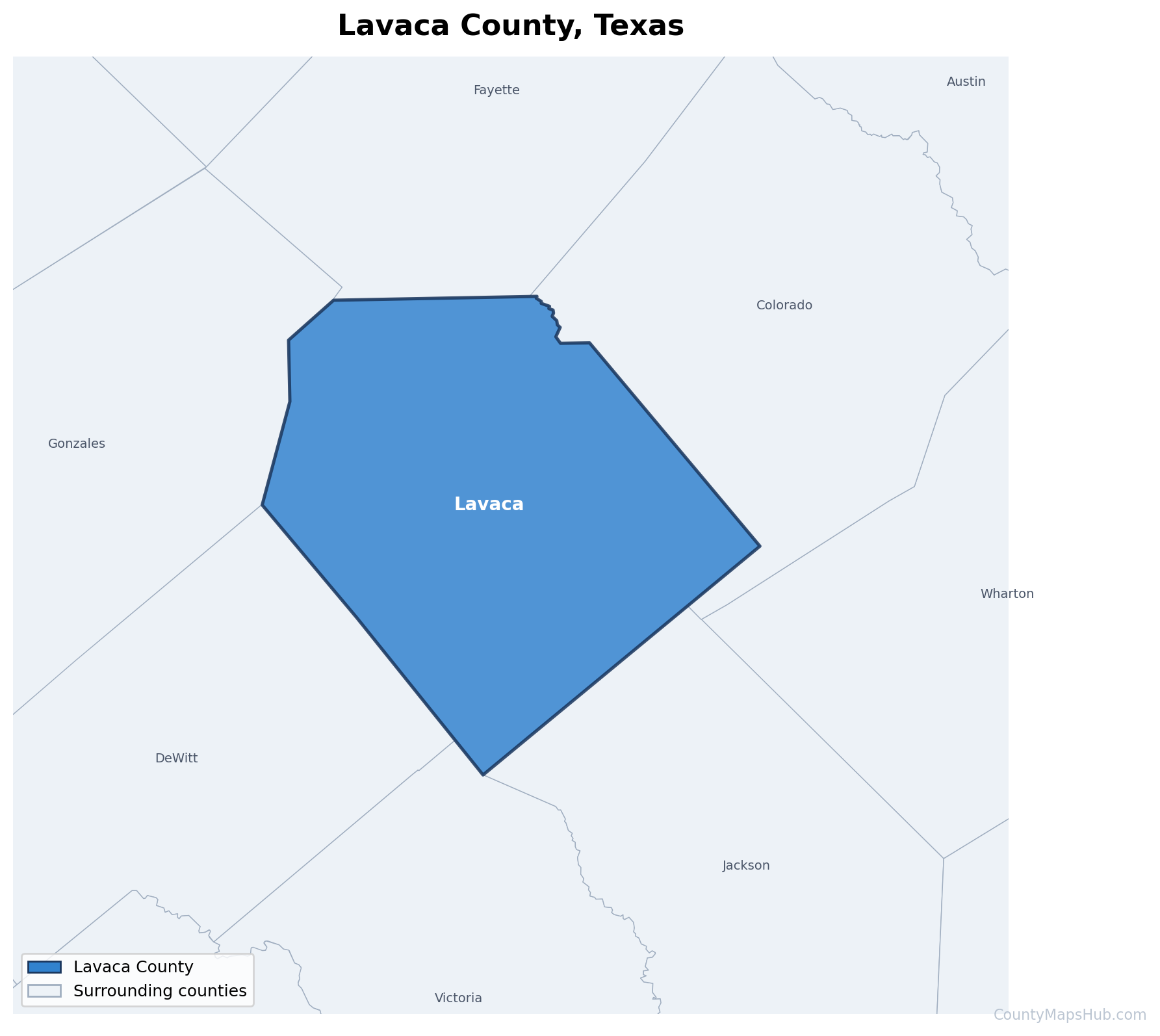
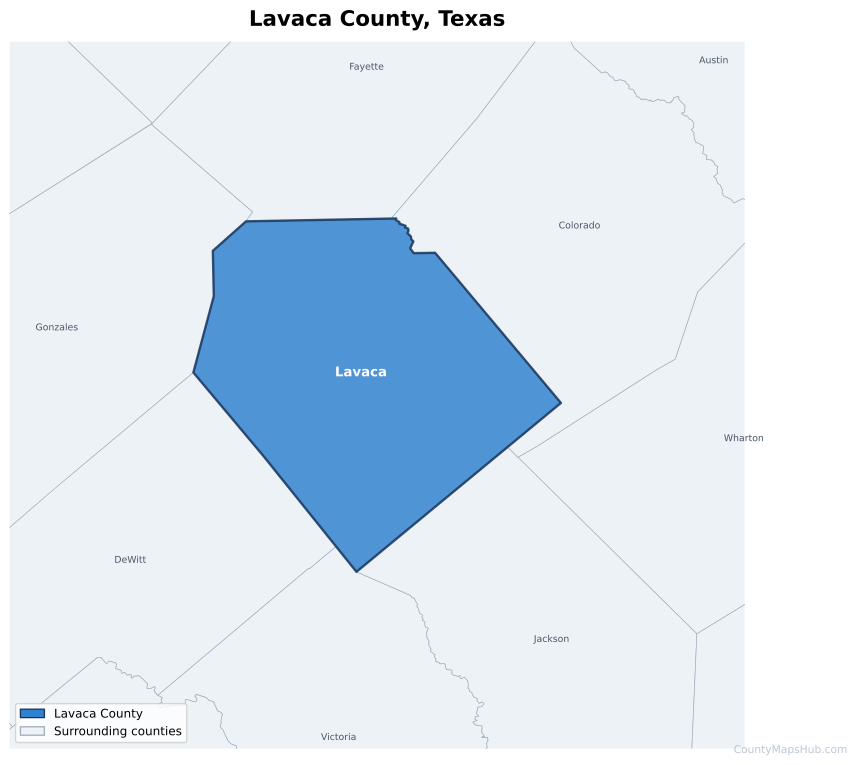
Lavaca County was established in 1846, taking its name from the Lavaca River that flows through the region. The county seat is located in Hallettsville, which has served as the governmental and commercial center since the county’s formation. The area’s settlement history reflects the broader patterns of Texas development during the mid-19th century, when the region was being organized into counties following Texas statehood in 1845.
The county’s development was shaped by its agricultural potential and position within South Texas. Early settlers were drawn to the fertile lands along the river bottomlands, establishing farming and ranching operations that would become the economic foundation of the region. Throughout the latter half of the 19th century and into the 20th century, the county evolved from a frontier territory into an established agricultural community, with small towns and rural communities developing across its 970 square miles.
Population
According to the 2020 census, Lavaca County had a population of 20,154 residents. This population density reflects the county’s primarily rural character, with residents distributed across its 970 square miles of South Texas landscape. The county seat of Hallettsville serves as the primary population center, while the remainder of the population lives in smaller communities and rural areas throughout the county. The population has remained relatively stable over recent decades, maintaining its character as a rural Texas county with deep agricultural roots and strong community connections.
Climate
Lavaca County experiences a humid subtropical climate typical of the South Texas coastal plain region. This climate pattern brings hot summers with high humidity levels and mild to cool winters. The area receives ample rainfall throughout the year, which supports the county’s agricultural activities and contributes to the lush vegetation characteristic of the region.
Summer temperatures regularly reach into the 90s Fahrenheit, with humidity from the nearby Gulf Coast creating warm, muggy conditions. Winters are generally mild, with occasional cold fronts bringing cooler temperatures but rarely sustained freezing conditions. The humid subtropical climate creates a long growing season that has historically supported the county’s farming and ranching industries, making agriculture a viable year-round endeavor.
Tourist Attractions
Visitors to Lavaca County can explore the authentic rural Texas experience that characterizes much of the South Texas region. The county’s landscape offers opportunities for outdoor recreation, including hunting, fishing, and wildlife observation. The area’s proximity to the Lavaca River provides scenic natural settings and opportunities for water-based activities. Those interested in Texas history can discover the heritage of mid-19th century settlement patterns and the development of agricultural communities in the region.
The county seat offers a glimpse into small-town Texas life, with historic architecture and local businesses that reflect the area’s heritage. Throughout the year, the region celebrates its agricultural traditions and community spirit through various local events. Visitors seeking an off-the-beaten-path Texas experience will find the county’s rural landscapes, friendly communities, and authentic local character appealing. The surrounding South Texas region also provides additional attractions and destinations within easy driving distance.
Culture
Lavaca County’s culture reflects the traditions of rural South Texas, where agricultural heritage remains central to community identity. The area’s cultural landscape has been shaped by generations of farming and ranching families, creating strong community bonds and traditions that persist today. Local values emphasize hard work, neighborliness, and connection to the land, characteristics common to rural Texas counties with agricultural foundations.
The county’s cultural life centers around community gatherings, agricultural traditions, and small-town celebrations that bring residents together throughout the year. Churches, civic organizations, and local institutions play important roles in maintaining social cohesion and preserving regional heritage. The area’s cultural identity also reflects the broader ethnic and cultural influences that have shaped South Texas, including Czech, German, and Hispanic traditions that are common throughout this region of the state. This blend of influences is evident in local foodways, community celebrations, and the architectural character of the region’s towns and rural areas.