Lee County
About
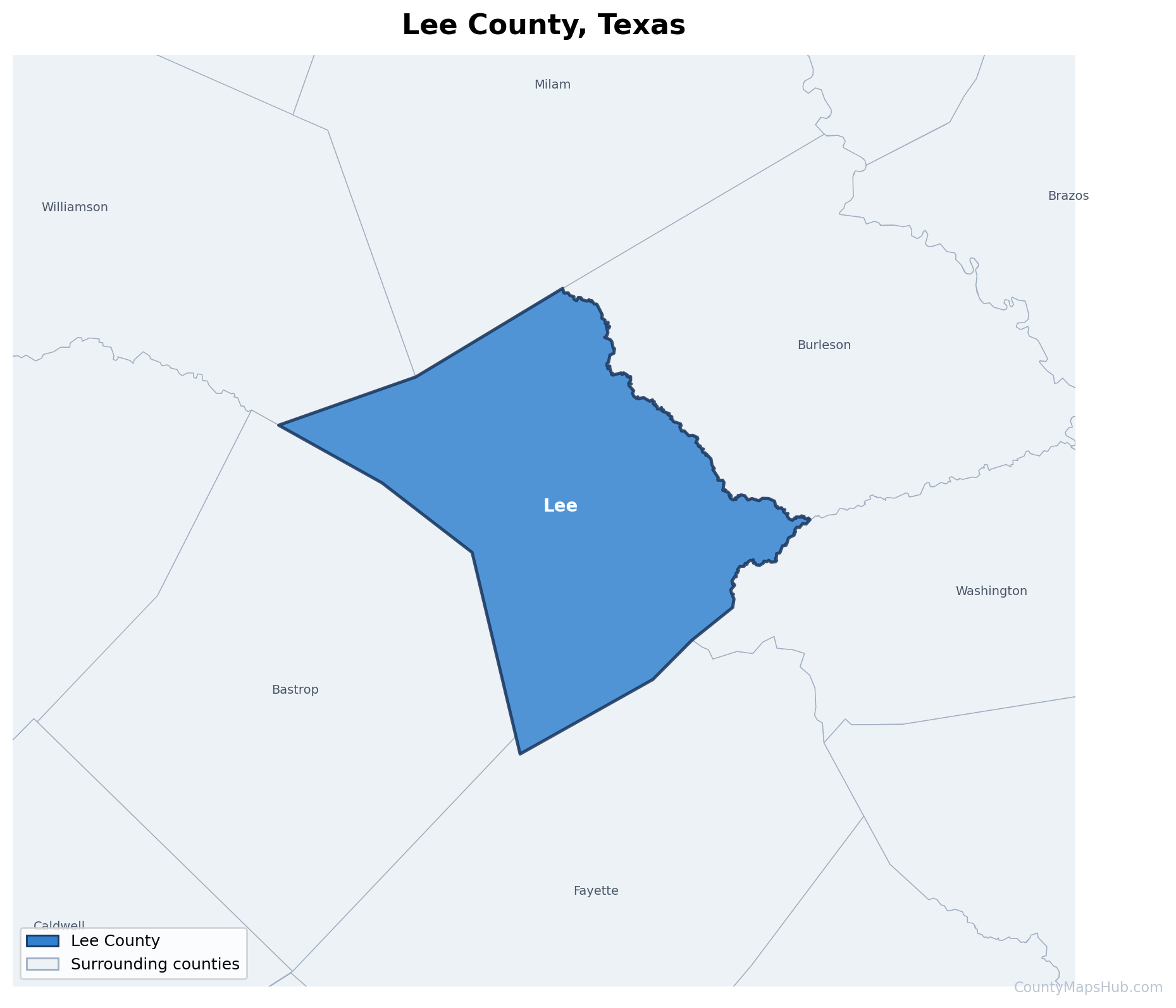
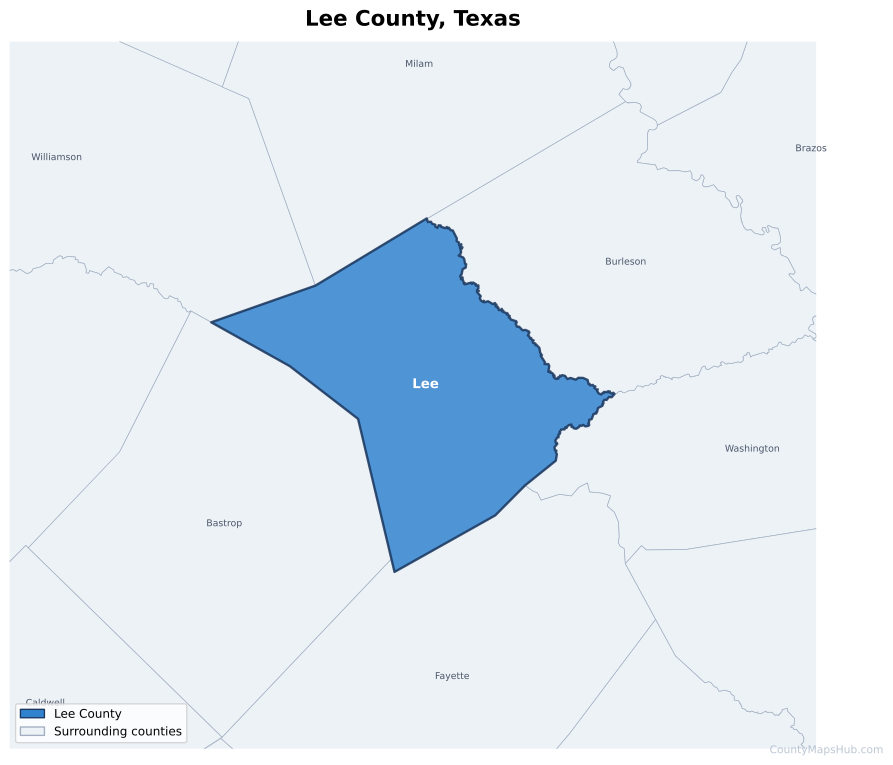
Lee County was established in 1874 and named after Robert E. Lee, the renowned Confederate general. The county was carved out of existing territories during the post-Civil War Reconstruction era, a period when Texas was reorganizing its governmental structures and expanding its network of counties to better serve growing populations. Giddings, the county seat, became the administrative center where county government and judicial functions were centralized.
Throughout its history, Lee County has maintained its roots as an agricultural region in Central Texas. The late nineteenth and early twentieth centuries saw the development of farming and ranching operations that shaped the local economy and culture. The arrival of railroad lines facilitated the transportation of agricultural products and connected the county to larger markets, contributing to steady growth and development over the decades.
Population
According to the 2020 census, Lee County has a population of 17,269 residents spread across its 629 square miles. This population density reflects the county’s character as a largely rural area with small-town communities. The demographic composition includes families with deep generational ties to the land, as well as newer residents attracted to the quieter pace of life and proximity to larger metropolitan areas in Central Texas. The population has remained relatively stable over recent decades, maintaining the county’s small-town atmosphere while adapting to gradual economic and social changes in the region.
Climate
Lee County experiences a humid subtropical climate characterized by hot summers and mild winters typical of Central Texas. Summer temperatures regularly climb into the 90s Fahrenheit, with high humidity levels that can make conditions feel warmer. Thunderstorms are common during the spring and early summer months, providing much-needed rainfall for agricultural activities.
Winters are generally mild, with occasional cold fronts bringing brief periods of cooler weather and rare freezes. The growing season is long, supporting diverse agricultural production throughout much of the year. Annual precipitation is moderate, distributed fairly evenly across the seasons, though drought conditions can occur periodically. This climate pattern has historically supported the county’s agricultural economy and continues to influence land use and lifestyle patterns.
Tourist Attractions
Visitors to Lee County can explore the charm of small-town Texas life and enjoy the scenic rural landscapes that characterize Central Texas. The area offers opportunities for outdoor recreation, including hunting, fishing, and exploring the gently rolling countryside. Historic downtown areas feature architecture from earlier eras, antique shops, and local eateries that provide authentic regional dining experiences.
The county’s location makes it a convenient stopping point for travelers exploring Central Texas, offering a slower pace compared to nearby urban centers. Seasonal activities tied to the agricultural calendar, such as harvest festivals and farmers markets, provide glimpses into local traditions. Nature enthusiasts can appreciate the native vegetation and wildlife of the region, while photography opportunities abound in the pastoral settings and small-town streetscapes that define the county’s character.
Culture
Lee County’s culture reflects traditional Texas values rooted in agriculture, community, and self-reliance. The county maintains a strong sense of local identity, with community gatherings and civic events playing important roles in social life. Churches serve as both spiritual centers and community hubs, hosting various activities throughout the year. Local schools are sources of pride, with athletic events and academic competitions bringing residents together in support of young people.
The cultural landscape blends German, Czech, and Southern influences that are common throughout Central Texas, visible in regional cuisine, architectural styles, and community traditions. Family heritage and land stewardship remain important values, with many properties passed down through generations. The slower pace of life and emphasis on neighborly relationships create a distinct atmosphere that contrasts with the rapid development occurring in some surrounding areas, preserving a connection to earlier Texas traditions while adapting to contemporary life.