Liberty County
About
Liberty County holds a distinguished place in Texas history as one of the state’s original counties, established in 1836 during the formative year of the Republic of Texas. The county takes its name from the concept of liberty itself, reflecting the revolutionary spirit and ideals of independence that characterized the Texas Revolution. The county seat, Liberty, served as an important settlement during the early development of southeast Texas.
Throughout the 19th and 20th centuries, the county evolved from a frontier region into a more developed area shaped by agriculture, timber industries, and later by the broader economic forces affecting the Texas Gulf Coast region. The county’s location in southeast Texas positioned it within the historical currents of westward expansion, the antebellum South, and eventually the modern oil and gas economy that transformed much of the state. Liberty County’s development paralleled that of many Texas counties that transitioned from rural, agricultural foundations to more diverse economic bases while maintaining connections to their historical roots.
Population
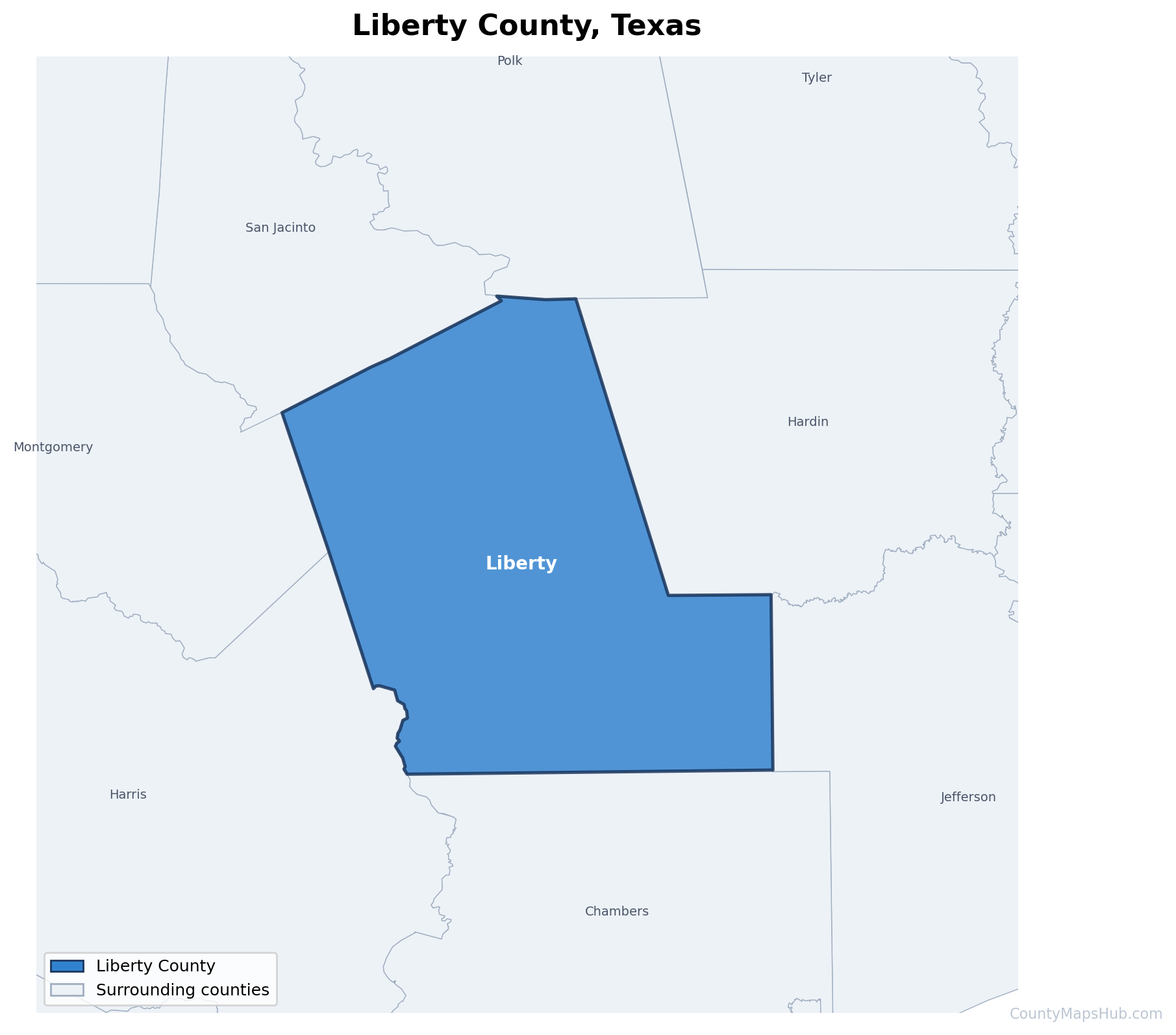
According to the 2020 census, Liberty County had a population of 91,628 residents spread across its 1,176 square miles of territory. This population density reflects a mix of small-town communities, rural areas, and regions influenced by proximity to larger metropolitan areas in southeast Texas. The county’s population has grown steadily over recent decades, driven by factors including economic opportunities, residential development, and the general population growth trends seen across the Texas Gulf Coast corridor. The demographic composition includes families with deep generational roots in the area alongside newer residents attracted by the region’s quality of life and economic prospects.
Climate
Liberty County experiences a humid subtropical climate typical of the Texas Gulf Coast region, characterized by hot, humid summers and mild to cool winters. Summer temperatures regularly climb into the 90s Fahrenheit, accompanied by high humidity levels that can make conditions feel even warmer. The area receives substantial rainfall throughout the year, with precipitation fairly well distributed across the seasons, though late spring and early fall can bring particularly heavy rainfall events.
Winters are generally mild, with freezing temperatures occurring only occasionally and snow being extremely rare. The county’s proximity to the Gulf of Mexico influences weather patterns, bringing moisture-laden air masses and occasional severe weather including thunderstorms and the potential for tropical systems during hurricane season from June through November. Residents and visitors should be prepared for the warm, humid conditions that dominate much of the year.
Tourist Attractions
Liberty County offers visitors opportunities to explore the natural landscapes and cultural heritage of southeast Texas. The region features areas for outdoor recreation including parks, nature trails, and waterways that provide settings for fishing, boating, bird watching, and hiking. The county’s position within the broader Texas Gulf Coast ecosystem means that nature enthusiasts can observe diverse plant and animal species characteristic of the southeastern Texas environment.
Historical attractions in the area allow visitors to learn about the county’s role in Texas history and its development over nearly two centuries. Local museums and historical sites preserve artifacts and stories from different eras of the county’s past. Cultural events and festivals held throughout the year celebrate regional traditions and bring communities together. Visitors interested in authentic Texas small-town experiences will find the county offers a glimpse into life in a region that balances historical preservation with contemporary development.
Culture
The cultural character of Liberty County reflects its deep Texas roots and the traditions of southeast Texas communities. The region’s heritage incorporates influences from the various groups that have called the area home over generations, creating a cultural tapestry that values history, family connections, and community ties. Local traditions often center around agricultural practices, outdoor activities, and celebrations that bring residents together throughout the year.
The county maintains cultural institutions that preserve and share regional history, while community gatherings and annual events provide opportunities for residents to celebrate shared heritage. Religious congregations, civic organizations, and volunteer groups play important roles in community life. The culture emphasizes hospitality, respect for tradition, and the independent spirit associated with Texas identity. Education and family values remain important focal points, and the county’s cultural landscape continues to evolve as new residents bring diverse perspectives while longtime families maintain connections to the area’s historical foundations.