Live Oak County
About
Live Oak County was established in 1856, carved from portions of neighboring South Texas counties during a period of significant territorial organization in the region. The county was named after the majestic live oak trees that characterize the landscape, these iconic evergreen oaks serving as prominent natural features throughout the area. George West serves as the county seat, providing administrative and governmental services to residents.
The county’s development followed patterns typical of South Texas regions, with ranching and agriculture forming the economic backbone of early settlement. The semi-arid climate and terrain proved suitable for livestock operations that would define the local economy for generations. Throughout its history, the county has maintained its rural character while adapting to changing economic conditions in the broader Texas landscape.
Population
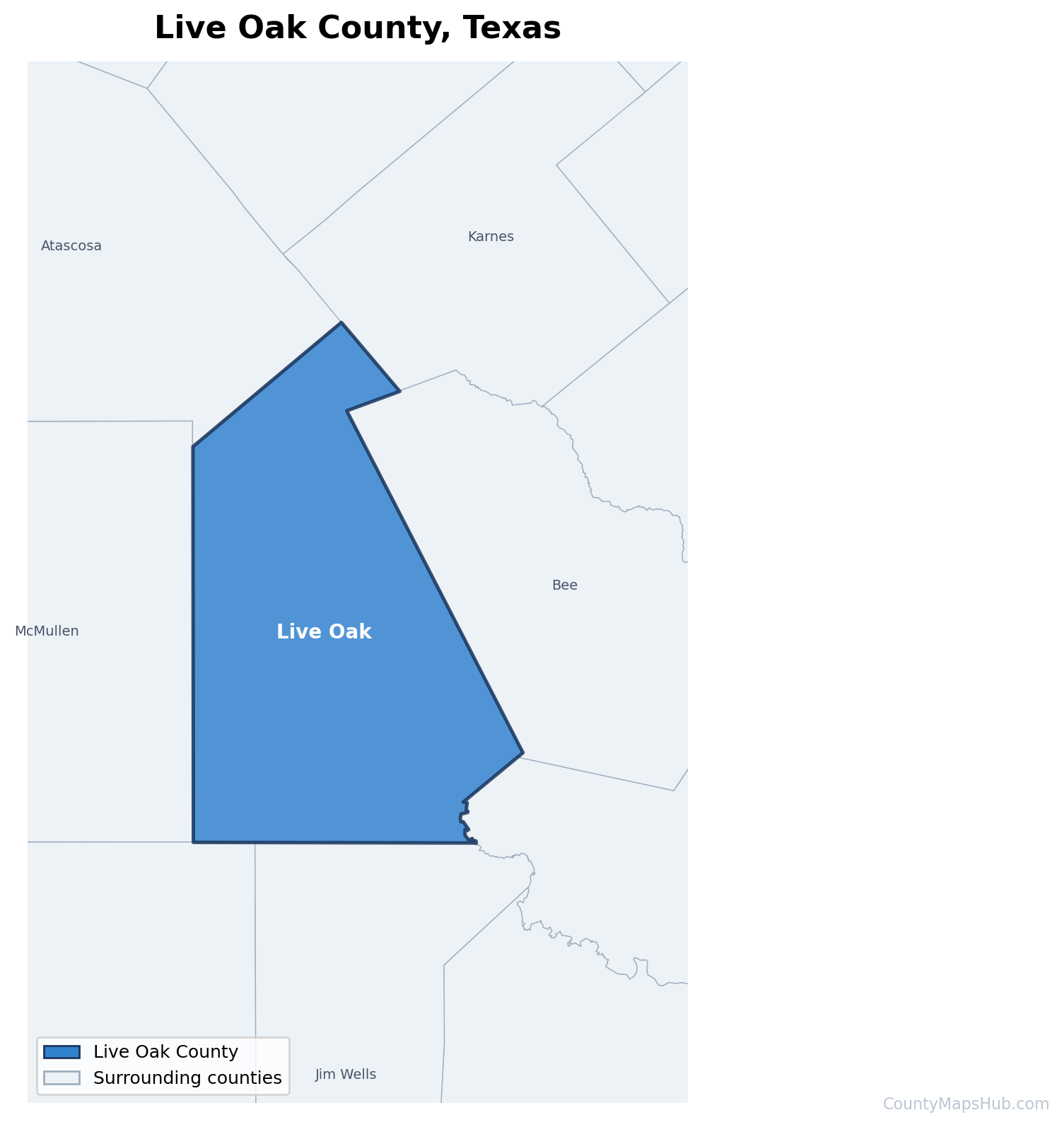
According to the 2020 census, Live Oak County has a population of 11,335 residents spread across its 1,056 square miles. This relatively modest population density reflects the county’s predominantly rural character and its economy traditionally centered on ranching and agriculture. The county seat of George West serves as the primary population center, providing essential services and serving as a hub for the surrounding communities. The population distribution reflects settlement patterns common to South Texas counties, where residents balance rural lifestyles with access to county services and amenities.
Climate
Live Oak County experiences a semi-arid climate characteristic of South Texas, with hot summers and mild winters that define the region’s weather patterns. Precipitation levels are moderate, supporting the growth of native vegetation including the live oak trees for which the county is named. Temperature variations between seasons are less extreme than in northern parts of the state, making the area suitable for year-round outdoor activities and agricultural operations.
The semi-arid conditions influence both the natural landscape and human activities in the county, with water resource management playing an important role in supporting local industries and residential needs. The climate supports grazing lands and drought-resistant vegetation that has shaped the region’s ranching heritage.
Tourist Attractions
Visitors to Live Oak County can experience the authentic rural character of South Texas, with opportunities to observe the natural landscapes that include the native live oak trees defining the region. The semi-arid environment supports diverse wildlife and plant communities that attract nature enthusiasts and those interested in the ecology of South Texas. Outdoor recreation opportunities include activities suited to the open spaces and rural setting characteristic of the county.
The county seat of George West provides a glimpse into small-town Texas life, where local establishments reflect the heritage and culture of the region. Travelers exploring the area can appreciate the wide-open spaces, agricultural landscapes, and the slower pace of life that defines many rural Texas counties. The region serves as a representative example of South Texas ranch country, offering authentic experiences away from more urbanized areas.
Culture
Live Oak County’s culture reflects the ranching heritage and rural traditions common throughout South Texas. The community maintains strong connections to agricultural practices and the land management traditions that have sustained the region for generations. Local values emphasize self-reliance, community cooperation, and stewardship of natural resources, characteristics typical of rural Texas counties with ranching roots.
The cultural fabric incorporates influences from various groups that have settled in South Texas over the centuries, creating a regional identity that blends frontier heritage with contemporary rural life. Community gatherings and local events typically celebrate the agricultural calendar and reinforce social bonds in this relatively small population. The county’s culture emphasizes practical skills, connection to the land, and the preservation of rural ways of life that define much of the Texas countryside.