Lynn County
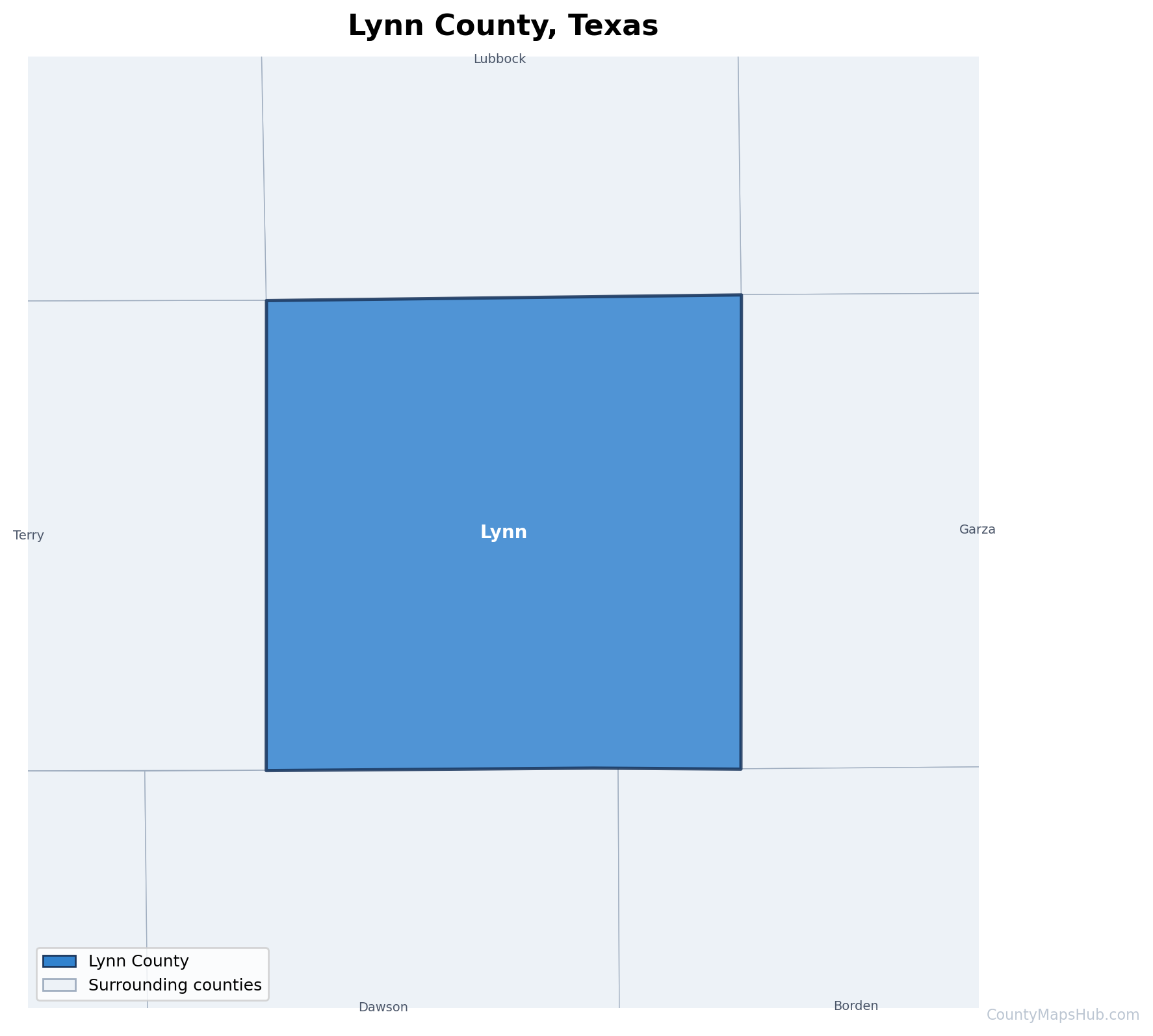
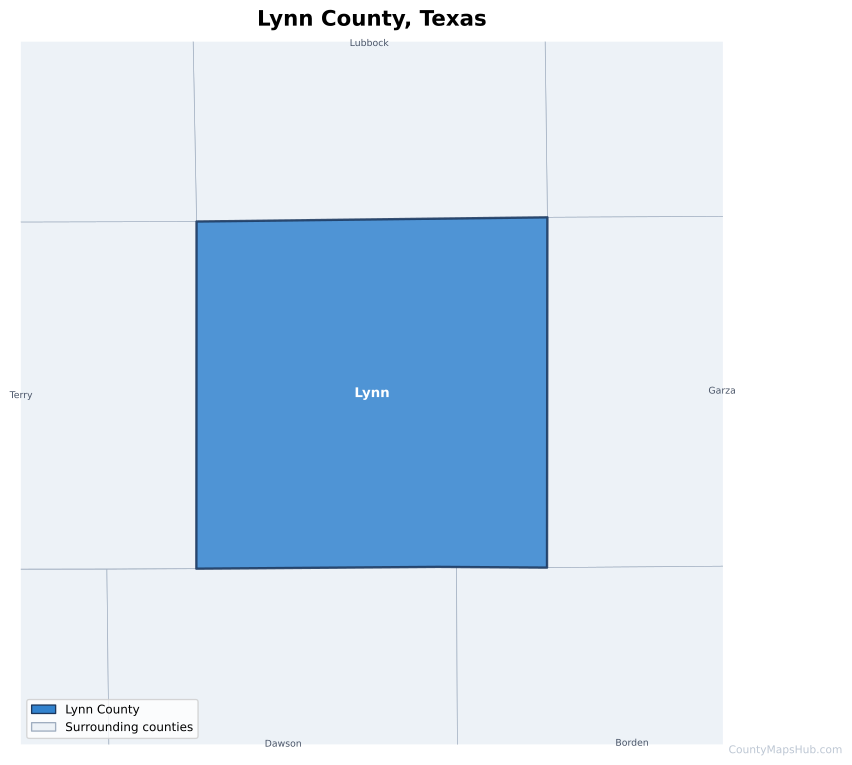
About
Lynn County was established in 1876 and named after William Lynn, reflecting the westward expansion of Texas settlement during the latter half of the 19th century. The county seat of Tahoka became the administrative and commercial center for this region of the South Plains. Like many West Texas counties, Lynn County’s development was shaped by the challenges and opportunities of the semi-arid landscape, with early settlers adapting to the demanding environment through ranching and, eventually, agriculture supported by irrigation and groundwater resources.
Throughout the 20th century, the county experienced the typical boom-and-bust cycles of rural Texas communities dependent on agriculture and natural resources. The cotton industry played a significant role in the local economy, with technological innovations and water management techniques enabling farming in this challenging climate. The county’s history reflects the broader narrative of the Texas High Plains, where determination and adaptation allowed communities to thrive despite geographic and climatic obstacles.
Population
According to the 2020 Census, Lynn County has a population of 5,596 residents spread across its 892 square miles of territory. This relatively low population density is characteristic of West Texas counties, where vast agricultural lands and ranching operations dominate the landscape. The population is centered primarily around the county seat and smaller rural communities that serve the surrounding agricultural areas. Like many rural Texas counties, Lynn County has experienced demographic shifts over recent decades as agricultural consolidation and economic changes have influenced settlement patterns across the region.
Climate
Lynn County experiences a semi-arid climate typical of the Texas High Plains, characterized by low annual precipitation, abundant sunshine, and significant temperature variations between seasons. Summers are hot with long, sunny days, while winters are generally mild but can experience occasional cold fronts bringing sharp temperature drops. The limited rainfall requires careful water management for agricultural purposes, with most precipitation occurring during the spring and early summer months.
The semi-arid conditions create wide diurnal temperature swings, with warm days often followed by cool nights. Wind is a frequent feature of the local climate, particularly during spring months. The open landscape and elevation contribute to clear skies and low humidity throughout much of the year, creating conditions that have historically favored certain types of agriculture while presenting challenges for others.
Tourist Attractions
Visitors to Lynn County can experience authentic West Texas rural landscapes and the distinctive character of High Plains communities. The region offers opportunities to observe traditional ranching operations and agricultural lands that stretch to the horizon, providing insight into the economic foundations of rural Texas. The open spaces and clear skies make the area appealing for those interested in stargazing and appreciating the natural beauty of semi-arid grasslands.
The county seat serves as a gateway to understanding small-town Texas life, where local businesses and community institutions reflect the heritage and values of West Texas. Those interested in regional history can explore how communities adapted to the challenges of the semi-arid environment. The surrounding landscape offers opportunities for outdoor activities such as bird watching, photography of the distinctive High Plains scenery, and experiencing the quieter pace of rural Texas life away from major metropolitan areas.
Culture
Lynn County’s cultural identity is deeply rooted in the ranching and agricultural traditions of West Texas. The community values reflect the self-reliance, neighborliness, and work ethic characteristic of rural High Plains life. Local gatherings and seasonal events often center around agricultural cycles and community institutions, fostering strong social bonds in this sparsely populated region. The cultural fabric includes influences from various groups that settled the area, creating a distinctive blend of traditions found across the South Plains.
Religion and family remain central to community life, with churches serving as important social and cultural anchors. Friday night football and other school activities unite communities across vast distances, reflecting the importance of local institutions in rural Texas culture. The county maintains connections to broader West Texas traditions, including cowboy heritage, country music, and the pioneering spirit that defined settlement of the region. This cultural continuity helps preserve a way of life that, while evolving with modern times, remains distinctively tied to the land and the challenges of thriving in a semi-arid environment.