McCulloch County
About
McCulloch County was established in 1856 and named after Benjamin McCulloch, a notable figure in Texas history. The county’s formation occurred during a period of westward expansion in Texas, as settlers moved into the frontier regions of Central Texas. Like many Texas counties of this era, its early development was shaped by ranching, agriculture, and the challenges of establishing communities in what was then relatively remote territory.
The county seat of Brady became the administrative and commercial center of the region, serving the needs of ranchers, farmers, and other residents who settled the area. Throughout the late 19th and early 20th centuries, the county’s economy evolved alongside improvements in transportation and infrastructure, connecting it more closely to other parts of Texas. The heritage of this founding period continues to influence the county’s character today, with many residents maintaining ties to the land and traditional ways of life that have persisted for generations.
Population
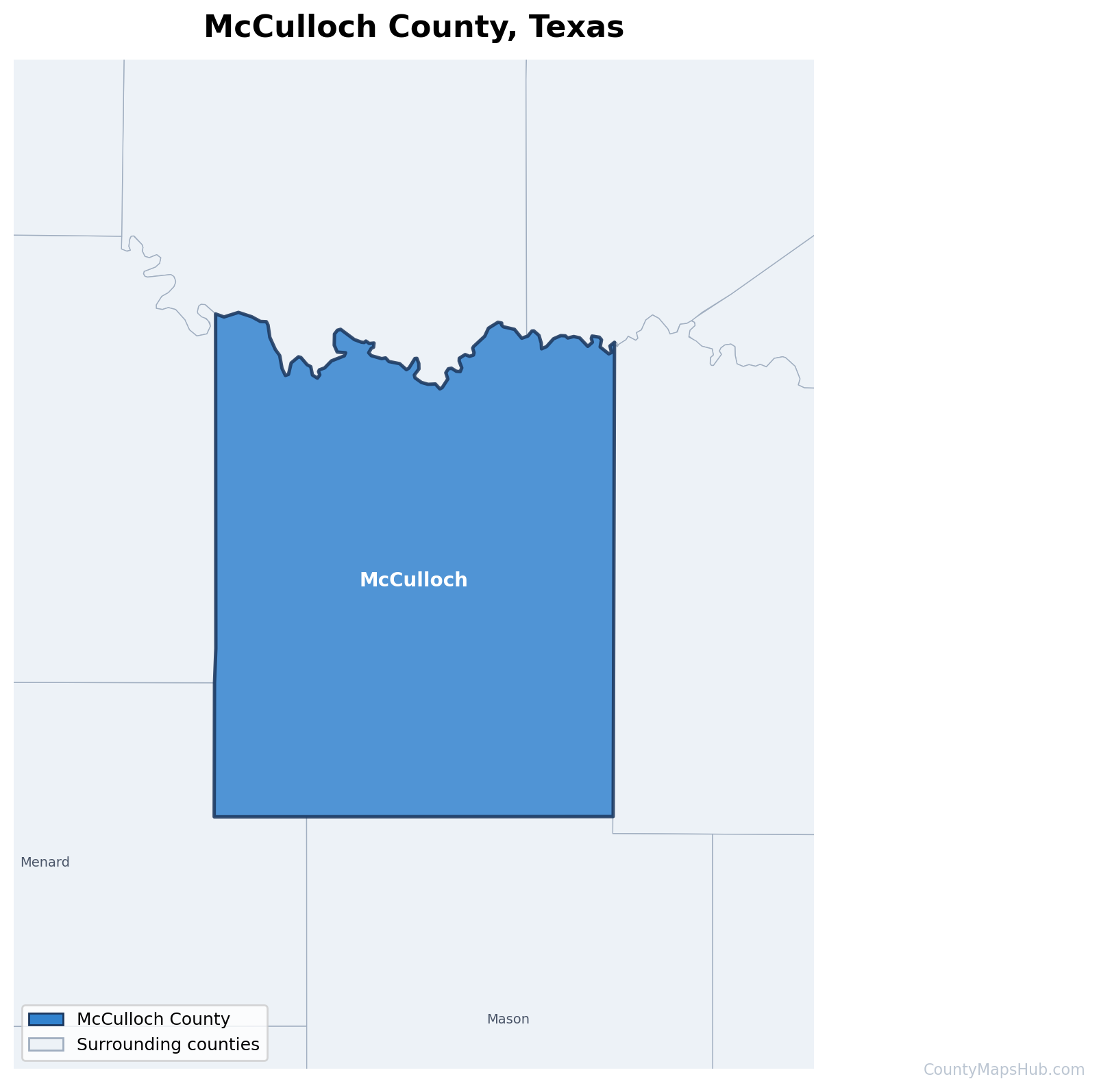
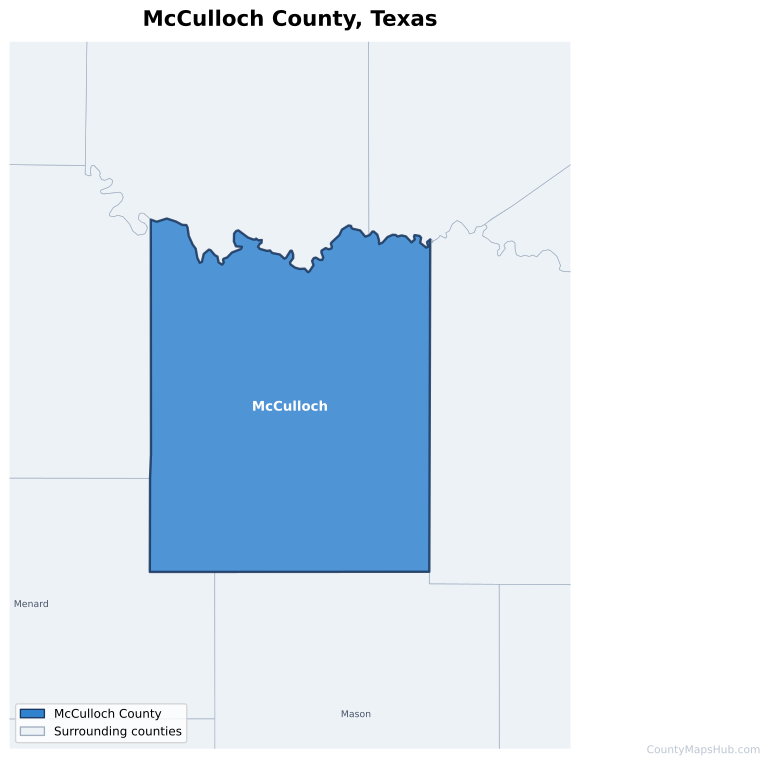
As of the 2020 Census, McCulloch County had a population of 7,592 residents spread across its 1,073 square miles. This population density reflects the county’s rural character, typical of many Central Texas counties where wide open spaces and agricultural land use predominate. The county seat serves as the primary population center, providing essential services, commerce, and community gathering places for residents throughout the county. The relatively small population size fosters a close-knit community atmosphere where neighbors often know one another and local institutions play central roles in daily life.
Climate
McCulloch County experiences a humid subtropical climate, characterized by hot summers and mild to cool winters typical of Central Texas. This climate zone brings warm temperatures for much of the year, with summer months often seeing temperatures rise into the 90s Fahrenheit. The region receives moderate rainfall distributed throughout the year, though precipitation patterns can vary significantly from season to season.
The humid subtropical classification means the area experiences enough moisture to support a variety of vegetation, including grasslands and scattered trees. Winters are generally mild compared to northern regions, with occasional cold fronts bringing cooler temperatures. This climate supports agricultural activities and ranching operations that have long been part of the county’s economy, while also providing residents with a generally temperate environment for outdoor activities throughout much of the year.
Tourist Attractions
McCulloch County offers visitors an authentic Central Texas experience with its rural landscapes and small-town atmosphere. The region features opportunities for outdoor recreation typical of the Texas Hill Country and surrounding areas, including hunting, fishing, and exploring the natural terrain. Visitors interested in wildlife and nature can find diverse habitats that support various bird species and native fauna characteristic of this part of the state.
Those interested in Texas history and small-town culture will find the county seat provides a glimpse into traditional Texas community life. Local attractions typically include historic downtown areas, regional museums showcasing frontier and ranching heritage, and community events that reflect the agricultural roots of the area. The county’s location in Central Texas also makes it a convenient stopping point for travelers exploring the broader region, offering a quieter alternative to larger metropolitan areas while maintaining access to essential amenities and services.
Culture
The cultural character of McCulloch County reflects the values and traditions of rural Central Texas, where agriculture, ranching, and small-town community life remain central to local identity. County residents often maintain strong connections to the land and to traditions passed down through generations. Community events throughout the year typically celebrate this heritage, bringing together families and neighbors for gatherings that reinforce social bonds and shared values. Local institutions including churches, schools, and civic organizations play vital roles in maintaining the social fabric of the county.
The pace of life in McCulloch County tends to be slower and more relaxed than in urban areas, with an emphasis on neighborliness and mutual support. Traditional Texas hospitality is evident in daily interactions, and many residents take pride in their county’s history and rural character. The culture values self-reliance, hard work, and stewardship of the land, reflecting the practical necessities of life in an agricultural region. While the county has evolved over the decades, it maintains a distinctive identity rooted in its frontier origins and the ongoing importance of ranching and farming to the local way of life.