Martin County
About
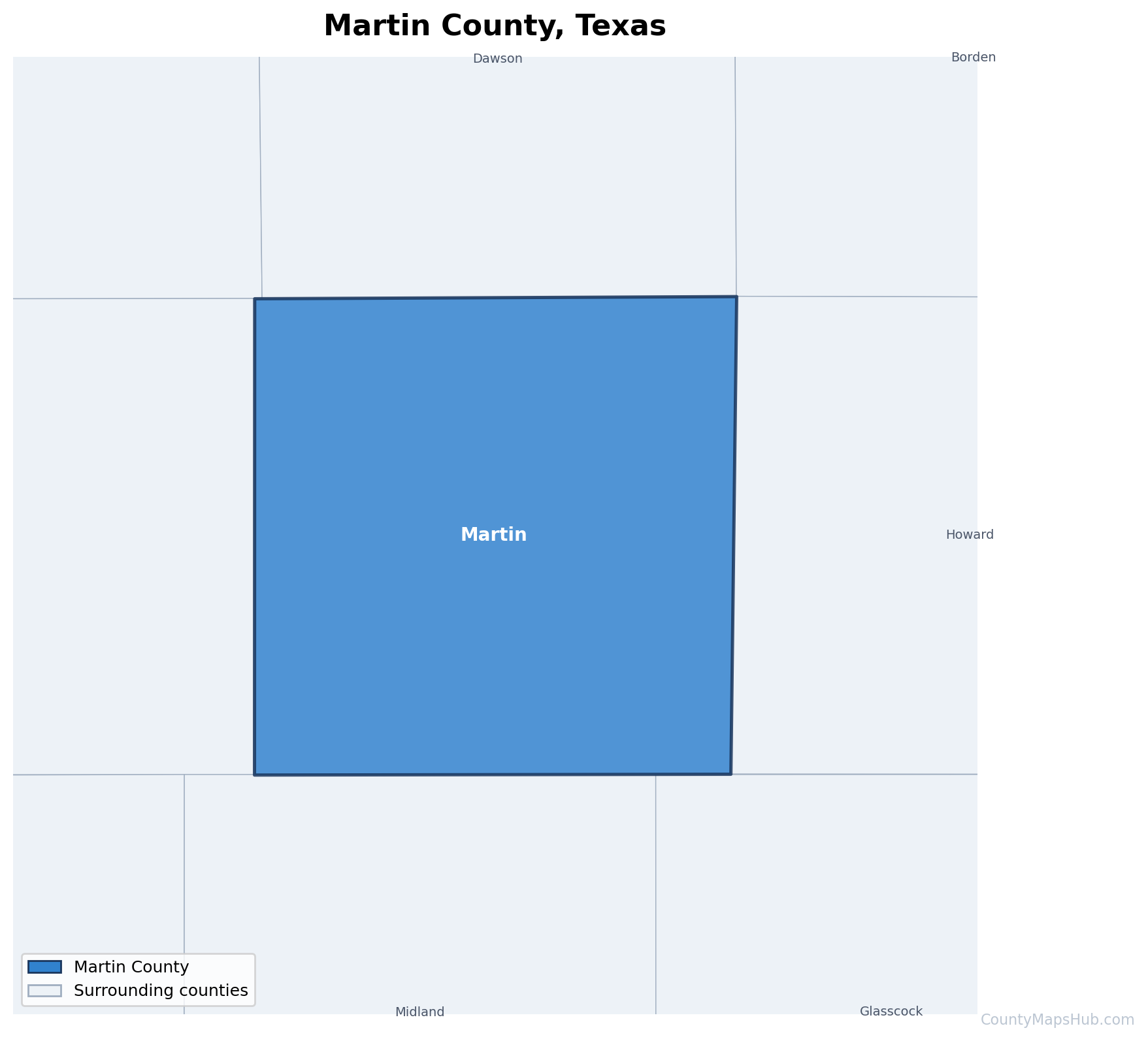
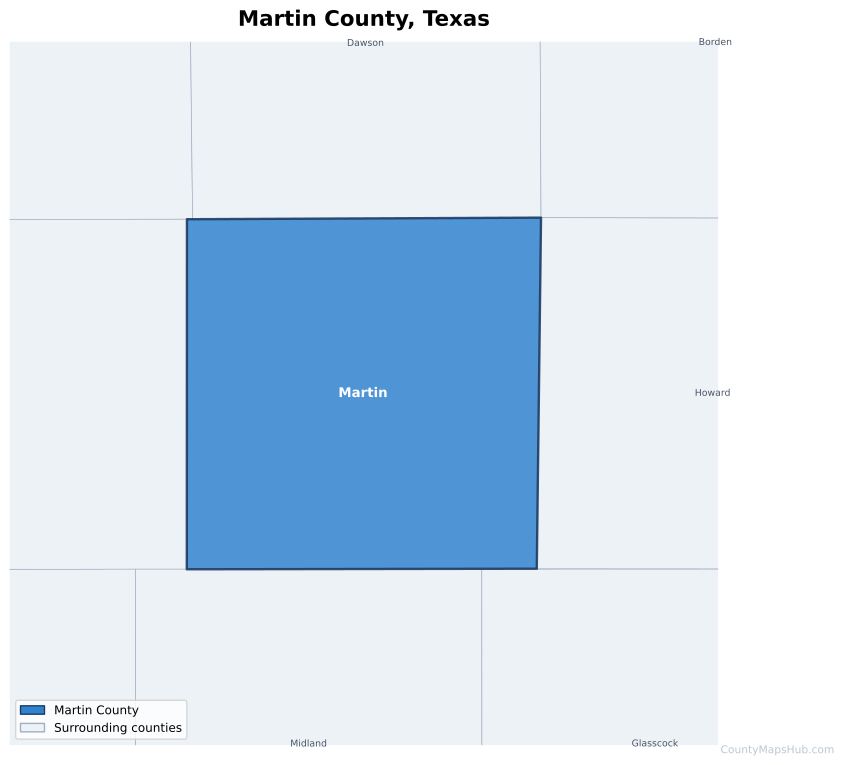
Martin County was established in 1876 and named after Wylie Martin, reflecting the state’s practice of honoring significant figures in Texas history. The county developed during the era of westward expansion when settlers were drawn to the vast plains of West Texas. Like many counties in this region, its early economy centered on ranching and agriculture, taking advantage of the expansive grasslands that characterized the landscape.
The county seat of Stanton has served as the administrative and commercial center since the county’s organization. Throughout the late nineteenth and early twentieth centuries, the area experienced the challenges typical of semi-arid regions, including water scarcity and the boom-and-bust cycles associated with agricultural commodity prices. The discovery of oil and natural gas in West Texas during the twentieth century brought economic diversification to the region, supplementing traditional ranching activities with energy sector opportunities that continue to influence the local economy today.
Population
According to the 2020 census, Martin County has a population of 5,237 residents spread across its 915 square miles of West Texas territory. This relatively sparse population density reflects the county’s rural character and the challenges of settlement in semi-arid environments. The population distribution is typical of agricultural and energy-producing counties in this part of Texas, where small communities are scattered across wide expanses of land. The county’s demographic composition has been shaped by generations of ranching families, oil field workers, and others drawn to the economic opportunities of West Texas, creating a tight-knit community where residents often know their neighbors and share common connections to the land and local industries.
Climate
Martin County experiences a semi-arid climate characterized by hot summers, mild winters, and limited annual precipitation. This climate zone is typical of the Texas High Plains region, where moisture is scarce and evaporation rates are high. Summer temperatures frequently exceed ninety degrees Fahrenheit, while winters are generally moderate with occasional cold fronts bringing brief periods of freezing weather.
The limited rainfall, usually concentrated in late spring and early summer, has historically influenced land use patterns and agricultural practices in the area. Residents and farmers have adapted to these conditions through water conservation techniques and drought-resistant crops. The clear skies and low humidity that accompany the semi-arid climate provide abundant sunshine throughout the year, contributing to the region’s wide-open vistas and dramatic sunsets that are characteristic of West Texas landscapes.
Tourist Attractions
Visitors to Martin County can experience authentic West Texas culture and the distinctive character of the High Plains region. The county’s wide-open spaces and rural landscapes appeal to those seeking an escape from urban environments and an opportunity to observe traditional ranching operations that have sustained the area for generations. The semi-arid terrain supports unique flora and fauna adapted to drought conditions, offering opportunities for nature observation and photography.
The region’s heritage as part of Texas’s ranching and oil country provides cultural interest for those fascinated by the state’s economic development. Local historical sites and buildings reflect the architectural styles and construction methods used by early settlers who built communities in this challenging environment. The clear night skies, unpolluted by urban light sources, make the area attractive for stargazing and astronomical observation, while the expansive horizons and relatively undeveloped landscape offer a sense of isolation and tranquility increasingly rare in modern Texas.
Culture
Martin County embodies the values and traditions of rural West Texas, where community bonds remain strong and self-reliance is prized. The cultural heritage reflects the influence of ranching families, oil field workers, and agricultural communities that have shaped the region over generations. Local gatherings, community events, and civic organizations provide important social connections in an area where neighbors may live miles apart, fostering a sense of shared identity and mutual support.
The county’s culture emphasizes practicality, hard work, and adaptation to environmental challenges. Traditions associated with ranching, rodeo, and Western heritage remain important aspects of local identity, passed down through families and celebrated in community activities. The influence of the oil and gas industry has also contributed to the cultural landscape, bringing workers from diverse backgrounds and creating economic patterns distinct from purely agricultural areas. This blend of ranching tradition and energy sector modernity characterizes much of contemporary life in Martin County and similar West Texas communities.