Mason County
About
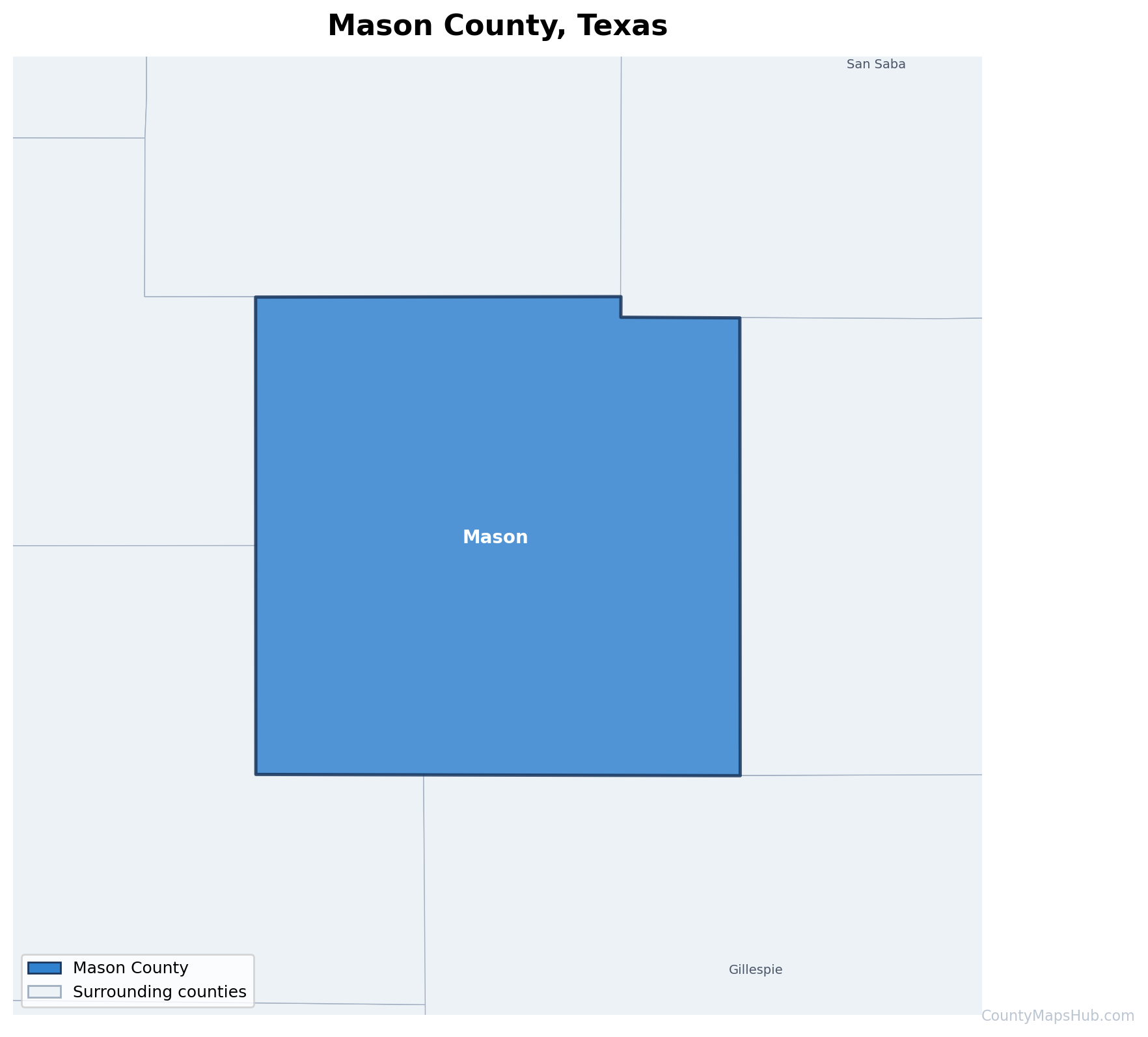
Mason County was established in 1858 and named after Fort Mason, a military installation that played an important role in the frontier defense of central Texas during the mid-19th century. The county seat, Mason, developed as a center of settlement in the Hill Country region, serving ranchers and farmers who established homesteads in this rugged terrain. The area’s early history reflects the broader patterns of Texas frontier life, including conflicts and eventual peaceful settlement.
Throughout its existence, Mason County has maintained its agricultural character while adapting to changing economic conditions. The county’s development was shaped by the challenges of ranching and farming in the Hill Country, where limestone terrain and periodic drought required resourcefulness from settlers. Over the decades, the county has preserved much of its historic character, with many buildings and landscapes reflecting its 19th-century origins and the hardy spirit of its founding generation.
Population
According to the 2020 census, Mason County has a population of 3,953 residents spread across 932 square miles, resulting in a low population density characteristic of rural Texas Hill Country counties. This small population reflects the county’s primarily agricultural economy and its distance from major metropolitan areas. The community maintains a close-knit character typical of rural Texas counties, where residents often have deep generational ties to the land and local institutions. The population has remained relatively stable over recent decades, with the county seat of Mason serving as the primary center of commerce and civic life for residents throughout the county.
Climate
Mason County experiences a humid subtropical climate, characterized by hot summers and mild winters typical of the central Texas Hill Country. Summer temperatures regularly climb into the 90s Fahrenheit, while winter months tend to be temperate with occasional cold fronts bringing brief periods of cooler weather. The region receives moderate rainfall, though precipitation patterns can be variable from year to year, with periodic droughts affecting agricultural activities.
The climate supports a mix of grasslands and hardwood vegetation, including native oak species that define the Hill Country landscape. Spring and fall are particularly pleasant seasons, with comfortable temperatures and occasional wildflower displays that attract visitors to the region. The growing season is sufficiently long to support both livestock ranching and various agricultural pursuits that have historically formed the economic backbone of the county.
Tourist Attractions
Mason County offers visitors an authentic experience of rural Texas Hill Country life, with opportunities to explore historical architecture, scenic landscapes, and outdoor recreation. The area features historic buildings from the late 19th century that reflect the county’s frontier heritage and German immigrant influence common to this region of Texas. Visitors can enjoy the rolling hills, rocky terrain, and native vegetation that characterize the landscape.
Outdoor enthusiasts find opportunities for hunting, fishing, and wildlife observation in the county’s rural setting. The region’s ranches and natural areas provide habitat for white-tailed deer, wild turkey, and various bird species. Local businesses cater to visitors interested in experiencing small-town Texas hospitality, with seasonal events and community gatherings that reflect the area’s agricultural traditions and close-knit community values.
Culture
The cultural fabric of Mason County reflects its Texas Hill Country heritage, with traditions rooted in ranching, agriculture, and small-town community life. The county shares cultural characteristics common to central Texas, including influences from German settlers who helped shape the region during the 19th century. Community events often center around agricultural activities, school functions, and civic organizations that bring residents together throughout the year.
The county maintains a strong sense of local identity, with residents taking pride in their rural heritage and the self-sufficient character that frontier life demanded of earlier generations. Churches and community organizations play central roles in social life, providing gathering places and maintaining traditions passed down through generations. The culture emphasizes practical skills, neighborliness, and stewardship of the land, values that continue to define life in this rural Texas county despite the changes of the modern era.