Mills County
About
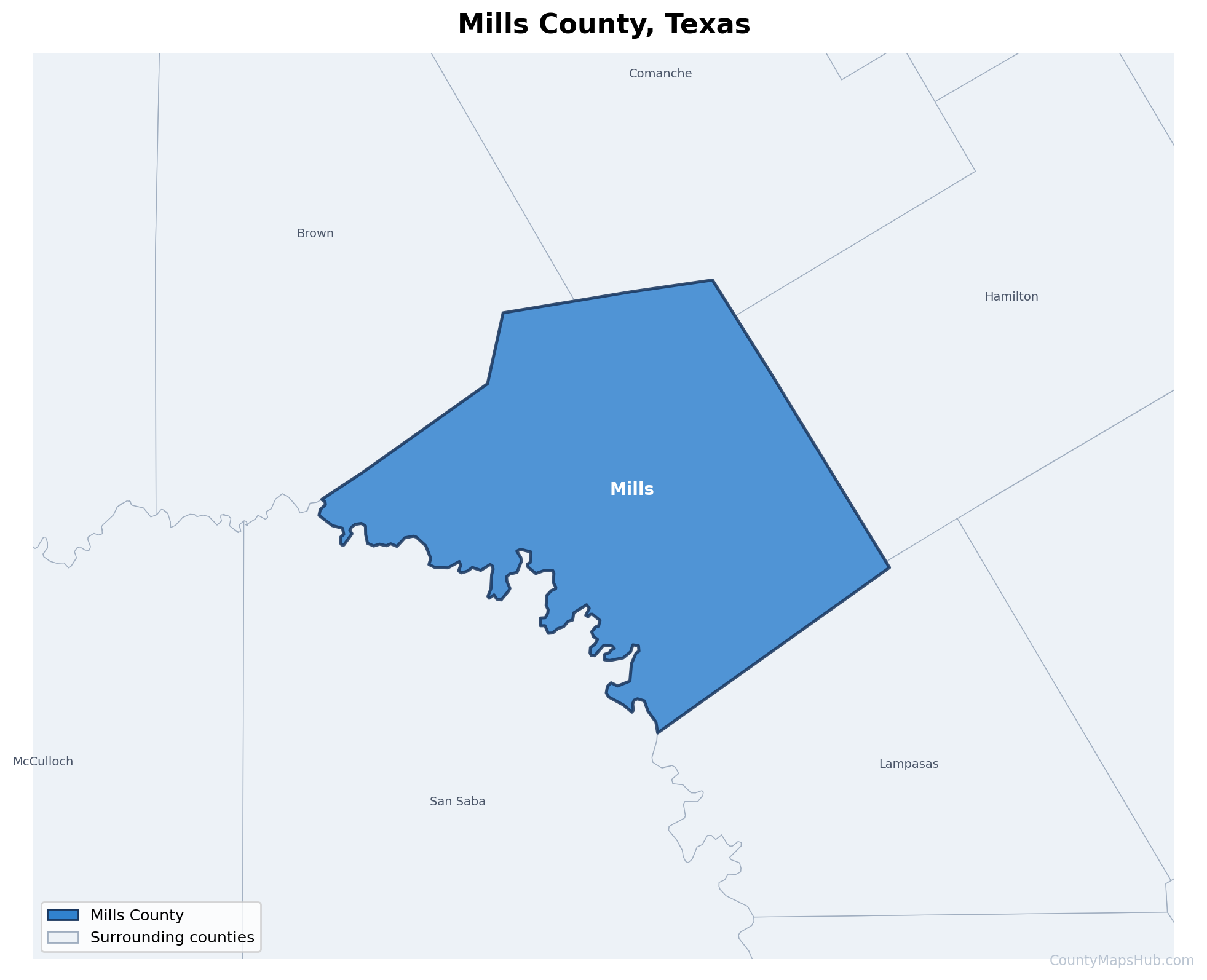
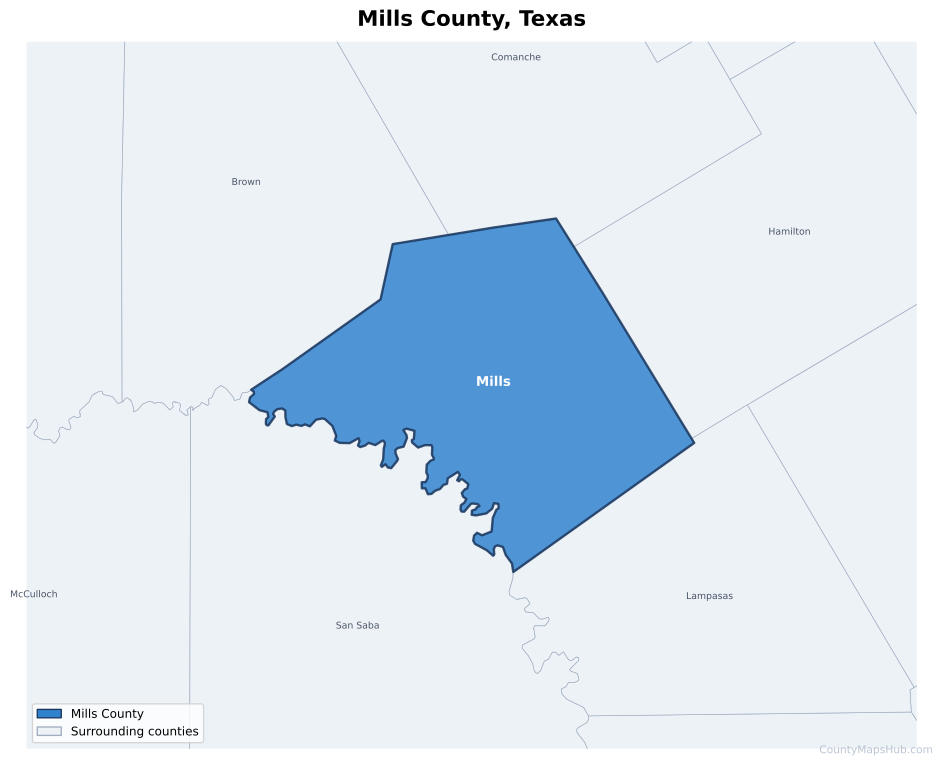
Mills County was established in 1887, carved from portions of surrounding Central Texas counties during a period of westward expansion and settlement. The county was named after John T. Mills, honoring his contributions to the region during the development of Texas. Goldthwaite serves as the county seat, anchoring the civic and governmental functions of this rural community.
Throughout the late 19th and early 20th centuries, the area developed primarily as an agricultural region, with ranching and farming forming the economic backbone. The county’s landscape and natural resources attracted settlers seeking opportunities in livestock raising and crop cultivation. Over the decades, Mills County has maintained its character as a quintessentially rural Texas county, preserving traditions while adapting to modern challenges.
The county’s history reflects broader patterns of Texas development, including the transitions from frontier territory to established agricultural community. Historical buildings and sites throughout the region provide glimpses into the pioneer era and the generations that followed, offering visitors and residents alike connections to the area’s heritage.
Population
According to the 2020 census, Mills County has a population of 4,456 residents spread across its 748 square miles. This relatively low population density characterizes the county as a sparsely populated rural area, typical of many Central Texas counties outside major metropolitan regions. The population reflects a community deeply rooted in agricultural traditions and small-town life, where residents often maintain multi-generational ties to the land. The modest population size contributes to a close-knit community atmosphere where civic engagement and neighborly connections remain strong.
Climate
Mills County experiences a humid subtropical climate, characterized by hot summers and mild to cool winters typical of Central Texas. The region receives moderate rainfall throughout the year, with spring months often bringing the most precipitation along with occasional severe weather systems. Summer temperatures regularly climb into the 90s Fahrenheit, while winters are generally temperate with occasional freezes.
The climate supports a diverse range of vegetation and agricultural activities, making the area suitable for both livestock grazing and various forms of crop production. Seasonal variations create distinct periods throughout the year, with wildflower blooms in spring being particularly notable across the Texas Hill Country region. The weather patterns influence both the lifestyle and economic activities of county residents, who adapt their routines to the rhythm of the seasons.
Tourist Attractions
Mills County offers visitors an authentic taste of rural Central Texas, with opportunities to experience the natural beauty and outdoor recreation characteristic of the region. The landscape features rolling hills, rocky terrain, and waterways that provide settings for hiking, fishing, hunting, and wildlife observation. The county’s relatively undeveloped character appeals to those seeking peaceful escapes from urban environments.
Visitors can explore the county seat and discover historic architecture and local businesses that reflect small-town Texas heritage. The surrounding countryside offers scenic drives through ranch land and agricultural areas, providing photographic opportunities and chances to observe regional flora and fauna. Seasonal activities tied to the rural lifestyle, including agricultural events and community gatherings, give outsiders glimpses into the authentic culture of rural Texas living.
Culture
Mills County embodies the cultural traditions of rural Central Texas, where ranching heritage and small-town values shape community life. The culture emphasizes self-reliance, neighborly cooperation, and connection to the land, with many families maintaining agricultural operations passed down through generations. Local gatherings and community events strengthen social bonds and celebrate shared heritage, reflecting patterns common throughout rural Texas.
The county’s cultural identity draws from its frontier roots and agricultural foundation, maintaining traditions that have defined the region for over a century. Religious institutions play important roles in community life, serving as centers for both spiritual practice and social connection. Education, youth activities, and civic organizations provide frameworks for community participation, while respect for property rights and independence remains central to the local ethos. This cultural landscape attracts those who value authenticity and traditional ways of life in an increasingly urbanized state.