Montague County
About
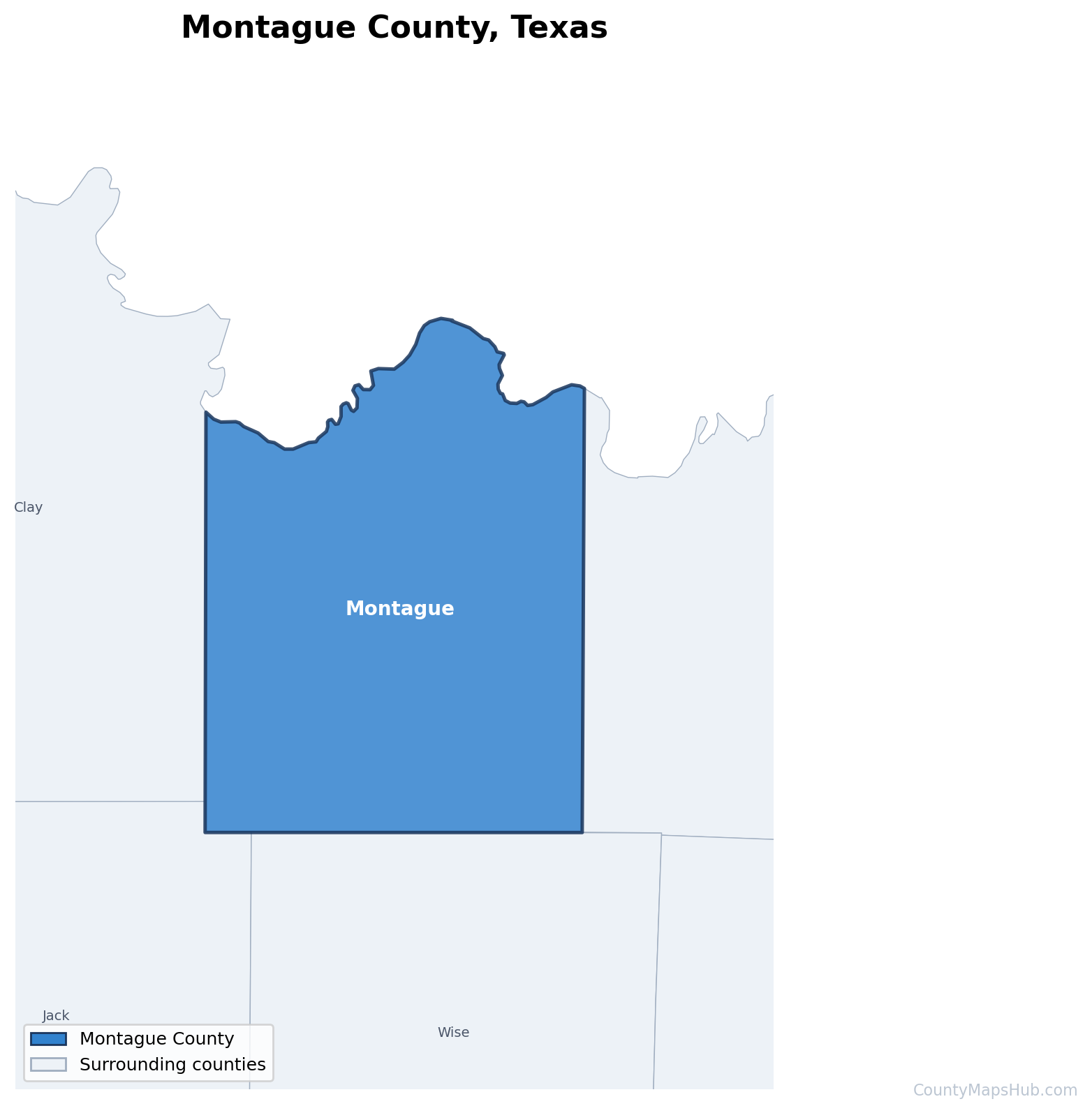
Montague County was established in 1857 and named after Daniel Montague, reflecting the westward expansion of settlement in North Texas during the mid-19th century. The region became organized during a period when Texas was developing its governmental infrastructure following statehood. The county seat, Montague, served as the administrative center for this growing frontier community.
Throughout the latter half of the 1800s, the area developed alongside the broader patterns of North Texas settlement, with agriculture and ranching forming the economic foundation. The county’s location in the Red River region positioned it within important trade and transportation networks that connected North Texas communities. Over the decades, Montague County evolved from frontier territory into an established rural county while maintaining its agricultural character and small-town identity that persists into the modern era.
Population
According to the 2020 Census, Montague County had a population of 19,818 residents spread across its 931 square miles. This population density reflects the county’s rural character, typical of North Texas counties outside major metropolitan areas. The demographic makeup represents a stable community that balances small-town living with access to regional amenities. The population includes a mix of long-established families with deep roots in the area alongside newer residents attracted to the rural lifestyle and relatively affordable land. The county’s population has remained relatively stable over recent decades, maintaining its identity as a rural North Texas community with strong agricultural ties and traditional small-town values.
Climate
Montague County experiences a humid subtropical climate, characteristic of North Texas regions positioned between the Gulf Coast moisture sources and the drier western plains. The area sees hot summers with temperatures frequently reaching the 90s Fahrenheit, while winters are generally mild with occasional cold fronts bringing brief periods of freezing temperatures. Precipitation is distributed throughout the year, with spring typically being the wettest season when severe weather and thunderstorms are most common.
The growing season is relatively long, supporting agricultural activities that have historically been important to the local economy. Residents experience all four seasons, though the transitions between them can be rapid. The climate supports a variety of vegetation types, from prairies to cross timbers woodland, creating diverse landscapes across the county.
Tourist Attractions
Montague County offers visitors a taste of authentic North Texas rural landscapes and small-town atmosphere. The area features opportunities for outdoor recreation including hunting, fishing, and wildlife observation in the region’s natural settings. Local parks and recreational areas provide spaces for hiking and enjoying the diverse terrain that characterizes this part of Texas. The county’s position near major reservoirs and water features in the Red River region makes it attractive for water-based activities.
Visitors interested in Texas history can explore the heritage of frontier settlement and agricultural development through local historical markers and community museums. The small towns throughout the county showcase traditional Texas architecture and offer glimpses into rural life. Seasonal community events and county fairs celebrate agricultural traditions and provide entertainment for families. The county’s rural roads and scenic byways attract those seeking peaceful drives through rolling Texas countryside.
Culture
Montague County maintains a strong rural Texas culture rooted in agricultural traditions and small-town values. The community identity centers around ranching and farming heritage, with many families having worked the land for multiple generations. Local customs reflect the broader North Texas culture, where neighborliness, self-reliance, and connection to the land remain important values. Community gatherings, agricultural shows, and local celebrations help maintain social bonds in this dispersed rural setting.
The cultural life of the county reflects typical small-town Texas patterns, with churches serving as important social institutions alongside schools and civic organizations. High school sports, particularly football, generate strong community support and pride. The area’s cuisine features traditional Texas fare with an emphasis on barbecue, home-style cooking, and foods connected to ranching culture. While the county maintains its rural character, residents have access to cultural amenities in nearby regional centers, creating a balance between traditional country living and connection to broader cultural opportunities.