Moore County
About
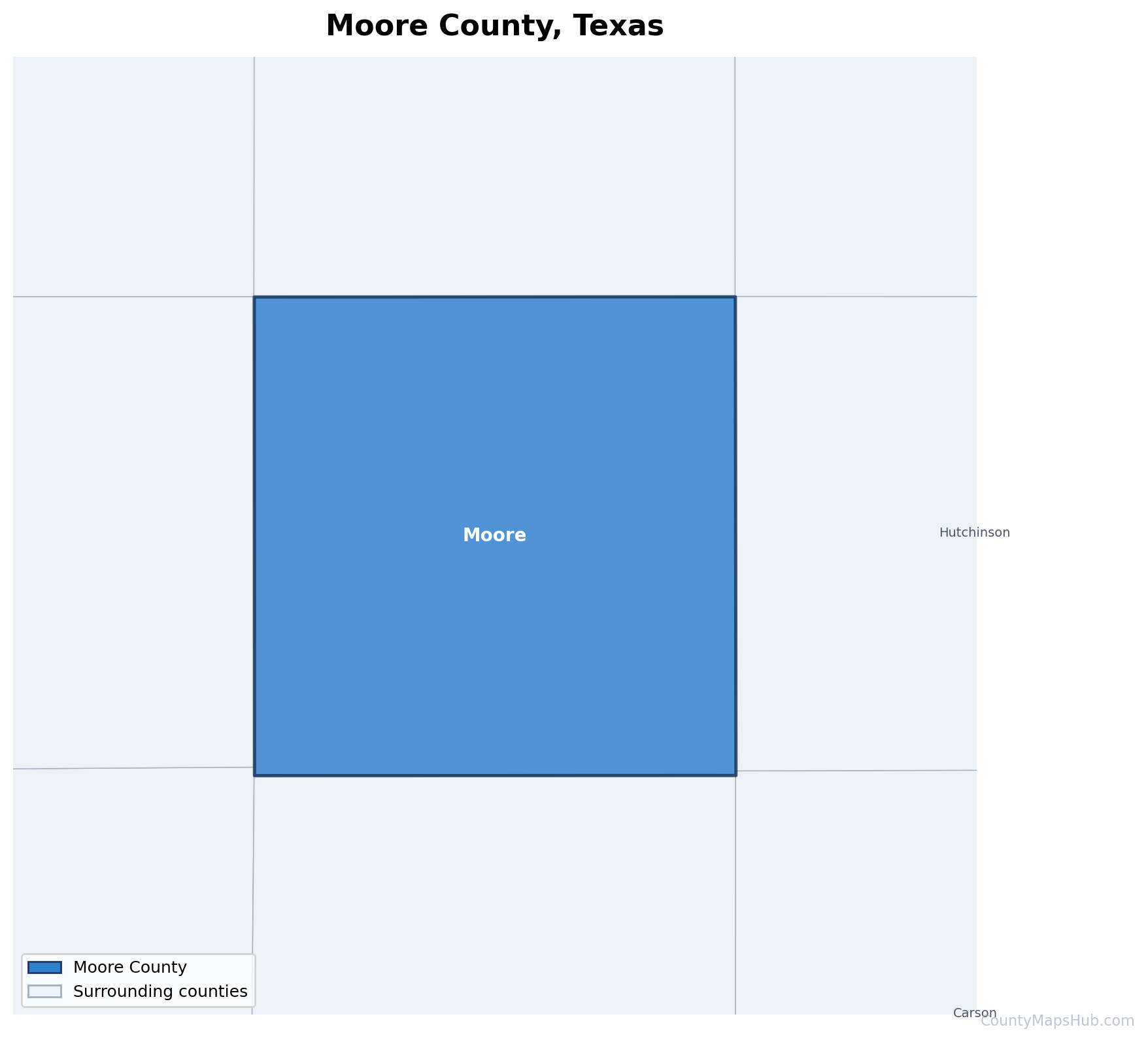
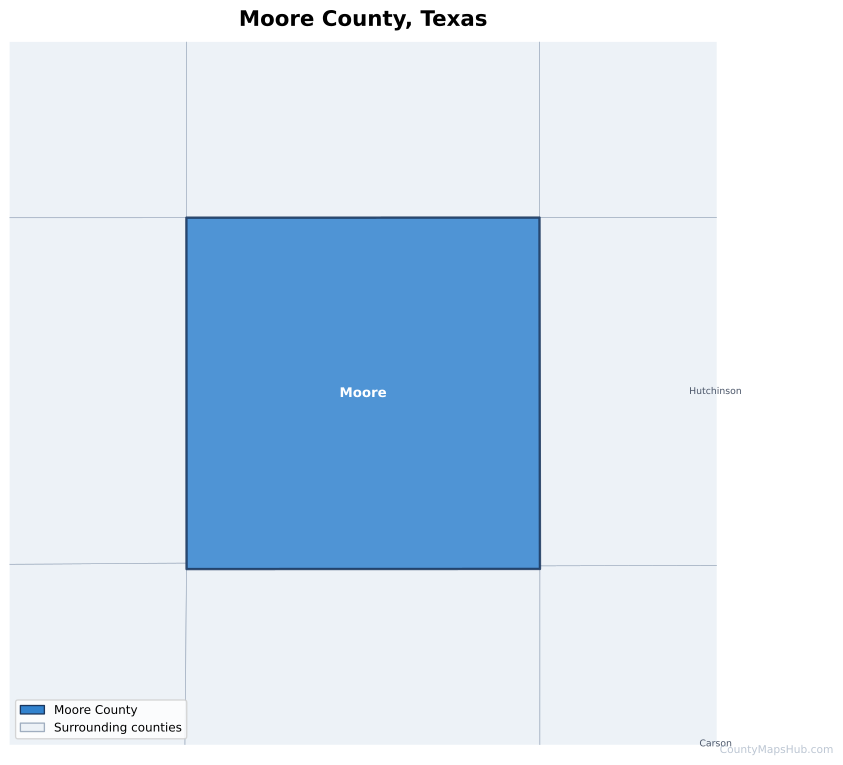
Moore County was established in 1876 and named after Edwin Ward Moore, a distinguished figure in Texas history. Located in the Texas Panhandle, the county’s development followed patterns typical of the region, with early settlement shaped by cattle ranching and agricultural opportunities on the High Plains. The county seat, Dumas, emerged as the administrative and commercial center, serving the surrounding rural communities.
Throughout the late nineteenth and early twentieth centuries, the county’s economy evolved alongside developments in transportation infrastructure and agricultural technology. The advent of irrigation and mechanized farming transformed the landscape, allowing settlers to cultivate crops in the semi-arid environment. Like many Texas Panhandle counties, Moore County’s growth reflected the broader transition from open-range cattle operations to more diversified agricultural enterprises, establishing patterns that would define the region for generations.
Population
According to the 2020 census, Moore County had a population of 20,850 residents spread across its 900 square miles. This population density reflects the rural character common to Texas Panhandle counties, where agricultural land use predominates. The county seat of Dumas serves as the primary population center, providing essential services, education, and employment opportunities for residents throughout the region. The population distribution demonstrates the enduring importance of agriculture and related industries in sustaining communities across the High Plains of Texas.
Climate
Moore County experiences a semi-arid climate characteristic of the Texas Panhandle region. This climate zone is defined by moderate precipitation, significant temperature variations between seasons, and relatively low humidity throughout the year. Summers typically bring warm to hot temperatures, while winters can be quite cold with occasional winter storms sweeping down from the northern plains.
The semi-arid conditions have significantly influenced land use and agricultural practices throughout the county’s history. The limited rainfall necessitates careful water management and often requires irrigation for successful crop production. Residents experience abundant sunshine and clear skies for much of the year, along with the strong winds common to the High Plains. These climatic factors have shaped both the natural vegetation and the types of crops and livestock that thrive in the region.
Tourist Attractions
Visitors to Moore County can experience the authentic character of the Texas Panhandle, where wide-open spaces and agricultural heritage define the landscape. The region offers opportunities to explore the unique ecology of the High Plains, with its distinctive grasslands and wildlife. Those interested in Western history and ranching culture will find the area rich with stories of settlement and frontier life that shaped this part of Texas.
Outdoor enthusiasts can enjoy activities suited to the open terrain, including opportunities for bird watching, photography, and experiencing the dramatic sunsets that characterize the Texas plains. The county’s rural roads provide scenic drives through agricultural lands, offering glimpses of working farms and ranches. Local community events throughout the year celebrate the agricultural heritage and close-knit character of Panhandle communities, providing visitors with authentic experiences of rural Texas life.
Culture
Moore County’s culture reflects the values and traditions of the Texas Panhandle, where agricultural heritage and Western influences remain strong. The community maintains traditions associated with ranching and farming, including rodeo events, livestock shows, and harvest celebrations. Family ties and neighborly cooperation have long been essential to life in this rural region, creating close-knit communities that support one another through the challenges of High Plains living.
The county seat of Dumas serves as the cultural hub, hosting community gatherings, educational institutions, and civic organizations that bind residents together. Religious institutions play an important role in community life, as they do throughout rural Texas. The cultural landscape also reflects the practical values of hard work, self-reliance, and resilience that have characterized Panhandle communities since settlement. Local traditions celebrate both the region’s cowboy heritage and its agricultural contributions to Texas and the nation.