Morris County
About
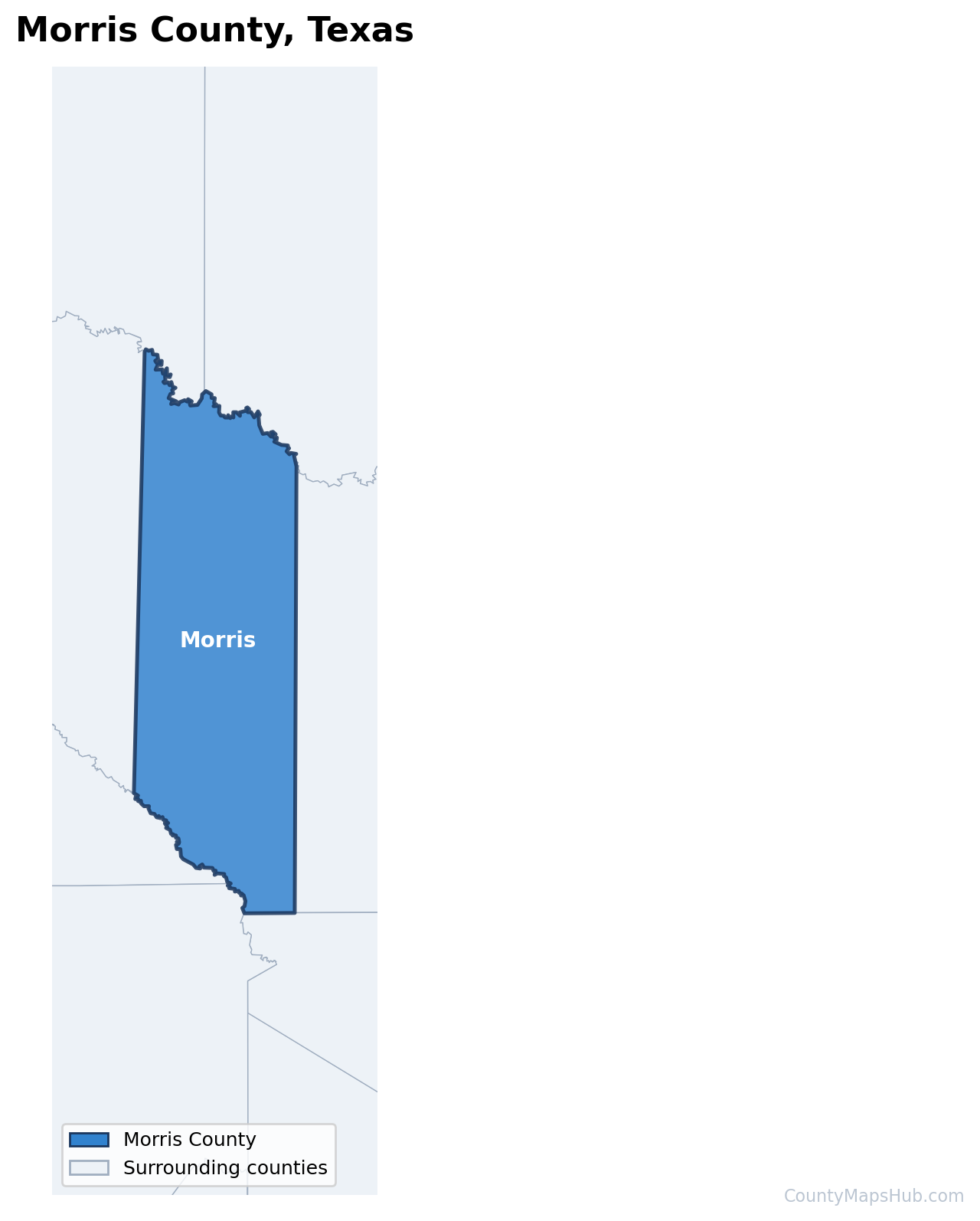
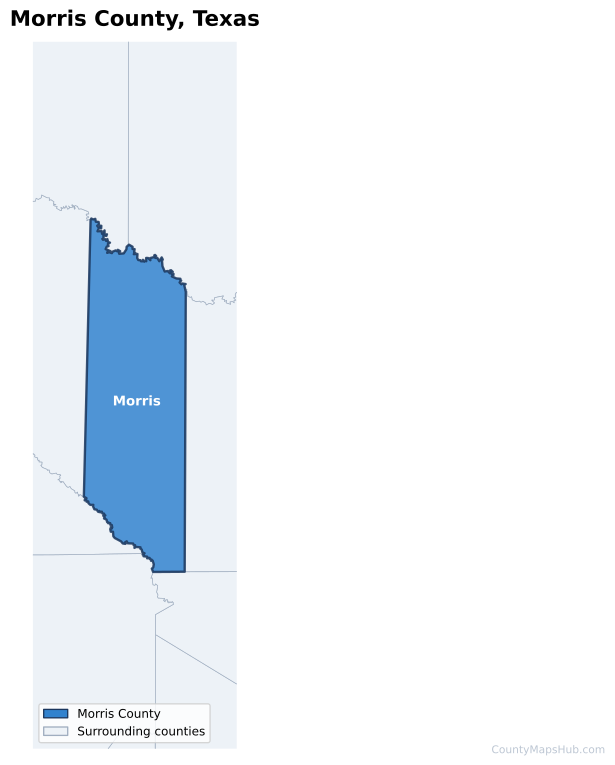
Morris County was established in 1875 and named after William W. Morris, an early settler and prominent figure in the region’s development. The county emerged during the post-Civil War era when East Texas was experiencing growth and reorganization. Daingerfield serves as the county seat, providing governmental and administrative services to residents across the county’s 254 square miles.
The formation of Morris County reflected the broader pattern of Texas county organization in the late 19th century, as the state worked to establish local governance structures across its expanding territory. The county’s location in northeastern Texas positioned it within the Piney Woods region, where timber resources and agriculture shaped early economic development. Over the decades, the county evolved from its frontier origins into a settled community with established institutions and infrastructure serving local residents.
Population
According to the 2020 census, Morris County has a population of 11,973 residents. This population density reflects the county’s character as a rural East Texas community, with residents distributed across its 254 square miles. The county seat of Daingerfield serves as a focal point for county services and community activities. The population has remained relatively stable over recent decades, maintaining its small-town atmosphere and close-knit community identity that characterizes many northeastern Texas counties.
Climate
Morris County experiences a humid subtropical climate typical of northeastern Texas. This climate pattern brings hot, humid summers and mild to cool winters, with precipitation distributed throughout the year. Summer temperatures regularly reach into the 90s Fahrenheit, while winter months see more moderate conditions with occasional cold fronts bringing cooler weather.
The humid subtropical classification means the county receives ample rainfall, supporting the lush vegetation characteristic of the East Texas Piney Woods region. Spring and fall serve as transitional seasons with generally pleasant weather conditions. The climate supports diverse plant life and agricultural activities, though residents should be prepared for the occasional severe thunderstorm during spring months and the heat and humidity that define summer in this part of Texas.
Tourist Attractions
Morris County offers visitors opportunities to experience the natural beauty and outdoor recreation typical of the East Texas region. The area’s forests and waterways provide settings for fishing, hunting, hiking, and wildlife observation. Local parks and recreational facilities serve both residents and visitors seeking outdoor activities in a tranquil rural setting.
The county’s small-town atmosphere and historic character appeal to those interested in exploring rural Texas communities. Visitors can appreciate local architecture, community events, and the slower pace of life that defines the region. The surrounding Piney Woods ecosystem offers scenic drives and opportunities to experience the distinctive landscape of northeastern Texas, with its dense forests and rolling terrain quite different from the state’s more arid western regions.
Culture
Morris County embodies the cultural traditions of East Texas, where Southern heritage blends with Texas identity. The community maintains strong ties to agricultural roots and small-town values, with local gatherings and seasonal celebrations bringing residents together. Churches play a central role in community life, serving as both spiritual centers and social hubs where neighbors connect and support one another.
The cultural landscape reflects the broader East Texas character, with influences from the American South evident in local cuisine, musical traditions, and social customs. Residents take pride in their community’s history and work to preserve the county’s heritage while adapting to contemporary life. The county’s rural character fosters a strong sense of place and community identity, where generations of families have built lives connected to the land and to one another through shared experiences and traditions.