Motley County
About
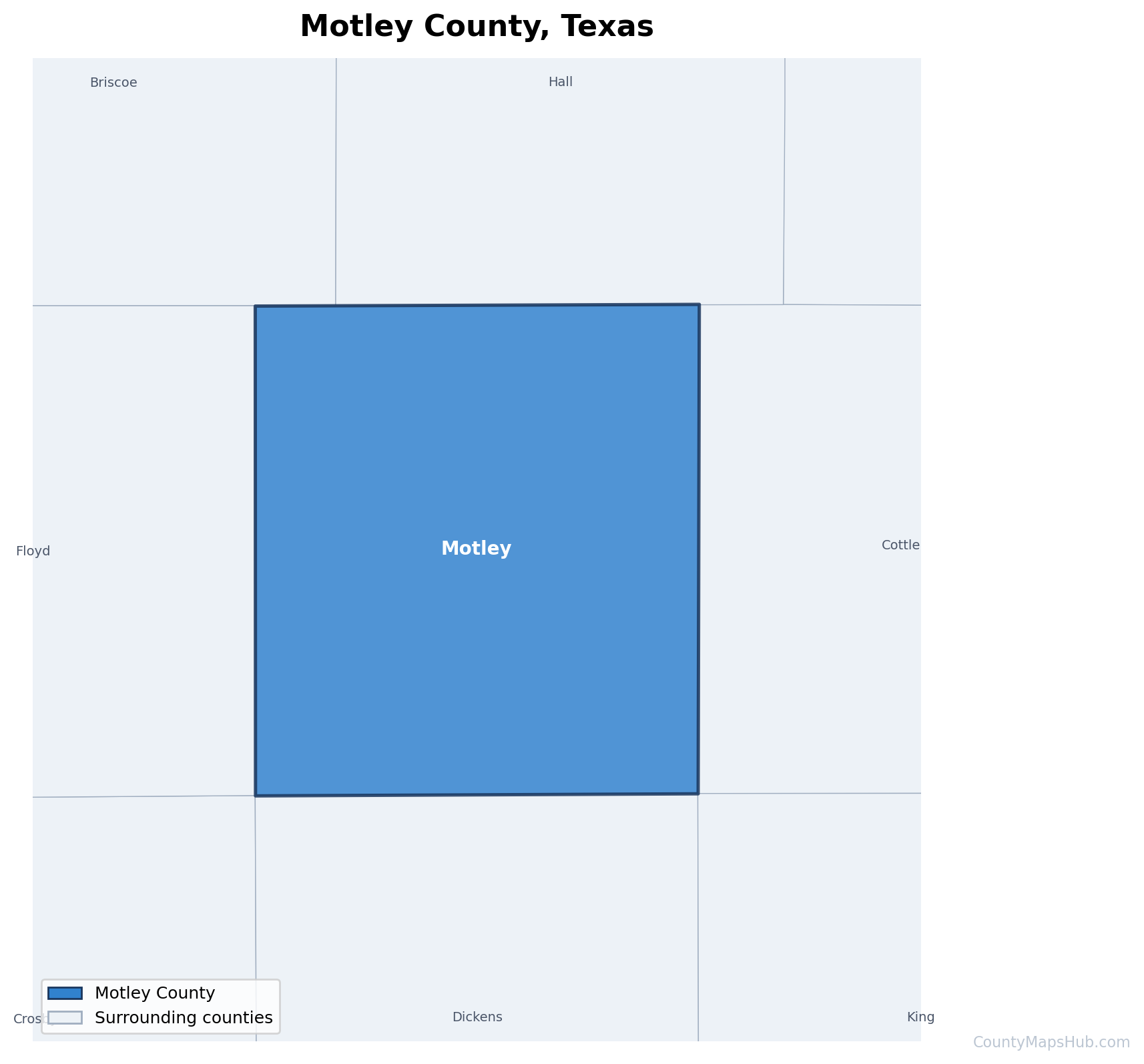
Motley County was established in 1876 and named after Junius William Mottley, a signer of the Texas Declaration of Independence. The county seat, Matador, became the administrative center for this region of the Texas Panhandle. During the late nineteenth century, the area transitioned from open range to organized ranching operations, with cattle production becoming the economic foundation of the community.
The county’s development reflected the broader patterns of West Texas settlement, as ranchers and farmers adapted to the challenging semi-arid environment. Throughout the twentieth century, the region maintained its agricultural character while experiencing the demographic shifts common to rural Texas counties. The community has preserved its frontier heritage while adapting to modern agricultural practices and economic realities.
Population
According to 2020 census data, Motley County has a population of 1063 residents spread across its 990 square miles, making it one of the more sparsely populated counties in Texas. This low population density reflects the county’s rural character and agricultural economy, which requires extensive land use for ranching and farming operations. The small population has fostered tight-knit communities where residents maintain strong connections to the land and to one another, preserving traditional values and ways of life characteristic of rural West Texas.
Climate
Motley County experiences a semi-arid climate typical of the Texas Panhandle region, characterized by low annual precipitation and significant temperature variations between seasons. Summers are hot with intense sunshine, while winters can bring cold fronts and occasional snowfall. The limited rainfall requires careful water management for agricultural activities and shapes the landscape’s vegetation patterns.
The semi-arid conditions support grasslands and drought-resistant plant species, creating the environment that has historically supported cattle ranching in the region. Residents and visitors should be prepared for strong winds, low humidity, and rapid weather changes that characterize this climate zone.
Tourist Attractions
Visitors to Motley County can experience the authentic character of rural West Texas, where wide open spaces and agricultural landscapes dominate the scenery. The region offers opportunities for those interested in experiencing traditional ranch culture and the slower pace of small-town life. The surrounding countryside provides settings for outdoor activities such as wildlife observation and photography of the distinctive semi-arid landscape.
The county seat of Matador serves as the primary community center, where visitors can learn about local history and experience the hospitality of a genuine Texas small town. Those traveling through the area will find the expansive vistas and clear skies characteristic of the Texas Panhandle, offering a glimpse into the state’s ranching heritage and frontier past.
Culture
Motley County’s culture is deeply rooted in ranching traditions and the values of rural Texas communities. The sparse population has maintained social structures where neighbors support one another and community events bring residents together. Agricultural heritage remains central to local identity, with generations of families having worked the land and raised livestock in this challenging but rewarding environment.
The cultural fabric reflects the independence and resilience required to thrive in a semi-arid region with limited resources. Traditional Western values, including self-reliance and hospitality, continue to shape daily life. Community gatherings and local institutions preserve the county’s history while adapting to contemporary challenges facing rural America, maintaining connections between past and present in this distinctive corner of Texas.