Nacogdoches County
About
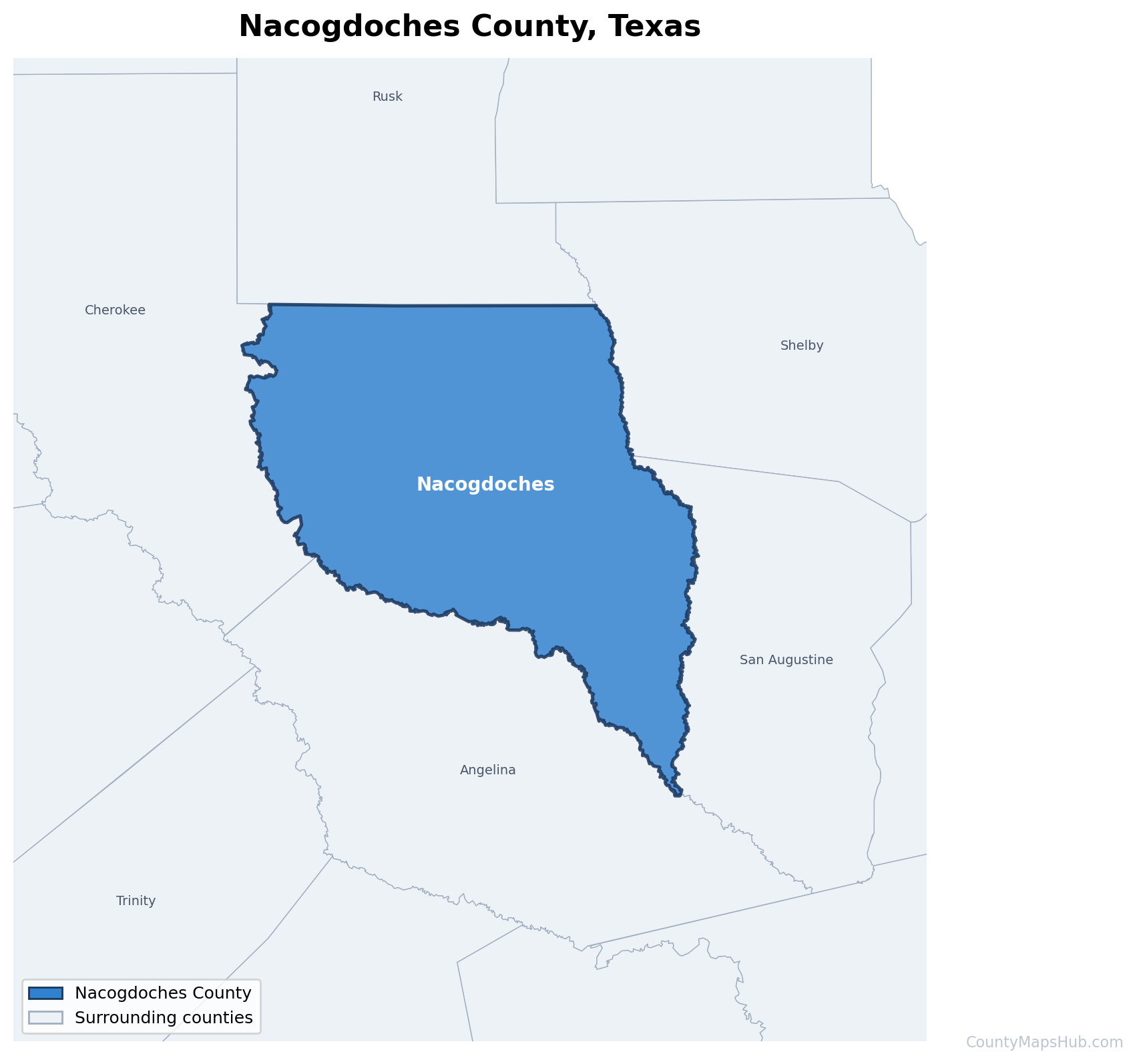
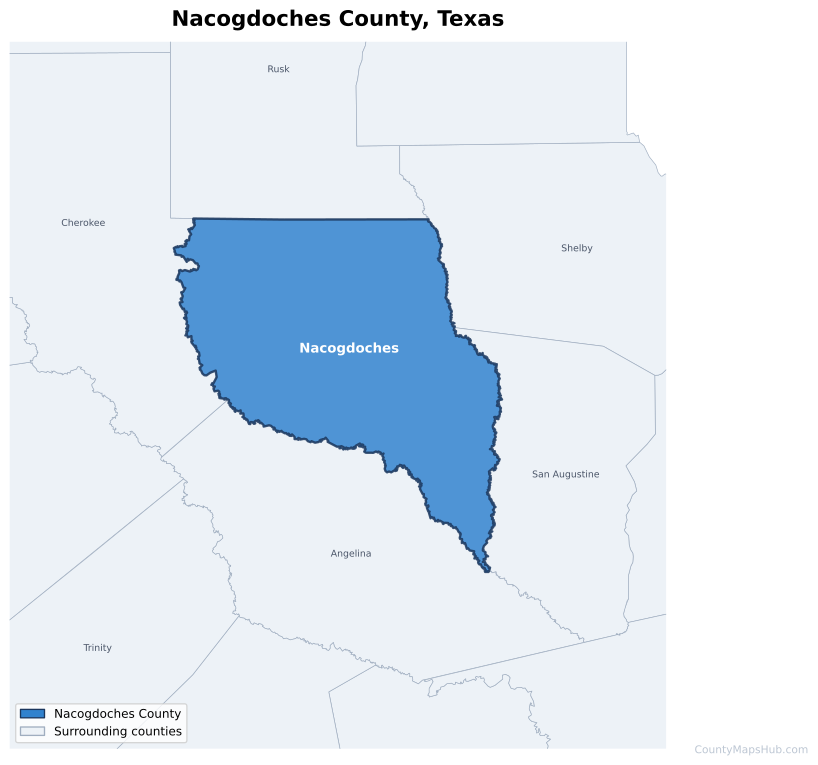
Nacogdoches County was established in 1837, making it one of the original counties organized following Texas independence. The county takes its name from the Nacogdoche Caddo, a Native American people who inhabited the region for centuries before European contact. The area holds deep historical significance in Texas history, as the region was an important crossroads during Spanish colonial times and played a role in the development of early Texas settlements.
The county seat, Nacogdoches, serves as the governmental and cultural center of the region. Throughout the 19th and 20th centuries, the county developed through agriculture, timber production, and educational institutions, reflecting the broader economic patterns of East Texas. The county’s heritage reflects a blend of Native American, Spanish, Mexican, and Anglo-American influences that shaped this part of Texas over multiple centuries.
Population
According to the 2020 Census, Nacogdoches County has a population of 64,653 residents living within its 947 square miles. This population density reflects a mix of urban concentration in the county seat and more rural areas throughout the rest of the county. The demographic composition includes families, students, professionals, and retirees who are drawn to the area’s educational opportunities, natural resources, and quality of life. Population trends in the county have been influenced by the presence of educational institutions and the regional economy, contributing to a diverse community that balances traditional rural East Texas culture with the amenities of a college town environment.
Climate
Nacogdoches County experiences a humid subtropical climate characterized by hot summers and mild winters typical of East Texas. The region receives ample rainfall throughout the year, supporting the lush pine forests and vegetation that define the local landscape. Summer temperatures regularly climb into the 90s Fahrenheit, while winter months are generally mild with occasional cold fronts bringing brief periods of cooler weather.
The humid conditions and moderate temperatures create an environment favorable to diverse plant and animal life. Residents and visitors should be prepared for the possibility of severe weather during spring months, including thunderstorms and occasional severe weather systems that move through the region. The climate supports year-round outdoor activities while also requiring attention to heat and humidity during the warmest months.
Tourist Attractions
Nacogdoches County offers visitors a variety of attractions rooted in its natural environment and historical significance. The region’s location in the Piney Woods of East Texas provides opportunities for outdoor recreation, including hiking, fishing, and wildlife observation in local parks and natural areas. The forested landscape and rolling terrain create scenic drives and nature experiences that showcase the beauty of East Texas.
Cultural and historical sites throughout the county allow visitors to explore the area’s deep roots in Texas history. Local museums and heritage sites interpret the region’s past, from Native American history through the Spanish colonial period and into modern times. Annual events and festivals celebrate the county’s heritage and community spirit, offering visitors a chance to experience local traditions, crafts, and cuisine that reflect the character of East Texas culture.
Culture
The cultural fabric of Nacogdoches County weaves together influences from Native American heritage, Spanish colonial history, and traditional Southern and Texas cultures. This blend creates a distinctive regional identity that values both historical preservation and community traditions. The presence of educational institutions contributes to a cultural environment that balances small-town warmth with intellectual and artistic activities, including performances, lectures, and exhibitions throughout the year.
Local cuisine reflects East Texas and Southern traditions, with barbecue, Tex-Mex, and comfort food featuring prominently in the culinary landscape. Community gatherings, whether centered around athletics, the arts, or seasonal celebrations, play an important role in county life. The residents take pride in their area’s historical significance while maintaining a welcoming atmosphere for newcomers and visitors. Traditional values of hospitality and community engagement remain strong, creating a social environment where neighbors know one another and local institutions serve as gathering points for civic life.