Navarro County
About
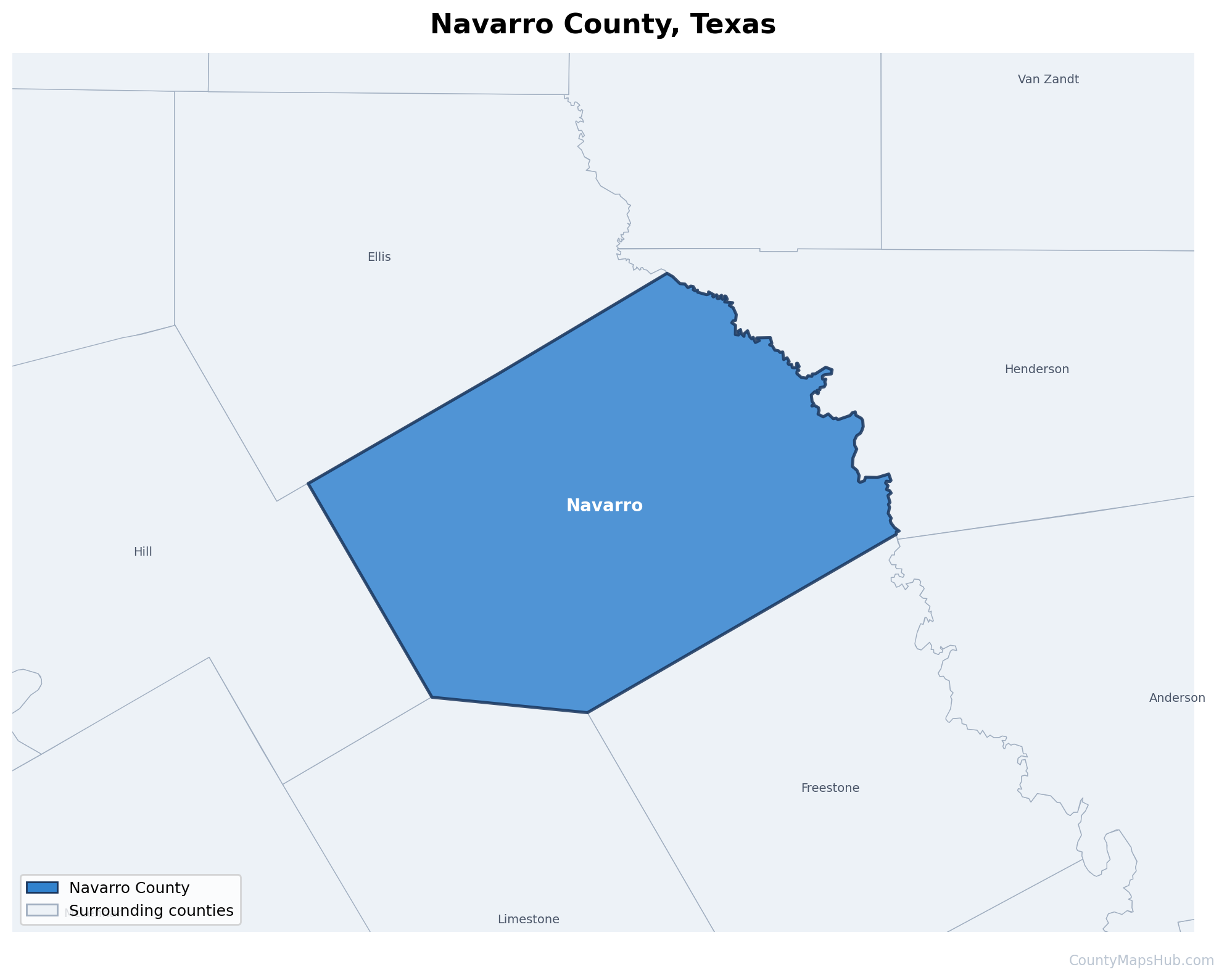
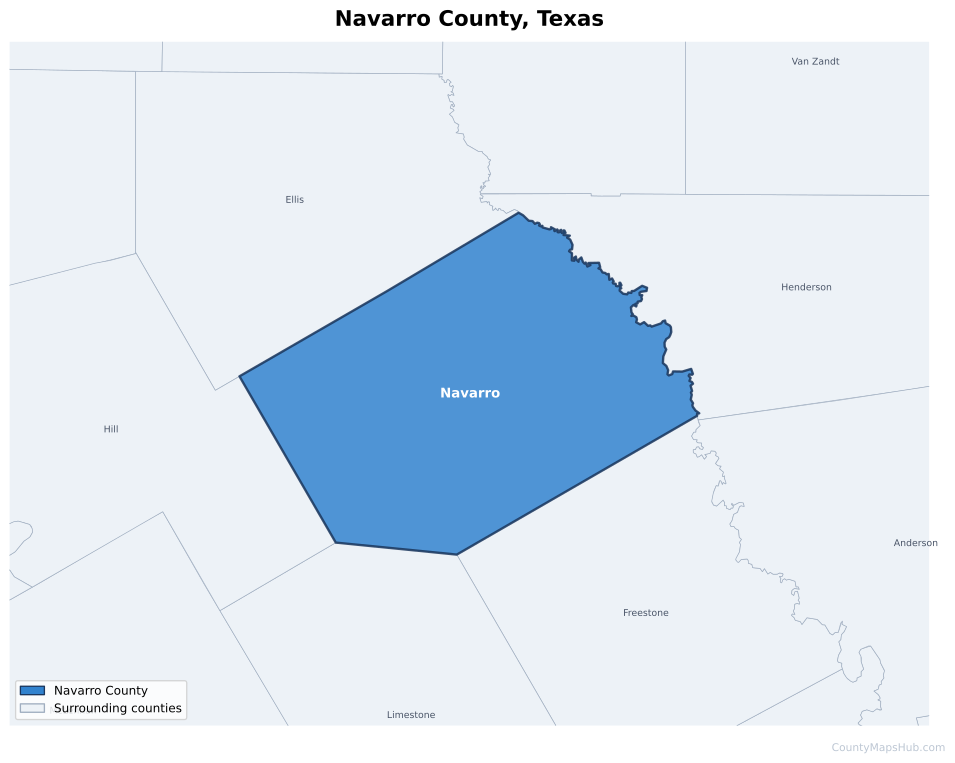
Navarro County was established in 1846, named in honor of José Antonio Navarro, a prominent Texas statesman and signer of the Texas Declaration of Independence. The county seat is Corsicana, which has served as the administrative center since the county’s formation. Located in the north-central region of Texas, the county developed during a period of rapid expansion following Texas statehood.
Throughout the 19th and early 20th centuries, the area’s economy was shaped by agriculture and later by natural resource extraction. The county’s development reflected broader patterns of settlement in North Texas, with communities growing along transportation routes and around agricultural trade. Its history is intertwined with the larger narrative of Texas growth, from frontier territory to established agricultural region to modern economy.
Population
According to the 2020 census, Navarro County has a population of 52,654 residents spread across its 1,086 square miles. This population density reflects a mix of small-town living and rural landscapes typical of North Texas counties. The county seat of Corsicana serves as the primary population center, while surrounding areas maintain more dispersed settlement patterns. The population includes families with deep roots in the region as well as newer residents drawn by the county’s location and quality of life.
Climate
Navarro County experiences a humid subtropical climate characterized by hot summers and mild winters. This climate zone brings warm, humid conditions during summer months with temperatures often reaching the 90s Fahrenheit, while winters remain relatively temperate with occasional cold fronts. The area receives moderate rainfall distributed throughout the year, supporting the region’s agricultural activities and maintaining the lush vegetation typical of this part of Texas.
Seasonal variations create distinct weather patterns, with spring and fall offering particularly pleasant conditions. Thunderstorms are common during the warmer months, occasionally bringing heavy rainfall. The climate supports a variety of outdoor activities year-round and contributes to the county’s agricultural productivity.
Tourist Attractions
Visitors to Navarro County can explore a variety of attractions that reflect the region’s Texas heritage and natural beauty. The county offers opportunities to learn about local history through heritage sites and museums that preserve the story of North Texas settlement and development. Historic downtown areas feature architecture from earlier eras, providing glimpses into the county’s past.
Outdoor enthusiasts can enjoy the county’s natural landscapes through various recreational activities. Local parks and natural areas offer hiking, fishing, and wildlife observation opportunities. The county’s location in North Texas provides easy access to both rural countryside and larger metropolitan amenities. Seasonal events and community celebrations throughout the year showcase regional traditions and provide opportunities for visitors to experience authentic Texas hospitality.
Culture
The cultural landscape of Navarro County reflects traditional Texas values combined with the influences of North Texas regional identity. Community life centers around local traditions, with residents taking pride in their county’s heritage and connection to Texas history. Small-town values emphasize neighborly relationships, community involvement, and preservation of local customs that have been passed down through generations.
The county’s cultural fabric includes influences from the various groups that have called this region home over the centuries. Churches and civic organizations play important roles in community life, hosting gatherings and events that bring residents together. Traditional Texas cuisine, country music, and western heritage remain influential in local culture. Educational institutions and libraries serve as cultural hubs, while annual community events celebrate the county’s identity and provide opportunities for residents to maintain their connections to both past and present.