Newton County
About
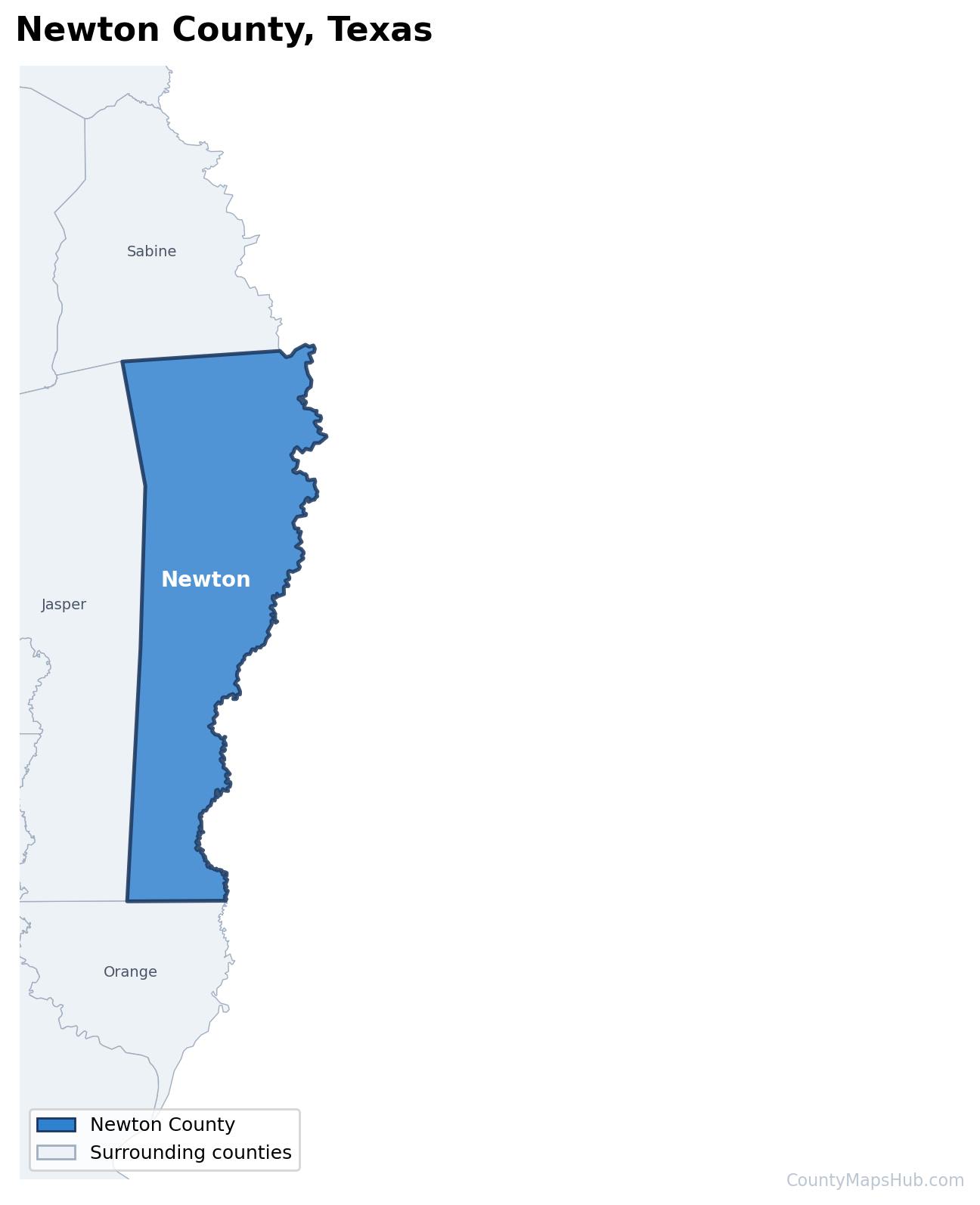
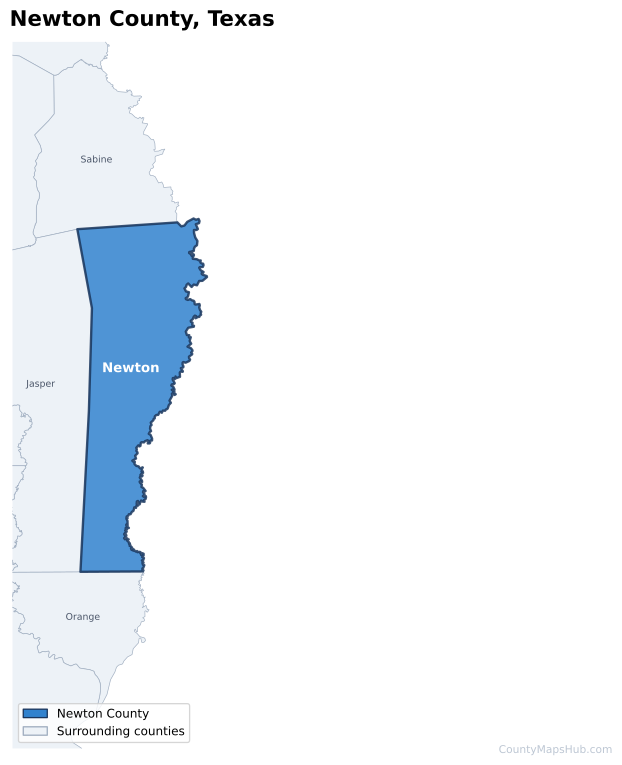
Newton County was established in 1846 during a period of significant expansion in East Texas following the state’s annexation to the United States. The county was named after John Newton, honoring his contributions to the region during its formative years. Positioned in the southeastern corner of Texas along the Louisiana border, the county developed as part of the state’s timber-rich Piney Woods region.
The county seat, Newton, has served as the administrative and commercial center since the county’s formation. Throughout the nineteenth and early twentieth centuries, the area’s economy centered on timber harvesting and agriculture, with the dense forests providing valuable natural resources. The county’s development reflected broader patterns of settlement in East Texas, as communities established themselves along waterways and transportation routes that connected the region to larger markets in both Texas and Louisiana.
Population
According to the 2020 census, Newton County recorded a population of 12,217 residents across its 940 square miles, resulting in a relatively low population density characteristic of rural East Texas counties. The population distribution reflects the county’s predominantly rural character, with residents dispersed across small communities and unincorporated areas throughout the region. This population size has remained relatively stable over recent decades, maintaining the county’s quiet, close-knit community atmosphere that appeals to those seeking a slower-paced lifestyle away from urban centers.
Climate
Newton County experiences a humid subtropical climate typical of the Deep South and East Texas regions, characterized by hot, humid summers and mild to cool winters. Summer temperatures regularly reach the upper 90s Fahrenheit, accompanied by high humidity levels that create a distinctly muggy atmosphere. Afternoon thunderstorms are common during the warmest months, providing periodic relief from the heat.
Winters are generally mild, with occasional cold fronts bringing cooler temperatures but rarely sustained freezing conditions. The region receives abundant rainfall throughout the year, supporting the lush pine forests and diverse vegetation that define the landscape. Spring and fall offer the most comfortable weather conditions, with moderate temperatures and lower humidity levels that make outdoor activities particularly enjoyable during these transitional seasons.
Tourist Attractions
The county’s location within the East Texas Piney Woods makes it an attractive destination for nature enthusiasts and outdoor recreation seekers. Visitors can explore extensive forested areas that offer opportunities for hiking, birdwatching, and wildlife observation. The dense woodlands provide habitat for diverse species and create scenic landscapes that change dramatically with the seasons. Fishing and boating opportunities can be found at various waterways throughout the region, drawing anglers and water sports enthusiasts.
The area’s rural character and natural beauty appeal to those seeking peaceful retreats from urban environments. Local parks and natural areas provide spaces for picnicking, camping, and exploring the region’s ecological diversity. The county’s position near the Texas-Louisiana border also makes it a convenient stopping point for travelers exploring the broader Gulf Coast and southeastern Texas regions, offering a glimpse into the traditional rural landscapes that have characterized East Texas for generations.
Culture
Newton County embodies the cultural traditions of rural East Texas, where Southern hospitality and small-town values remain central to community life. The region’s heritage reflects a blend of influences from early Anglo-American settlers, with cultural practices rooted in agricultural and forestry traditions. Community gatherings and local events strengthen social bonds among residents, fostering a strong sense of belonging and mutual support that characterizes life in smaller Texas counties.
The county’s cultural landscape reflects its position within the broader Piney Woods region, where timber industry heritage and rural lifestyles continue to shape local identity. Traditional Southern cuisine, outdoor recreation, and family-centered activities form the foundation of social life. Religious institutions play significant roles in community organization, and residents maintain connections to the land through hunting, fishing, and other outdoor pursuits that have been passed down through generations, preserving a way of life that remains distinct from Texas’s rapidly urbanizing areas.