Nueces County
About
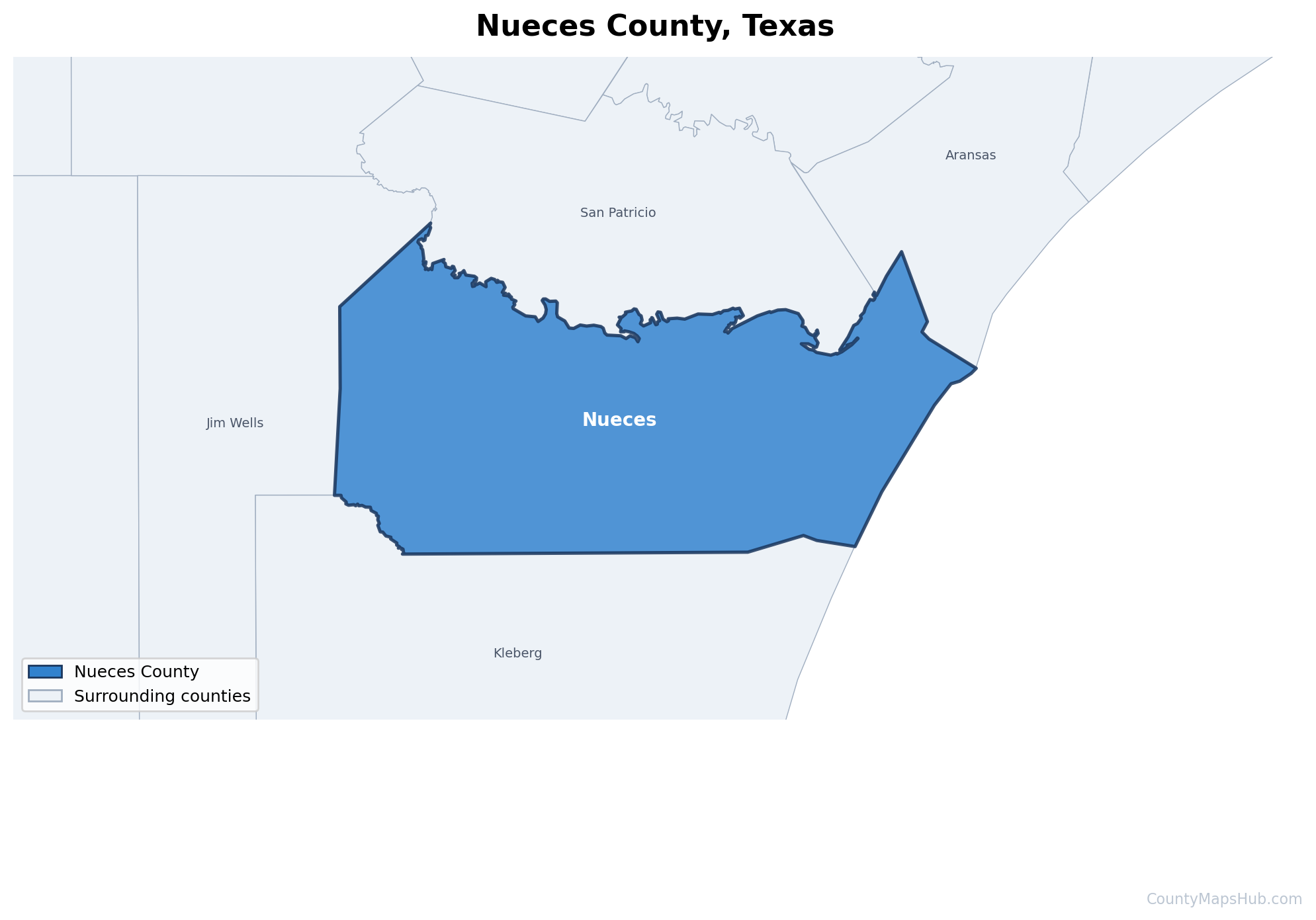
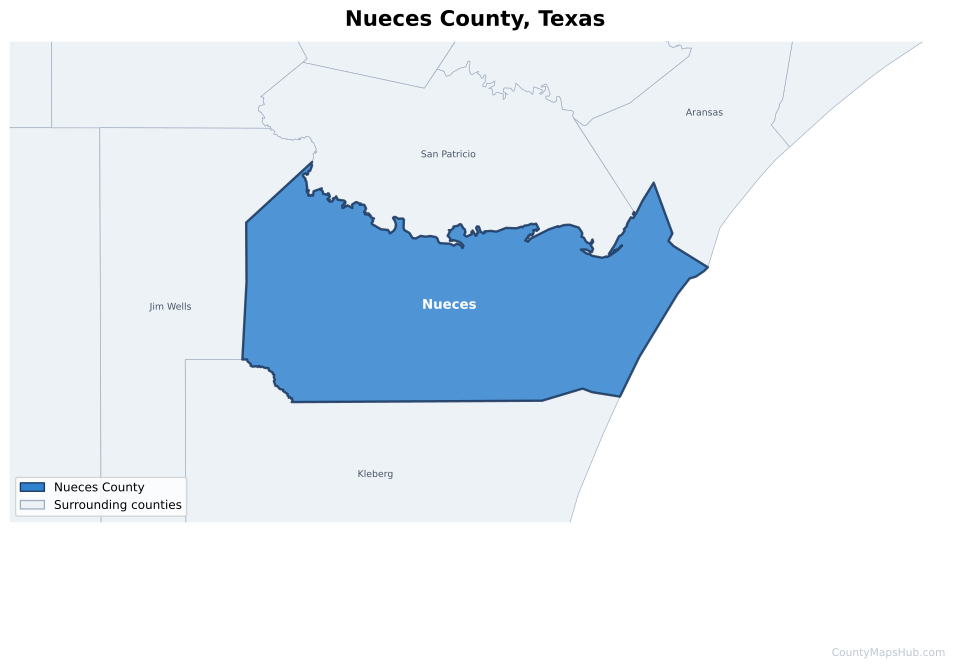
Nueces County was established in 1846, taking its name from the Nueces River, which played a significant role in the region’s early geography and settlement patterns. The county’s formation came during a pivotal period in Texas history, shortly after the state’s annexation to the United States. The region’s strategic location along the Texas Gulf Coast made it an important area for trade, ranching, and maritime activities throughout the nineteenth century.
The county seat, Corpus Christi, grew from a small trading post into a major coastal city, serving as the economic and administrative hub of the region. Throughout its history, the county has evolved from a frontier territory into a diverse and economically dynamic area, with industries ranging from agriculture and ranching to port operations and tourism. The cultural heritage of the region reflects the blending of various influences over nearly two centuries of development.
Population
As of the 2020 census, Nueces County had a population of 353,178 residents, making it one of the more populous counties along the Texas Gulf Coast. The population is concentrated primarily in the county seat of Corpus Christi and surrounding communities. The county spans 836 square miles, creating a population density that reflects both urban and suburban development patterns. The demographic composition of the county reflects the broader cultural diversity typical of South Texas coastal regions, with residents from various ethnic and cultural backgrounds contributing to the area’s social fabric.
Climate
Nueces County experiences a humid subtropical climate characterized by hot summers, mild winters, and moderate to high humidity levels throughout much of the year. The county’s coastal location along the Gulf of Mexico significantly influences weather patterns, with sea breezes providing some relief during the warmest months. Rainfall is distributed fairly evenly across the year, though late spring and early fall can see periods of increased precipitation.
Winter temperatures rarely dip to freezing, making the area attractive to those seeking milder seasonal conditions. Summer temperatures regularly reach the upper 80s and 90s Fahrenheit, with humidity amplifying the heat index. The region can be affected by tropical weather systems during hurricane season, which runs from June through November. Overall, the climate supports a long growing season and outdoor recreational activities year-round.
Tourist Attractions
The county’s location along the Texas Gulf Coast provides visitors with access to beautiful beaches, waterfront parks, and opportunities for fishing, boating, and water sports. The coastal environment attracts nature enthusiasts interested in birdwatching, as the region lies along major migratory routes. Local marinas and harbors serve as gateways to bay and offshore recreational activities, while beachfront areas offer relaxation and family-friendly amenities.
Cultural and historical sites throughout the county provide insight into the region’s maritime heritage and development over nearly two centuries. Visitors can explore local museums, historical districts, and educational centers that showcase the area’s natural and cultural history. The downtown area of the county seat features a mix of dining, shopping, and entertainment options, along with waterfront promenades and public spaces that celebrate the coastal setting.
Culture
The cultural landscape of Nueces County reflects the rich traditions of South Texas, blending influences from multiple heritage groups that have shaped the region over generations. The proximity to Mexico and the broader Gulf Coast has fostered a vibrant cultural exchange that manifests in local cuisine, music, and community celebrations. Regional festivals and events throughout the year highlight this cultural diversity, bringing together residents and visitors to celebrate shared traditions and local pride.
The county’s identity is closely tied to its coastal environment, with maritime activities and beach culture playing central roles in community life. Local culinary traditions emphasize fresh seafood and Tex-Mex flavors, reflecting both the Gulf setting and regional heritage. Arts and music scenes incorporate various styles, from traditional folk expressions to contemporary genres, contributing to a dynamic cultural environment that honors the past while embracing modern influences.