Ochiltree County
About
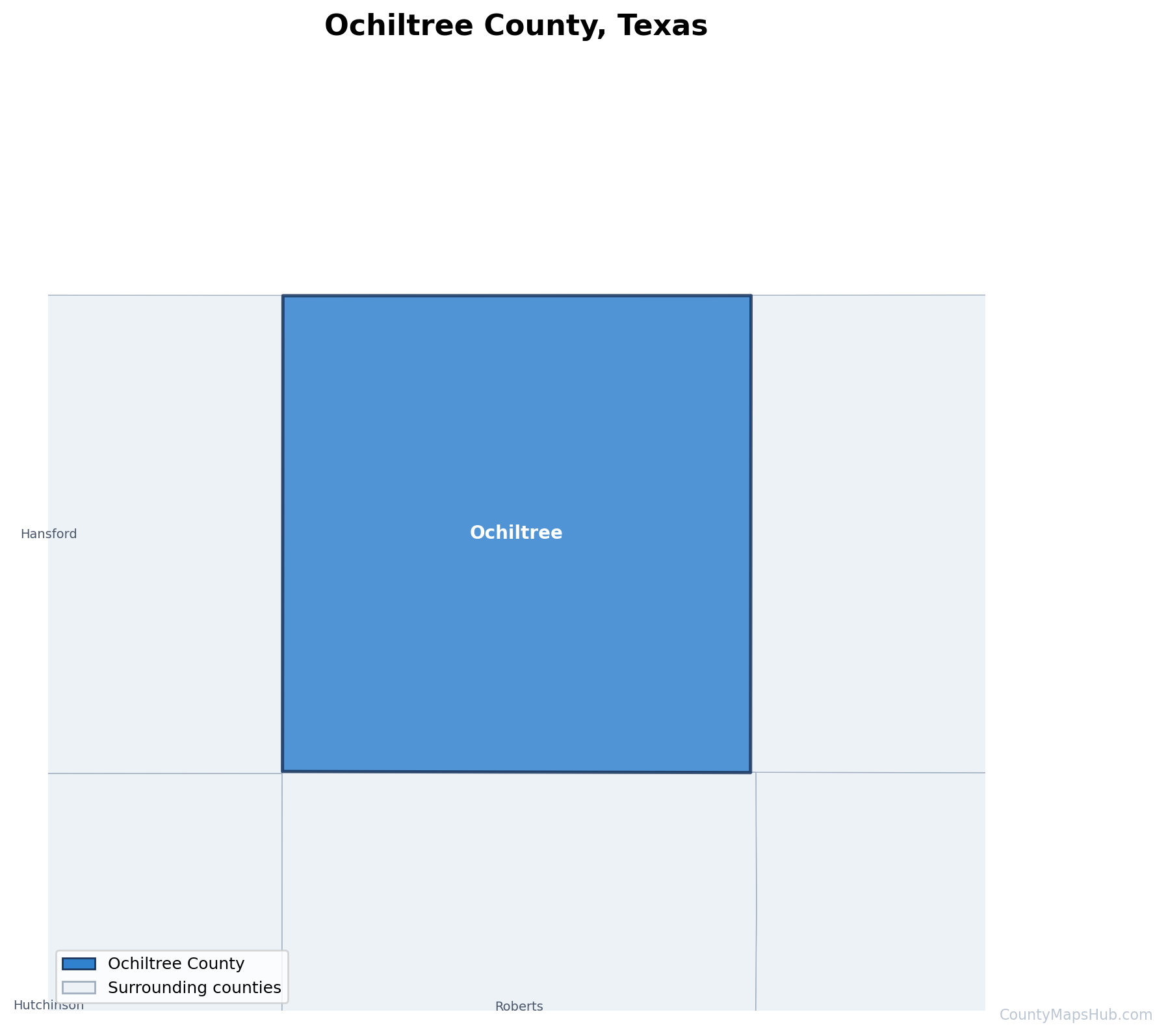
Ochiltree County was established in 1876 during the post-Civil War expansion of Texas settlements into the Panhandle region. The county was named after William Beck Ochiltree, a prominent figure in Texas history. Like many Texas Panhandle counties, its early development was shaped by cattle ranching and the challenges of frontier life in a region characterized by vast open plains and relatively sparse water resources.
The county seat of Perryton serves as the governmental and commercial center for the region. Throughout the late nineteenth and early twentieth centuries, the area evolved from open range cattle country to a more diversified agricultural economy. The arrival of railroads and improvements in transportation infrastructure helped connect this remote Panhandle county to broader markets and facilitated settlement patterns that continue to define its character today.
Population
According to the 2020 census, Ochiltree County has a population of 9,836 residents spread across its 918 square miles of Texas Panhandle territory. This population density reflects the rural, agricultural character common to many northern Texas counties. The county’s residents are primarily concentrated in Perryton and surrounding communities, with the remainder distributed across the agricultural landscape. The population has remained relatively stable over recent decades, consistent with demographic patterns in many rural Great Plains counties where economic opportunities center on agriculture and related industries.
Climate
Ochiltree County experiences a semi-arid climate typical of the Texas Panhandle region, characterized by low annual precipitation and significant temperature variations between seasons. Summers tend to be warm with abundant sunshine, while winters can bring cold fronts sweeping down from the northern plains, occasionally accompanied by snow and ice. The semi-arid conditions mean that water conservation and irrigation management are important considerations for agricultural operations.
The region’s climate supports prairie grasslands and requires adapted farming and ranching practices. Spring and fall represent transition periods with variable weather patterns, including the potential for severe thunderstorms. The relatively dry conditions and open terrain contribute to wide temperature swings between day and night, a characteristic feature of semi-arid continental climates.
Tourist Attractions
Visitors to Ochiltree County can experience the authentic character of the Texas Panhandle, where wide-open spaces and agricultural landscapes dominate the scenery. The region offers opportunities for those interested in rural Texas life, including observing farming and ranching operations that have sustained the local economy for generations. The area’s natural environment provides settings for outdoor activities such as bird watching, photography of prairie landscapes, and appreciation of the region’s expansive skies.
The county seat provides access to local amenities and serves as a gateway for exploring the broader Panhandle region. Travelers interested in the history of Texas settlement and agricultural development will find the area representative of the challenges and adaptations required to build communities in this semi-arid environment. The region’s heritage reflects the determination of pioneers who established lasting communities on the Great Plains.
Culture
Ochiltree County’s culture reflects the values and traditions of rural Texas Panhandle communities, where agriculture remains central to local identity and economic life. The heritage of ranching and farming influences social structures, community events, and the rhythms of daily life that follow seasonal agricultural cycles. Community gatherings often center around agricultural themes, school activities, and local traditions that reinforce bonds among residents in this sparsely populated region.
The cultural character of the area embodies the independence and resilience associated with rural Great Plains communities. Religious institutions, civic organizations, and school systems serve as focal points for community life. The region’s relative isolation has helped preserve traditional rural values while residents maintain connections to broader Texas culture through modern communications and transportation networks. Local cuisine and customs reflect both general Texas influences and the specific adaptations required by life in the semi-arid Panhandle environment.