Orange County
About
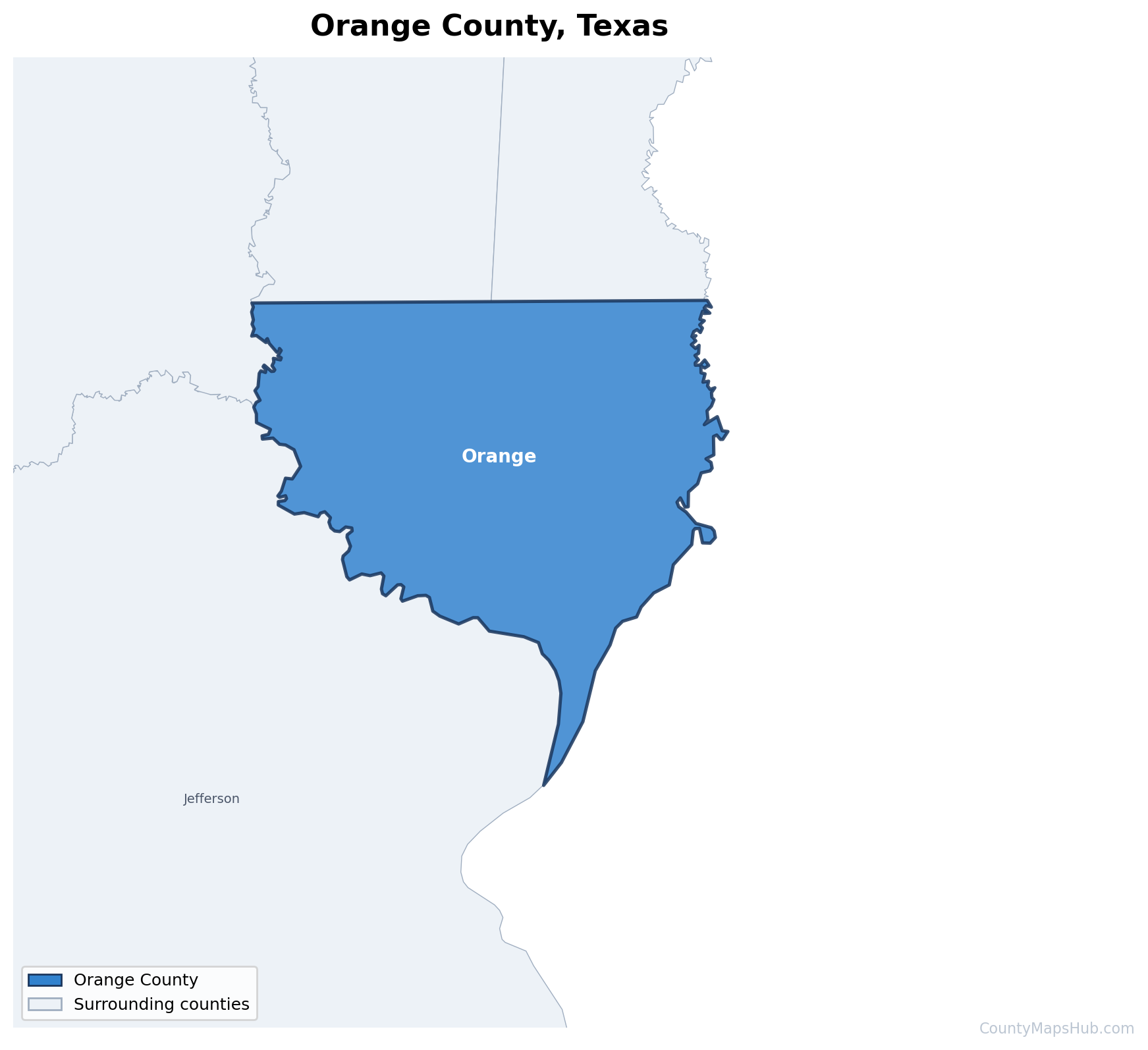
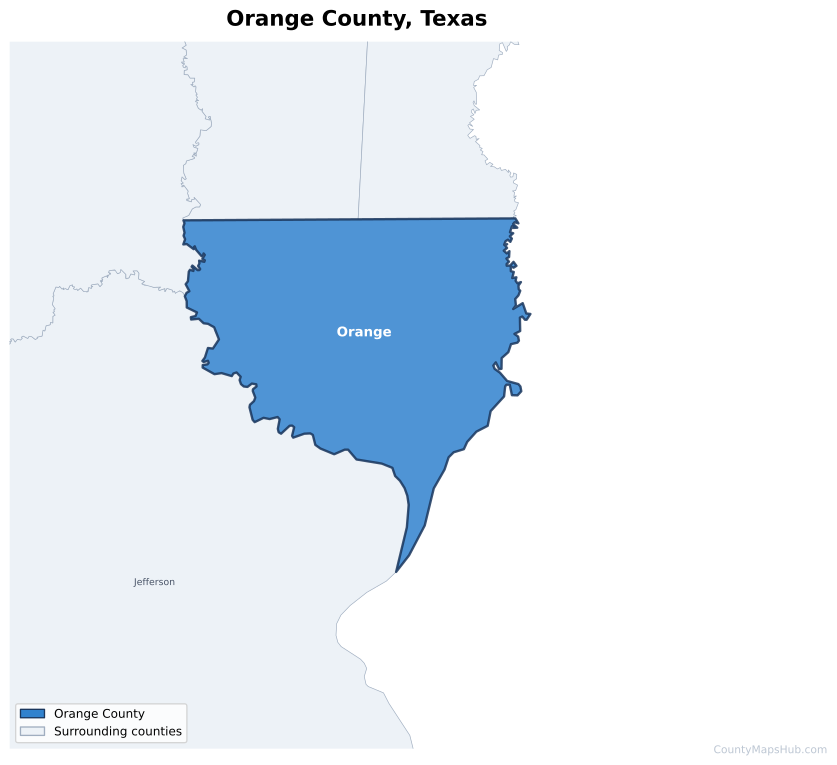
Orange County was established in 1852 and derives its distinctive name from the orange groves that once characterized the landscape of this Southeast Texas region. The county seat, Orange, has served as the administrative and commercial center since the county’s founding. Located along the Texas-Louisiana border, the area developed as part of the broader settlement patterns of the upper Texas Gulf Coast during the mid-nineteenth century.
The county’s position near major waterways contributed to its economic development over subsequent decades. Like many Southeast Texas counties, the region experienced growth tied to natural resource industries and maritime commerce. The landscape and economy evolved significantly from the agricultural emphasis of its early years, though the legacy of its naming—honoring the citrus cultivation that once flourished here—remains an enduring part of its identity.
Population
According to the 2020 census, Orange County has a population of 84,808 residents spread across its 357 square miles. This population density reflects a mix of urban concentration in the county seat and surrounding communities, along with less densely settled rural areas. The demographic composition represents the diverse heritage common to Southeast Texas border regions, where influences from neighboring Louisiana blend with Texas Gulf Coast culture. The county’s modest geographic size combined with its population creates a community-oriented environment where residents benefit from both small-town accessibility and proximity to larger regional centers.
Climate
Orange County experiences a humid subtropical climate characterized by hot, humid summers and mild winters typical of the Texas Gulf Coast. The region receives substantial rainfall throughout the year, with precipitation patterns that support lush vegetation and contribute to the area’s verdant landscape. Summer temperatures regularly climb into the 90s Fahrenheit, accompanied by high humidity levels from the nearby Gulf of Mexico.
Winters are generally mild, with temperatures rarely falling to freezing for extended periods. The county’s climate supports year-round outdoor activities, though the summer heat and occasional tropical weather systems require residents and visitors to plan accordingly. The humid subtropical conditions create an environment conducive to diverse plant and animal life, contributing to the natural beauty of this Southeast Texas region.
Tourist Attractions
Orange County offers visitors opportunities to explore the natural and cultural heritage of Southeast Texas. The region’s proximity to waterways provides access to recreational activities including fishing, boating, and wildlife observation. Nature enthusiasts can enjoy the diverse ecosystems characteristic of the coastal plains, where wetlands, forests, and waterways create habitats for numerous species. The area serves as a gateway for exploring the broader Golden Triangle region of Southeast Texas.
Visitors interested in regional history can explore local museums and historic sites that preserve the story of Southeast Texas development. The county’s location along the Texas-Louisiana border makes it a convenient stopping point for travelers moving between the two states. Annual community events and festivals reflect the blend of cultural influences that define this border region, offering authentic experiences of Gulf Coast traditions and hospitality.
Culture
Orange County’s culture reflects the distinctive character of the Texas-Louisiana border region, where Cajun and Creole influences merge with traditional Texas Gulf Coast heritage. This cultural crossroads creates a unique identity evident in local cuisine, music, and community traditions. The region’s history of diverse settlement patterns has fostered a welcoming atmosphere where multiple cultural threads interweave, contributing to a rich social fabric.
Community life in the county centers around family-oriented values and strong neighborhood connections typical of smaller Texas counties. Local traditions often celebrate the area’s maritime heritage and connection to the natural environment. Religious institutions play an important role in community cohesion, and residents take pride in their regional identity as part of Southeast Texas. The blend of influences from neighboring Louisiana adds distinctive flavor to everything from local food traditions to musical preferences, creating a cultural experience that sets this border county apart from other parts of Texas.