Pecos County
About
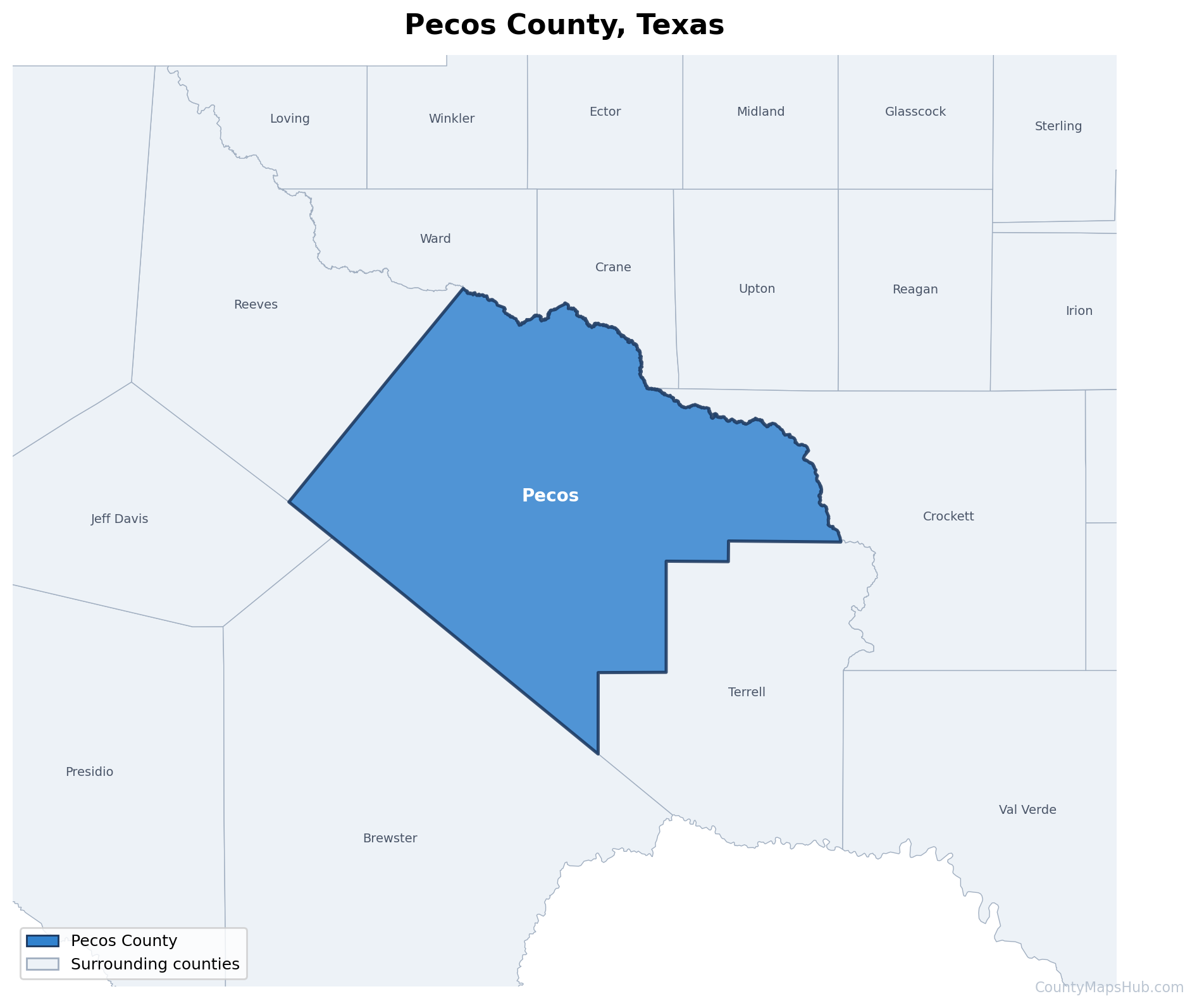
Pecos County was established in 1872 and named after the Pecos River, one of the major waterways that defines the geography and history of West Texas. The county seat, Fort Stockton, developed as a crucial outpost along the historic frontier, serving travelers and settlers moving through the vast Trans-Pecos region. The area’s history is deeply intertwined with the challenges and opportunities of the American Southwest, including ranching, military presence, and the expansion of transportation routes.
Throughout the late 19th and early 20th centuries, the county evolved from a remote frontier territory into an important center for ranching and trade. The landscape and sparse population reflected the harsh realities of life in West Texas, where water sources and strategic locations determined settlement patterns. Over the decades, the discovery of natural resources and the development of infrastructure helped shape the county’s economic foundation, connecting it to broader regional markets and development.
Population
According to the 2020 census, Pecos County has a population of 15,193 residents spread across its expansive 4,763 square miles. This relatively low population density reflects the county’s arid environment and rural character, typical of West Texas counties where vast distances separate communities. The population is centered primarily around Fort Stockton, the county seat, which serves as the main hub for commerce, services, and government. The demographic makeup of the county reflects the broader cultural heritage of the Texas-Mexico borderlands, with influences from ranching traditions, Hispanic culture, and frontier history shaping the community’s identity and way of life.
Climate
Pecos County experiences an arid climate characterized by low precipitation, hot summers, and mild winters typical of the Chihuahuan Desert region. Rainfall is scarce throughout the year, with the area receiving significantly less moisture than most other parts of Texas. Summer temperatures regularly exceed 95 degrees Fahrenheit, while winters are generally mild with occasional cold fronts bringing brief periods of cooler weather.
The dry climate and abundant sunshine define daily life and economic activities in the region. The lack of humidity makes even the hottest days more tolerable than in coastal areas, though the intense sun requires precautions. Clear skies dominate most of the year, making the area ideal for stargazing and outdoor activities during cooler months. Water conservation and management remain critical considerations for residents and visitors alike in this desert environment.
Tourist Attractions
Visitors to Pecos County can explore the rugged beauty of West Texas landscapes, including desert vistas, geological formations, and remnants of frontier heritage. The area offers opportunities for outdoor enthusiasts interested in hiking, wildlife observation, and photography in an authentic desert setting. Historical sites related to the frontier era provide glimpses into the challenges faced by early settlers and military personnel who shaped the region’s development.
The county’s location along historic travel routes makes it a convenient stopping point for travelers exploring the greater Trans-Pecos region. Local museums and cultural centers showcase artifacts and stories from ranching history, Native American heritage, and the pioneering spirit that defined West Texas. The vast open spaces and dark night skies attract those seeking solitude and natural beauty away from urban centers, offering a genuine taste of the American Southwest’s enduring character.
Culture
Pecos County’s culture reflects the traditions of West Texas ranching communities blended with Hispanic influences and frontier heritage. The county embodies the independent spirit and resilience necessary for life in a challenging desert environment. Local traditions often center around ranching activities, rodeos, and celebrations that honor the region’s cowboy heritage and multicultural roots. The cultural landscape is shaped by generations of families who adapted to the harsh climate and built communities based on cooperation and self-reliance.
Music, food, and social gatherings in the area draw from both Anglo and Hispanic traditions, creating a distinctive regional flavor. The cuisine typically features Tex-Mex influences alongside traditional ranch cooking, while community events bring together residents from across the county’s vast expanse. The slower pace of life and strong sense of community identity characterize daily existence in this remote corner of Texas, where neighbors often know each other and shared challenges create lasting bonds among those who call the desert home.