Polk County
About
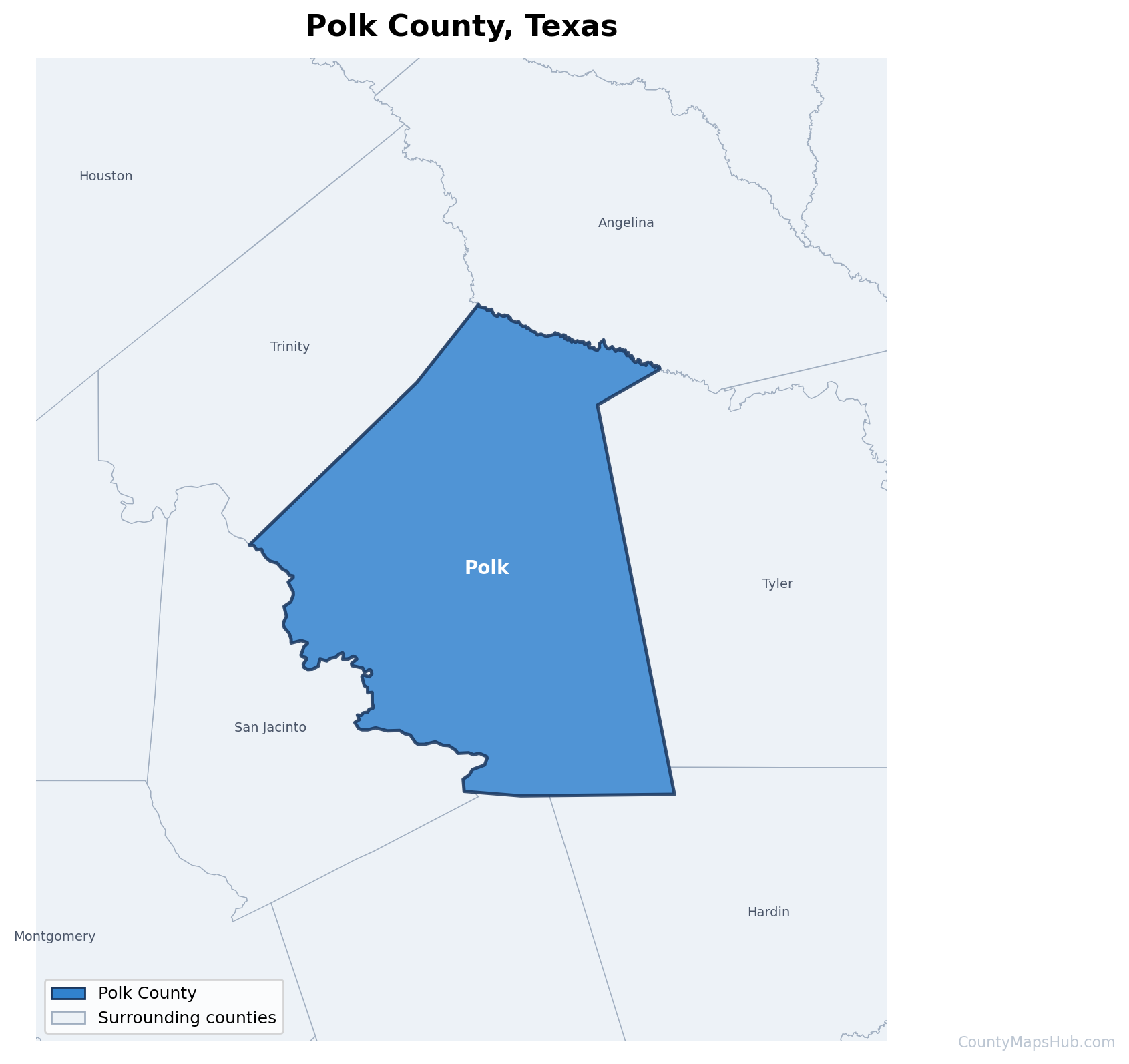
Polk County was established in 1846, shortly after Texas joined the United States, and was named in honor of James K. Polk, who served as the 11th President of the United States from 1845 to 1849. The county’s formation came during a period of significant expansion and settlement in East Texas, as pioneers moved into the region’s pine forests and fertile lands. The selection of Livingston as the county seat provided a central location for government services and commerce in this developing frontier area.
Throughout the 19th and early 20th centuries, the county’s economy centered on timber harvesting, agriculture, and livestock raising. The abundant pine forests that characterize much of the region supported a thriving lumber industry that shaped the county’s development and attracted workers and their families. Over time, the county evolved from its frontier origins into a more diversified economy while maintaining its rural character and connection to the natural resources that first drew settlers to the area.
Population
According to the 2020 census, Polk County has a population of 50,123 residents spread across its 1,109 square miles. This population density reflects the county’s predominantly rural character, with communities interspersed throughout the piney woods landscape. The county seat of Livingston serves as the primary population center, providing essential services, employment opportunities, and commercial activities for residents throughout the region. The population includes a mix of long-established families with generational roots in the area and newer residents attracted by the county’s natural beauty and more affordable cost of living compared to nearby metropolitan areas.
Climate
Polk County experiences a humid subtropical climate typical of East Texas, characterized by hot, humid summers and mild to cool winters. Summer temperatures regularly reach into the 90s Fahrenheit, with high humidity levels that can make conditions feel even warmer. The region receives abundant rainfall throughout the year, with precipitation supporting the lush pine forests and diverse vegetation that define the local landscape.
Winters are generally mild, with occasional cold fronts bringing cooler temperatures and rare freezes. Spring and fall offer pleasant weather conditions, making these seasons particularly enjoyable for outdoor activities. The climate supports a long growing season and contributes to the county’s agricultural productivity and the maintenance of its characteristic forest ecosystems.
Tourist Attractions
Polk County offers visitors a variety of outdoor recreational opportunities centered on its natural landscapes and waterways. The region’s extensive pine forests provide excellent settings for hiking, wildlife observation, and nature photography. Lakes and rivers in the area attract fishing enthusiasts and boaters seeking relaxation and sport in scenic surroundings. The abundant natural beauty makes the county an appealing destination for those seeking to escape urban environments and enjoy the tranquility of East Texas wilderness.
Visitors interested in local history can explore heritage sites and historical markers that document the county’s development from frontier settlement to modern community. The county’s rural character and natural resources continue to define its identity, offering tourists an authentic glimpse into the East Texas experience. Seasonal hunting opportunities and camping facilities further enhance the county’s appeal to outdoor enthusiasts throughout the year.
Culture
The cultural identity of Polk County reflects its East Texas heritage, blending Southern traditions with the independent spirit characteristic of the region. Community life centers around local schools, churches, and civic organizations that maintain strong social bonds among residents. Traditional values emphasizing family, neighborliness, and self-reliance remain important aspects of county culture, passed down through generations. Annual community gatherings and seasonal celebrations provide opportunities for residents to come together and strengthen their collective identity.
The county’s connection to the timber industry and rural livelihoods continues to influence local culture and values. Residents maintain a respect for the land and natural resources that have sustained the community for generations. Regional cuisine, musical traditions, and storytelling preserve connections to the past while adapting to contemporary life. The slower pace of life compared to urban centers appeals to those who value community ties and natural surroundings over the conveniences of city living.