Potter County
About
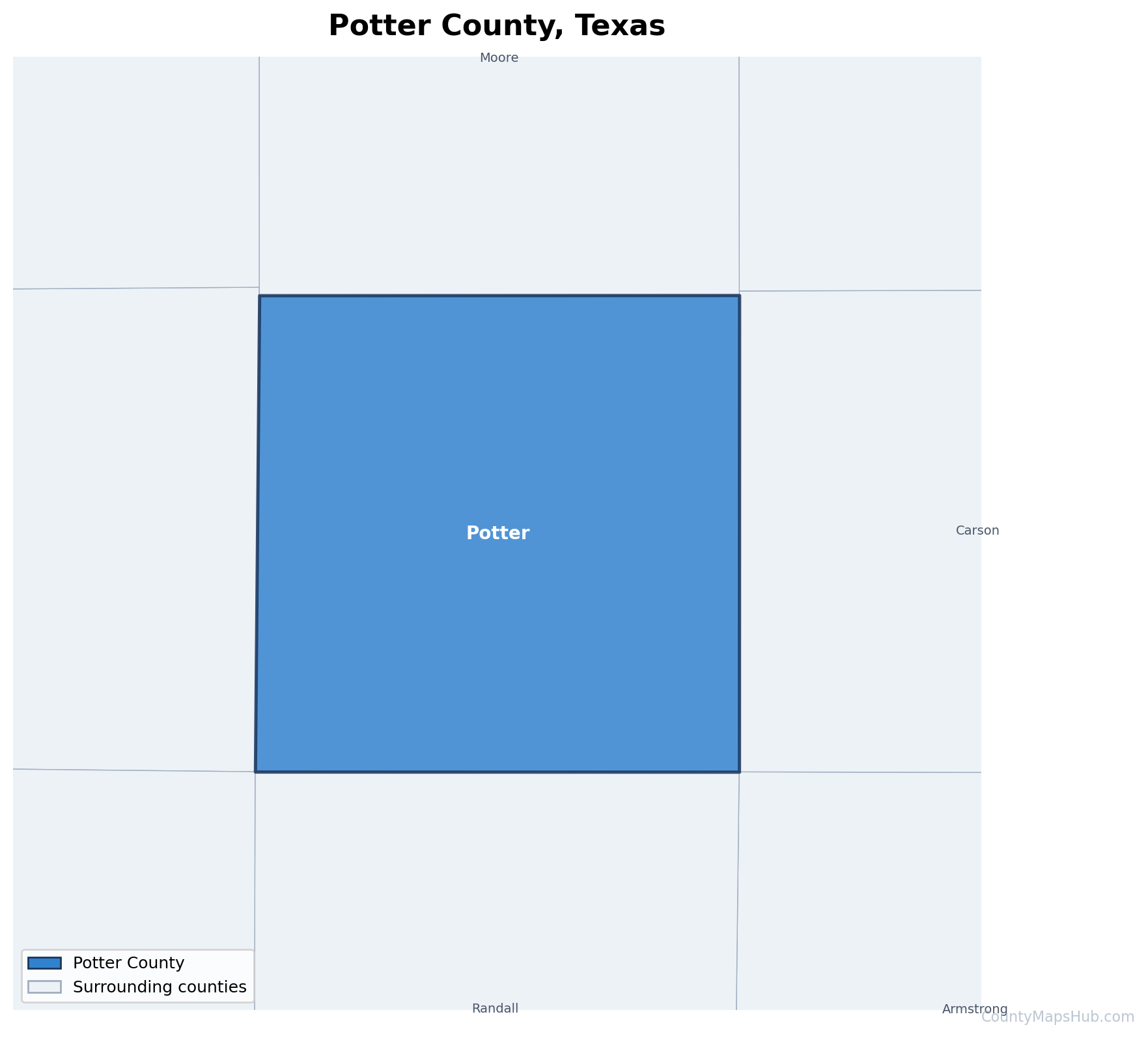
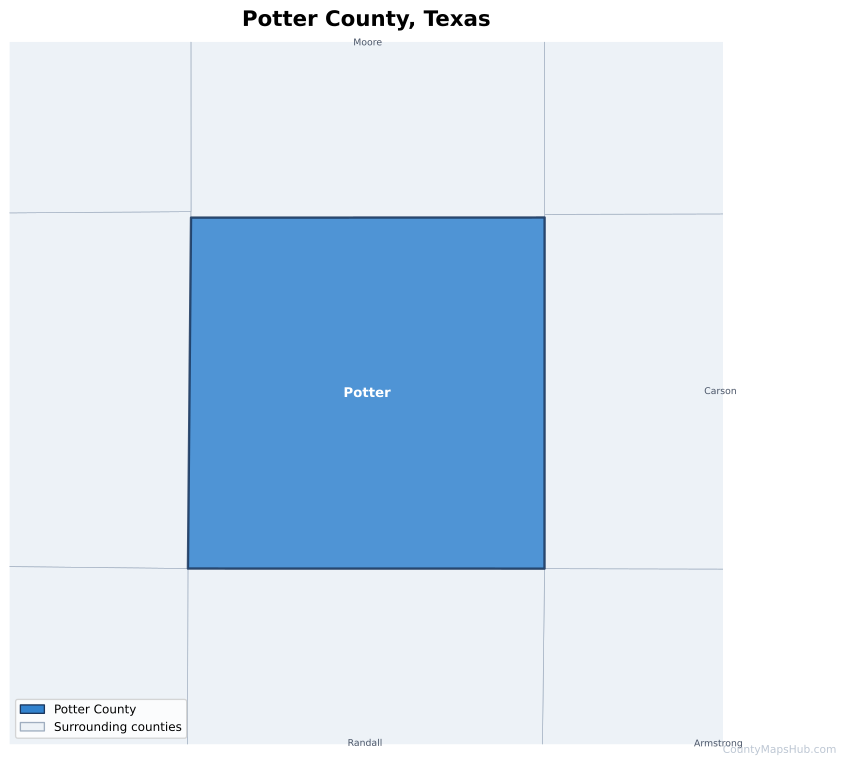
Potter County was established in 1876 in the heart of the Texas Panhandle, named after Robert Potter, a notable figure in early Texas history. The county’s development coincided with the expansion of cattle ranching across the Southern Plains and the subsequent arrival of railroads that transformed the region into an important agricultural and commercial hub. Amarillo, the county seat, grew rapidly as settlers were drawn to opportunities in ranching, farming, and trade.
Throughout its history, the county has evolved from a frontier region dominated by open rangeland into a more diversified economy. The semi-arid climate and vast grasslands made it ideal for cattle operations, while later agricultural innovations allowed for wheat and grain cultivation. The county’s strategic location along major transportation routes contributed to its role as a regional center for commerce and services in the Texas Panhandle.
Population
According to the 2020 Census, Potter County had a population of 118,525 residents spread across its 909 square miles. As the urban center of the Texas Panhandle, the county exhibits a mix of city dwellers and rural residents. The population reflects the diverse economic base of the region, with communities built around agriculture, energy, healthcare, and service industries. Demographic trends in the county mirror broader patterns seen across the Texas Panhandle, with families drawn to affordable living costs and employment opportunities in regional industries.
Climate
Potter County experiences a semi-arid climate typical of the Texas Panhandle, characterized by low annual precipitation and significant temperature variations between seasons. Summers can be hot with abundant sunshine, while winters bring cold temperatures and occasional snowfall. The region experiences moderate humidity levels and steady winds across the flat terrain.
The semi-arid conditions influence both agriculture and daily life in the county. Irrigation systems support crop production, while native vegetation adapted to drier conditions dominates the natural landscape. Residents experience dramatic seasonal changes, with spring and fall offering mild temperatures that contrast with the temperature extremes of summer and winter months.
Tourist Attractions
Visitors to Potter County can explore a variety of attractions that showcase the heritage and character of the Texas Panhandle. The region offers museums dedicated to local history, western heritage, and the cultural development of the area. Outdoor enthusiasts find opportunities for recreation in regional parks and natural areas that highlight the distinctive High Plains landscape.
The county serves as a gateway to experiencing authentic Panhandle culture, with local dining establishments featuring regional cuisine and shopping districts offering southwestern goods. Annual community events celebrate the agricultural heritage and western traditions of the area. Travelers often use the county as a base for exploring the wider Texas Panhandle, taking advantage of its central location and visitor amenities.
Culture
Potter County’s culture reflects the pioneering spirit and agricultural traditions of the Texas Panhandle. The western heritage remains strong, with rodeo events, livestock shows, and celebrations of ranching history forming important parts of community identity. Local traditions emphasize self-reliance, hospitality, and connection to the land that characterizes much of rural Texas.
The county’s cultural landscape includes influences from various communities who have settled in the region over generations. Arts organizations, performing arts venues, and cultural centers contribute to a vibrant community life that balances respect for tradition with contemporary expression. Educational institutions and civic organizations play important roles in preserving regional history while fostering cultural development for future generations.