Presidio County
About
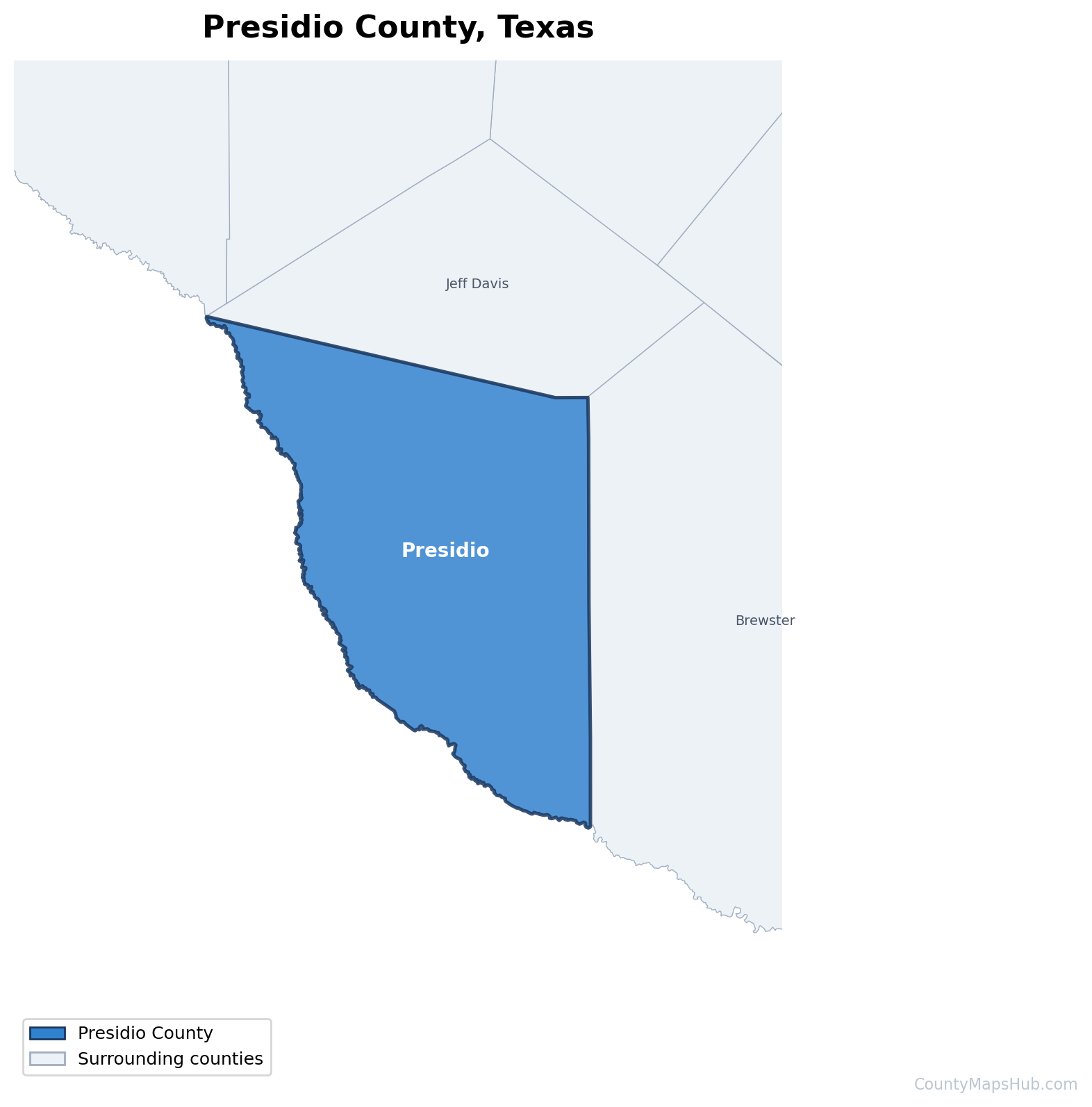
Presidio County was established in 1875, marking a significant moment in the organization of West Texas’s vast frontier territories. The county derives its name from Presidio del Norte, reflecting the deep historical connections between this borderland region and Spanish colonial presence along the Rio Grande. The name itself references the military fortifications that once protected settlements in this remote area.
Throughout its history, the county has served as a crossroads between cultures and economies, shaped by its position along the international boundary. The rugged terrain and isolation that characterized the region influenced patterns of settlement and development. Over the decades, the area evolved from a frontier outpost into an organized county with Marfa serving as its administrative center, maintaining its role as the county seat through the present day.
The county’s expansive geography, covering thousands of square miles of desert and mountain landscape, has long defined the character of local communities. From ranching to border trade, economic activities have adapted to the challenges and opportunities presented by the arid environment and remote location.
Population
According to 2020 census data, Presidio County recorded a population of 6,131 residents spread across its extensive 3,856 square miles. This population density reflects the county’s character as one of the more sparsely populated regions in Texas, where communities are dispersed across a vast landscape. The county seat of Marfa serves as the primary population center and administrative hub. The demographic composition reflects the borderland heritage of the region, where cultural influences from both sides of the Rio Grande have shaped community identity over generations. Population trends in such remote counties often reflect broader patterns of rural migration and economic opportunity in the American Southwest.
Climate
Presidio County experiences an arid climate characteristic of the Chihuahuan Desert region of West Texas. This climate zone features low annual precipitation, abundant sunshine throughout the year, and significant temperature variations between day and night. Summer months typically bring intense heat, while winter temperatures can drop considerably, especially during evening hours. The limited rainfall and low humidity define the growing season and natural vegetation patterns across the county.
The arid conditions have profoundly influenced both human settlement and natural ecosystems throughout the region. Desert-adapted plant and animal species dominate the landscape, while water resources have historically been precious and carefully managed. Clear skies and minimal light pollution, natural byproducts of the arid climate and low population density, create exceptional conditions for stargazing and astronomical observation that have become associated with the region.
Tourist Attractions
The vast desert landscapes of Presidio County offer visitors opportunities to experience the distinctive character of the Trans-Pecos region. The county’s remote location and dramatic topography attract those seeking authentic encounters with West Texas’s frontier heritage and natural beauty. Outdoor enthusiasts find opportunities for hiking, photography, and wildlife observation across public lands and scenic areas. The clear desert skies draw amateur astronomers and those interested in experiencing minimal light pollution.
Cultural attractions in the region reflect the unique blend of borderland heritage and contemporary art communities that have developed in West Texas. Visitors can explore local galleries, historic architecture, and sites that illustrate the county’s evolution from frontier outpost to its present character. The county’s position along historic routes and its proximity to Big Bend country make it a waypoint for travelers exploring the broader Trans-Pecos region. Seasonal visitors appreciate the mild winter climate and dramatic landscape photography opportunities available throughout the year.
Culture
Presidio County’s culture reflects its position as a borderland community where influences from Mexico and the American Southwest have intermingled for generations. The bilingual heritage of the region manifests in daily life, from local cuisine to community celebrations. Traditional ranching culture remains influential, with values of self-reliance and community cooperation shaped by the challenges of living in remote, arid country. The relatively small population has fostered tight-knit communities where neighbors maintain strong social connections.
In recent decades, the county has also become known for attracting artists, writers, and others drawn to the stark beauty of the desert landscape and the sense of isolation that the region provides. This has created an interesting cultural dynamic where long-established borderland traditions coexist with contemporary creative communities. Local events and gatherings often celebrate both the historic ranching heritage and the artistic sensibilities that have found expression in West Texas. The combination of frontier history, cultural diversity, and artistic appreciation creates a distinctive regional identity that sets Presidio County apart within Texas.