Real County
About
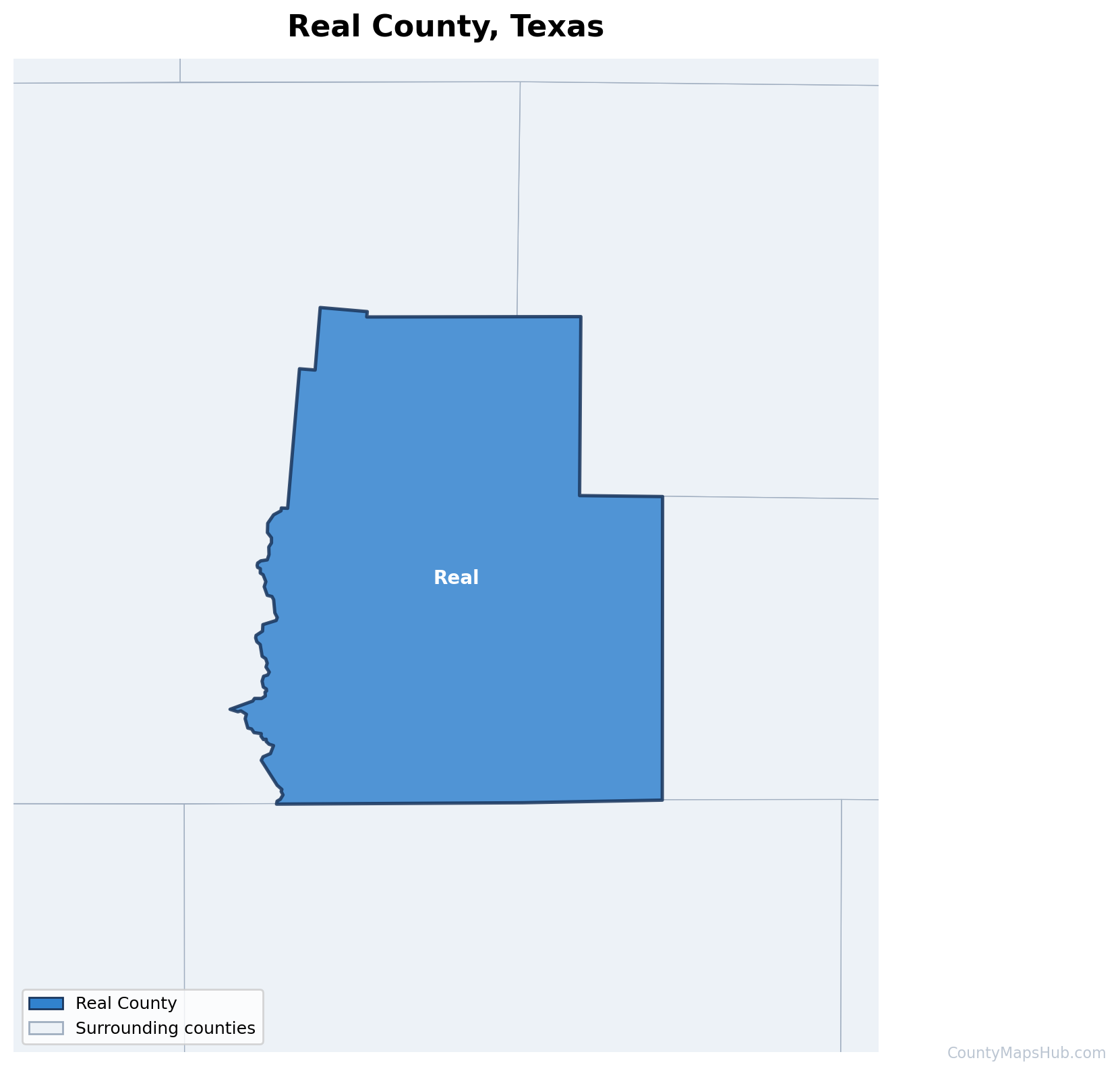
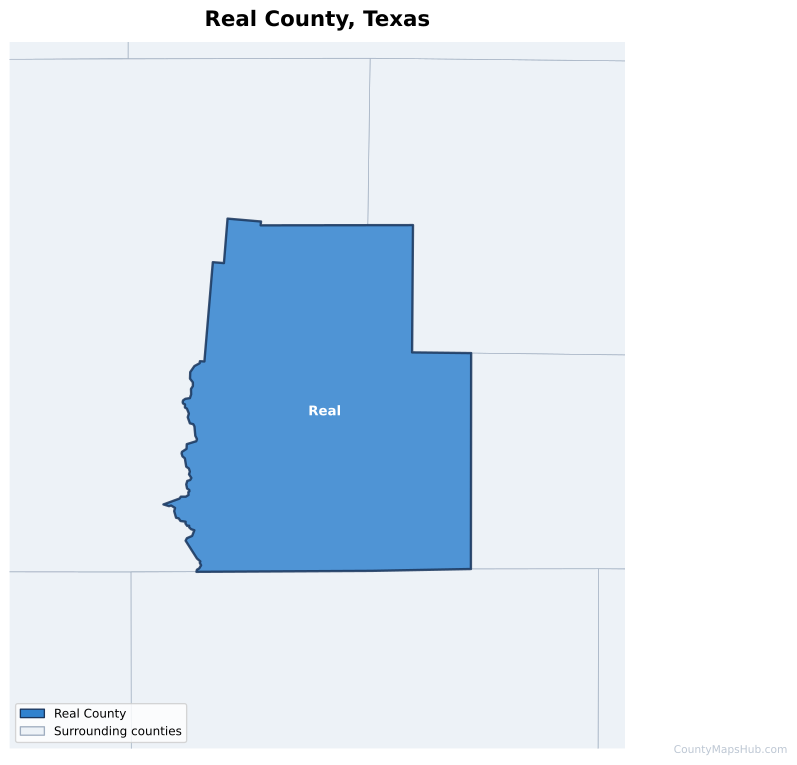
Real County was established in 1913, making it one of the younger counties in Texas. The county was named after Julius Real, honoring his contributions to the region. Located in the Texas Hill Country, the area that would become Real County was originally inhabited by indigenous peoples before Spanish explorers and later Mexican settlers moved through the region.
Following Texas independence and statehood, the area remained sparsely populated for decades due to its rugged terrain and remote location. The county’s formation in the early twentieth century reflected growing settlement patterns and the need for local governance. With Leakey designated as the county seat, Real County developed around ranching, agriculture, and the natural resources of the Hill Country. The county’s relatively small population has remained consistent with its rural character and geographical challenges throughout its history.
Population
According to the 2020 Census, Real County has a population of 2,758 residents spread across approximately 700 square miles. This gives the county one of the lowest population densities in Texas, reflecting its rural and rugged character. The small population is centered primarily around the county seat of Leakey and scattered ranch properties throughout the Hill Country terrain. The modest population size has remained relatively stable over the decades, with the county maintaining its character as a sparsely populated region where residents value open spaces, ranching traditions, and the natural landscape that defines this part of Texas.
Climate
Real County experiences a semi-arid climate typical of the Texas Hill Country transition zone. This climate pattern brings hot summers with temperatures frequently exceeding 90 degrees Fahrenheit, while winters remain relatively mild with occasional cold fronts that can bring brief periods of freezing temperatures. Precipitation is moderate and somewhat unpredictable, with the wettest months typically occurring in late spring and early fall.
The semi-arid conditions create a distinctive landscape characterized by hardy vegetation, including native grasses, mesquite, juniper, and various species of oak. The climate supports ranching operations that have historically defined the county’s economy. Drought conditions can occur periodically, impacting water resources and agricultural activities. The generally sunny weather and clear skies make the region appealing for outdoor activities throughout much of the year.
Tourist Attractions
Real County offers visitors an authentic Texas Hill Country experience with its rugged natural beauty and outdoor recreation opportunities. The county’s landscape features limestone hills, spring-fed streams, and scenic valleys that attract nature enthusiasts and those seeking respite from urban areas. Outdoor activities such as hiking, camping, hunting, and fishing draw visitors who appreciate the county’s unspoiled terrain and wildlife viewing opportunities.
The region appeals to travelers interested in experiencing rural Texas culture and exploring back roads through dramatic Hill Country topography. Visitors can discover small-town hospitality in the county seat and enjoy the slower pace of life that characterizes this remote area. The county’s natural environment provides opportunities for photography, bird watching, and stargazing in areas with minimal light pollution. Seasonal attractions related to wildflowers and fall foliage add to the area’s appeal for those seeking scenic drives and peaceful retreats.
Culture
Real County embodies the traditional culture of rural Texas Hill Country, where ranching heritage and self-reliant values remain central to community identity. The small population fosters close-knit relationships among residents, with local gatherings and community events serving as important social occasions. The culture reflects a blend of Anglo-American ranching traditions with influences from the region’s Spanish and Mexican heritage, visible in place names, architecture, and local customs.
Life in Real County moves at a deliberate pace, with residents valuing independence, land stewardship, and connection to the natural environment. The county’s isolation has helped preserve traditional ways of life, including ranching practices passed down through generations. Community institutions such as local schools and churches serve as gathering places that strengthen social bonds. Visitors will find genuine hospitality and an appreciation for storytelling, local history, and the challenges and rewards of living in one of Texas’s more remote and rugged counties.